



BY GCWALISILE MHLABANE
SOMNTONGO– Government has intensified its drive to unlock the country’s economic potential by placing young people at the centre of national development, unveiling renewed commitments to tackle youth unemployment, expand opportunities and prepare the next generation to lead the country’s future.
Speaking during the national commemoration of World Population Day 2026 at Somntongo Inkhundla in the Shiselweni Region on Wednesday, Government declared that investing in young people was no longer an option, but an urgent national priority that would determine Eswatini’s long-term prosperity.
The event, organised by the Ministry of Economic Planning and Development’s National Population Unit in partnership with the United Nations Population Fund (UNFPA), was held under the global theme: “Realising the hopes and aspirations of young people – today and for the future.”
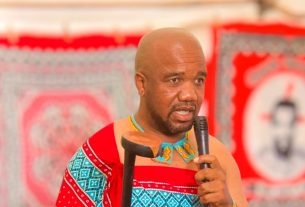
Addressing delegates on behalf of the Minister for Economic Planning and Development, Dr Thambo Gina, Acting Minister Sikhumbuzo Dlamini said Eswatini’s youthful population represented one of the country’s greatest strategic assets and could become the engine of economic transformation if given the necessary support.
He said Government remained committed to strengthening investments in education, healthcare, entrepreneurship, innovation and employment creation to ensure that young people are equipped with the skills and opportunities needed to contribute meaningfully to national development.
“Our young people are an asset to the nation and a strategic partner in harnessing Eswatini’s demographic dividend. The future of this country depends on the investments we make in them today,” said Dlamini.
He explained that Eswatini’s changing population structure presents a unique opportunity for accelerated economic growth. The country’s fertility rate has steadily declined from 7.8 children per woman in 1966 to 3.2 in 2017 and is projected to fall further to about 2.66 by 2027.
According to population experts, this transition creates favourable conditions for a demographic dividend, where a larger proportion of the population is of working age. If supported by quality education, healthcare and employment opportunities, such a population structure can significantly boost economic productivity and national income.
However, Dlamini acknowledged that youth unemployment remains one of Eswatini’s most pressing socio-economic challenges.
Current Labour Force Survey findings indicate that 56 percent of young people remain unemployed, while 46.6 percent are not in education, employment or training (NEET), highlighting the urgent need for coordinated interventions that create jobs and expand economic participation.
To address these challenges, Government continues to strengthen programmes aimed at increasing access to quality education, vocational training, entrepreneurship support, healthcare services and youth-friendly reproductive health programmes.
The Acting Minister also encouraged young people to make informed life choices and plan responsibly for their future families.
He emphasised that sustainable family planning contributes to improved household welfare, healthier communities and stronger economic development.
Meanwhile, UNFPA Officer-in-Charge Thamary Silindza said despite growing economic pressures, Eswatini’s young people remain optimistic about building successful lives and raising stable families.
She said findings from the latest Demographic Futures Survey reveal that young people have not abandoned their ambitions, but continue to face significant obstacles, including unemployment, limited access to affordable housing and restricted economic opportunities.
“Young people are not giving up on their futures. They continue to dream, aspire and plan for successful lives despite the barriers before them,” she said.
Silindza noted that approximately 39 percent of Eswatini’s population is between the ages of 15 and 35, describing this as a tremendous opportunity for innovation, entrepreneurship and inclusive economic growth.
She further stressed that accurate population data remains essential for effective national planning, enabling Government and development partners to design programmes that respond directly to the needs of young people.
Silindza also highlighted the importance of expanding employment and investment opportunities in rural communities, particularly in regions such as Shiselweni, where many young people continue to migrate elsewhere in search of better livelihoods.
Throughout the commemorative event, speakers called for stronger collaboration between Government, development partners, civil society and the private sector to increase investments in digital skills, innovation, entrepreneurship, healthcare and quality education.
Discussions also focused on addressing teenage pregnancy, gender-based violence and other social challenges affecting young people while promoting informed decision-making and responsible parenthood.
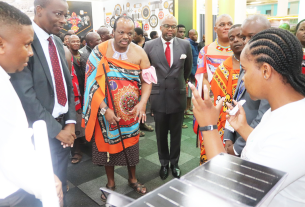
The event featured exhibitions, service delivery stalls and interactive panel discussions where Government ministries, private sector institutions and development organisations showcased programmes designed to empower young people with information, skills and opportunities.
As the event concluded, Government appealed to all stakeholders to continue supporting initiatives that place young people at the heart of Eswatini’s development agenda, describing them as the country’s greatest resource and the driving force behind a prosperous, inclusive and resilient future.