


BY GCWALISILE MHLABANE
HLANE– Government’s ambitious youth empowerment drive is set to open new economic opportunities for 30 000 young people across Eswatini through the rollout of the Eswatini Youth Empowerment Opportunities Project (EYEOP).
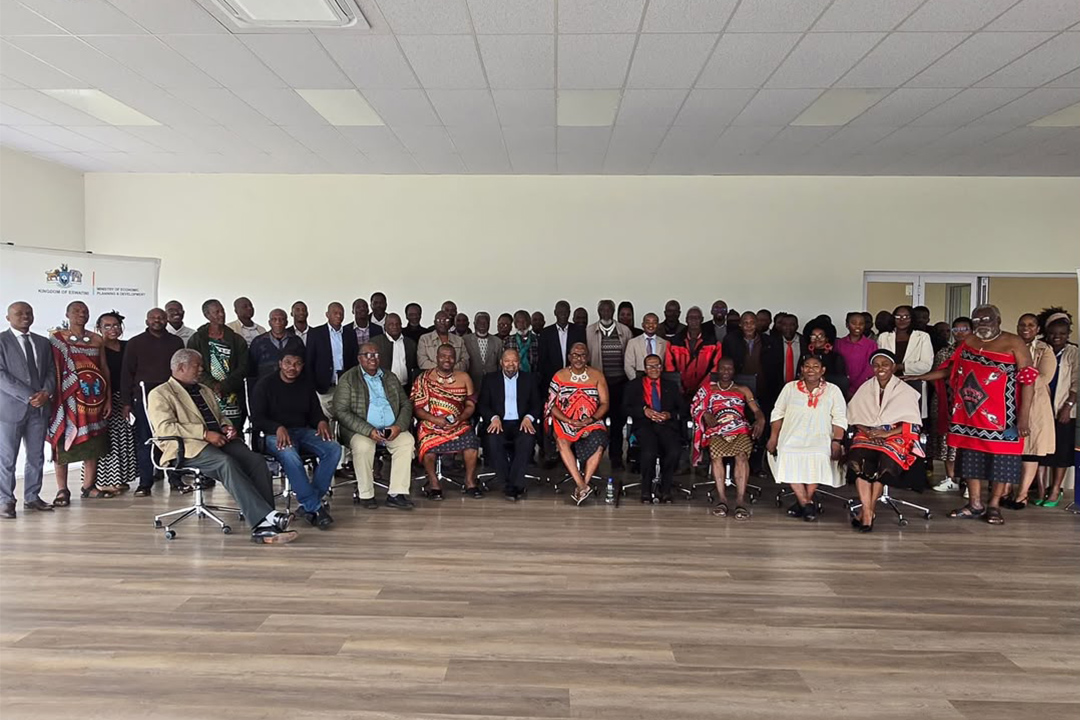
The programme, which seeks to tackle youth unemployment through employment creation, entrepreneurship development and skills training, was introduced to Lubombo traditional leaders during an engagement held at NsUlutane Hotel in Hlane on July 30, 2026.
The engagement was led by the Ministry of Economic Planning and Development (MEPD), in collaboration with the Ministry of Tinkhundla Administration and Development (MTAD), Deputy Prime Minister’s Office (DPMO), Eswatini Water and Agriculture Development Enterprise (EWADE), Microprojects Programme (MPP) and the Central Statistics Office (CSO).
The meeting also focused on preparations for the 2027 Population and Housing Census and the introduction of the National Social Registry, initiatives aimed at improving national planning and ensuring Government support reaches deserving beneficiaries.

Addressing traditional leaders, Minister of Economic Planning and Development Dr Thambo Gina said the success of EYEOP depended on strong collaboration between Government and communities.
“Traditional leaders have a critical role to play in supporting Government’s efforts to reduce youth unemployment, strengthen poverty alleviation initiatives and improve national development planning,” said Dr Gina.
He explained that EYEOP was designed to empower young people aged between 18 and 35 years by creating sustainable opportunities in agriculture and construction.
The programme targets 30 000 youth nationwide, with 20 000 expected to benefit through agricultural enterprises, while 10 000 will receive construction-related skills development and business incubation support.
Dr Gina urged chiefs to support the initiative by facilitating access to Swazi Nation Land for qualifying youth and ensuring that opportunities are distributed fairly within communities.
“We want to see young people becoming economically active, creating businesses and contributing to the growth of their communities,” he said.
Under the programme’s implementation structure, EWADE will lead the agricultural component, while MPP will oversee the construction component. The DPMO will coordinate beneficiary identification through the National Social Registry, with MTAD supporting community mobilisation.
The construction component will equip unemployed graduates and young artisans with practical workplace experience through attachment to infrastructure projects implemented by MPP.
Participants will also receive mentorship in entrepreneurship, contractor development, tendering processes and business management to prepare them to establish sustainable construction enterprises.
Meanwhile, the agricultural component will provide youth entrepreneurs with training, mentorship, start-up support and market linkages across various agricultural value chains.
Government officials said the programme would focus on commercially viable agricultural activities with market demand, while promoting youth-owned enterprises capable of creating employment opportunities.
During the engagement, CSO officials updated chiefs on preparations for the 2027 Population and Housing Census, highlighting the importance of accurate population data in guiding development planning.
“Accurate information is essential for effective planning, equitable resource allocation and informed policy decisions,” officials said.
Traditional leaders were encouraged to support census teams by mobilising communities and ensuring households participate in the data collection process.
The National Social Registry was also introduced as a tool that will help Government identify vulnerable households and improve the targeting of social protection programmes.
Officials said the registry would enhance transparency and ensure assistance reaches eligible beneficiaries, including youth targeted through programmes such as EYEOP.
Traditional leaders welcomed the initiatives and raised questions on land availability, beneficiary selection, funding arrangements and communication.
Government assured them that their contributions would inform implementation while reaffirming its commitment to inclusive development.
Dr Gina thanked chiefs for their continued partnership and called on them to champion the successful implementation of EYEOP and other national initiatives within their communities.
“Working together with traditional leadership will ensure that these programmes reach the people they are intended to serve and improve the livelihoods of emaSwati,” he said.
#EswatiniPositiveNews #EYEOP #YouthEmpowerment #EconomicDevelopment #LubomboRegion #NationalDevelopment #EmpoweringEmaSwati
(Courtesy Pic)