



BY THEMBA ZWANE
MBABANE– United States (US) President Donald Trump has followed in the footsteps of His Majesty King Mswati III by becoming the first sitting U.S. president in modern times to have his portrait featured on an official United States dollar coin.
The historic development has created an extraordinary monetary comparison between the world’s most powerful republic and the Kingdom of Eswatini, where the portrait of King Mswati III has been a familiar feature of national coinage for four decades.
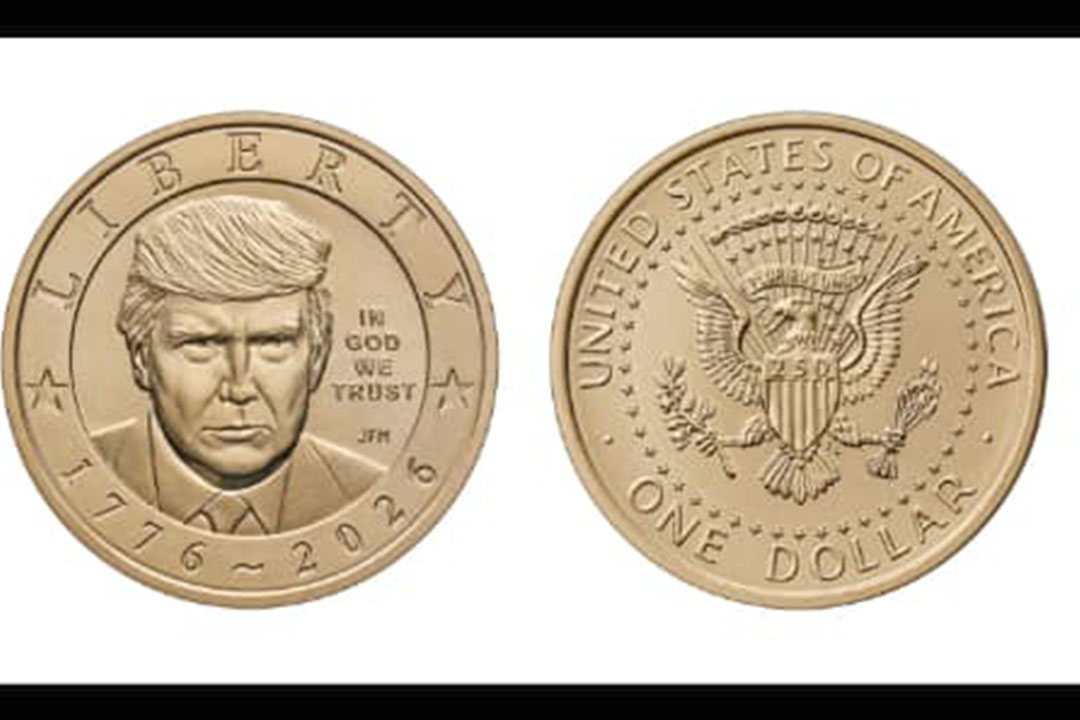
The United States Mint has released the new 2026 Semiquincentennial President Donald J. Trump $1 Coin, bearing Trump’s portrait on the obverse and the Presidential Seal on the reverse. The coin commemorates the 250th anniversary of the United States.
Trump’s portrait appears alongside the inscriptions “LIBERTY,” “IN GOD WE TRUST” and “1776 ~ 2026.” The design was created by United States Mint Chief Engraver Joseph Menna, based on an official White House photograph by Daniel Torok.

The development is particularly striking from an Eswatini perspective.
According to the Central Bank of Eswatini, King Mswati III’s portrait has appeared on the obverse of the country’s coins from 1986 to date. The King is depicted wearing royal insignia, including the three feathers of the lourie bird, or Ligwalagwala, and the traditional necklace known as Ligcebesha.
This means that long before the unprecedented American coin appeared, Eswatini had already established a monetary tradition in which the reigning monarch’s portrait formed part of the country’s coinage.
Trump’s new coin now creates a remarkable parallel.
For Americans, the image of a sitting president on a dollar coin represents a significant departure from the country’s traditional approach to portraying living political leaders on national currency.
For Eswatini, however, the appearance of the reigning monarch on coins has been an established feature of the Kingdom’s currency since the reign of King Mswati III began in 1986.
The new American coin has therefore brought renewed attention to a tradition that has long been familiar in the Kingdom.
The U.S. Mint describes the Trump coin as a historic issue created to mark the American Semiquincentennial, with the reverse featuring the Presidential Seal and the inscription “UNITED STATES OF AMERICA” and “ONE DOLLAR.”
The coins went on sale on September 2, 2026, with the Mint offering them in rolls of 25 and bags of 100. Although they have a circulating finish and are legal tender, the coins have been offered primarily through numismatic sales rather than being placed into general circulation.
Trump’s appearance on the coin has also attracted international attention because of the long-standing American tradition against placing living people on U.S. currency.
The development is historically unusual enough that it has prompted debate in the United States, while the government has pointed to the special legislation authorising the Semiquincentennial coin and the historical precedent of President Calvin Coolidge appearing on a commemorative coin in 1926.
But beyond the American debate lies an intriguing Eswatini connection.
King Mswati III has already been walking this monetary path for 40 years.
His portrait has remained a defining feature of Eswatini’s coins across successive generations, making the King’s image one of the most recognisable symbols on the Kingdom’s national currency.
Trump’s historic coin therefore presents an unusual moment in which the monetary traditions of two very different nations intersect.
A reigning African monarch whose portrait has appeared on his country’s coins since 1986 and a sitting American president whose portrait now appears on a commemorative U.S. dollar have, in their own very different systems, become part of the visual story of their nations’ coinage.
For Eswatini, the development provides another unexpected international spotlight on the Kingdom’s distinctive royal and monetary tradition.
And while there is no verified public statement from President Trump saying that he copied, benchmarked against, or was inspired by King Mswati III, the historical parallel is undeniable:
America’s sitting president has now entered a territory in which King Mswati III has stood for four decades – having his portrait immortalised on his nation’s coins.
#KingMswatiIII #Eswatini #DonaldTrump #UnitedStates #USCoin #RoyalCoinage #EswatiniRoyalFamily #Monarchy #Lilangeni #USADollar #History #InternationalSpotlight
(Courtesy Pic)