



BY PHUMELELE GAMEDZE
MBABANE- Once again, I found myself drifting deep into my ancestral roots, where emasiko awakened the teachings of my long-gone elders and brought the cultural Liswati within me back to life.
For seven days, Umhlanga became more than a cultural ceremony. It became a journey into my identity, a place where the words of my grandmother, the wisdom of my great-grandmother and the traditions of generations before me suddenly felt alive again.
My grandmother used to say, “Live liyegcayelwa,” reminding me that one should always show respect, even in places where they are not known.
During Umhlanga, I found myself living those very words.
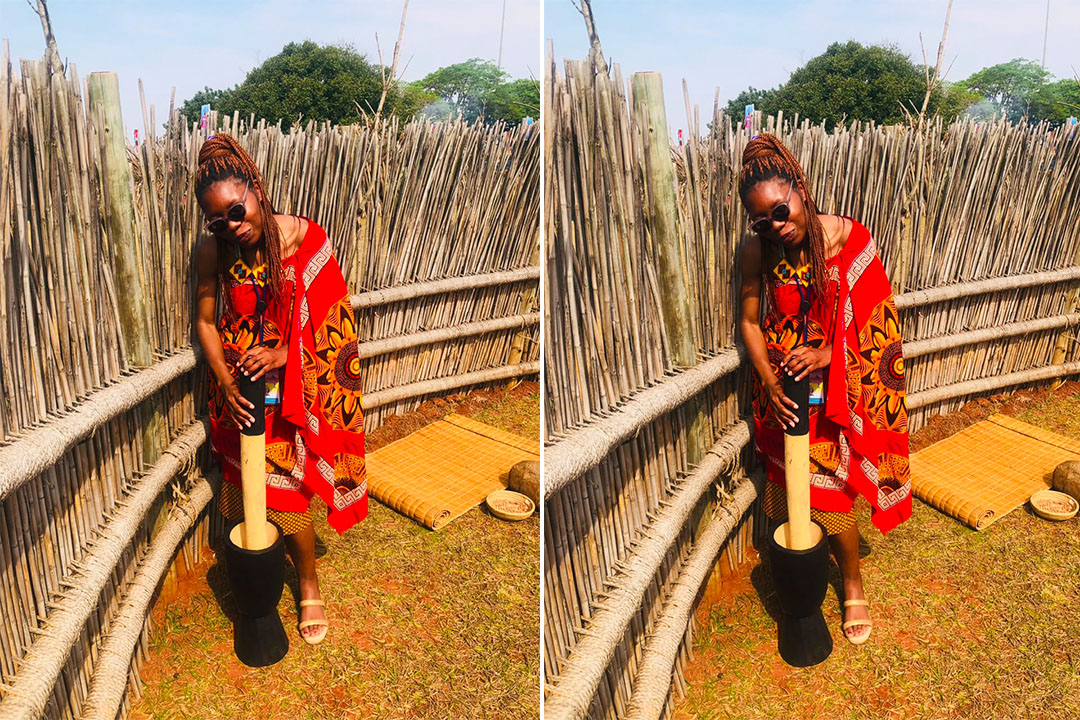
Surrounded by thousands of maidens, elders and people I had never met before, I understood that respect is not something we only practise when we know someone. It is a value we carry wherever we go.
What made it even more beautiful was seeing that same respect being extended to me and to others.
The traditional attire added colour and meaning to every moment. The traditional materials, ornaments and ways of dressing reminded me that what we sometimes call the past is still very much alive.
Then came the royal residence.
Being given the opportunity to see Their Majesties was, for me, a blessing. I remembered the words of my great-grandmother, who used to speak about the honour of seeing Their Majesties. During those moments, I could not help but think of her and wonder what she would have felt had she been standing beside me.
In that moment, a teaching from another generation had become my own experience.
Even the traditional huts at the royal residence gave me a different appreciation of emasiko. Looking at them, I found myself remembering the traditional knowledge of how our ancestors built their homes and the materials they used.
I found myself thinking about umgigo, emakhenya, umtjamba and the different elements that came together in building a traditional Swati homestead. I became fascinated by remembering which materials belonged where, how they were positioned and how everything had its own place and meaning according to the Swati way.
It was more than simply looking at a hut.
It was like looking at a piece of our ancestors’ intelligence.
The deep words of SiSwati spoken by elders throughout the experience also carried a special weight. Their greetings, teachings and manner of speaking reminded me that language is one of the strongest bridges between generations.
For seven days, I saw culture being lived rather than simply discussed.
I saw it in the way maidens carried themselves, in the traditional attire, in the respect shown to elders, in the materials used by our ancestors and in the traditions preserved at the royal residence.
I also experienced the beauty of sisterhood.
There were long days, tired feet, laughter, singing and moments when the body demanded rest. Yet the experience brought us together. We arrived as individuals, but emasiko gave us a shared identity.
When I finally looked back at those seven days, I realised that Umhlanga had given me something that cannot easily be captured in photographs or words.
It had allowed me to hear the voices of my ancestors through the teachings they left behind.
My grandmother’s “Live liyegcayelwa.”
My great grandmother’s words about the blessing of seeing Their Majesties.
The knowledge of how our ancestors built their homes.
The respect of our elders.
The beauty of SiSwati.
The pride of wearing our traditional attire.
All of it came together and reminded me of something I should never forget: I come from somewhere. I belong to something.
And that, for me, was the greatest gift of Umhlanga.
I did not simply participate in seven days of culture.
I returned to my roots, and somewhere along the way, I rediscovered the Liswati within me.
#Umhlanga2026 #EswatiniCulture #Emasiko #LiswatiPride
(Courtesy Pic)