



BY PHUMELELE GAMEDZE
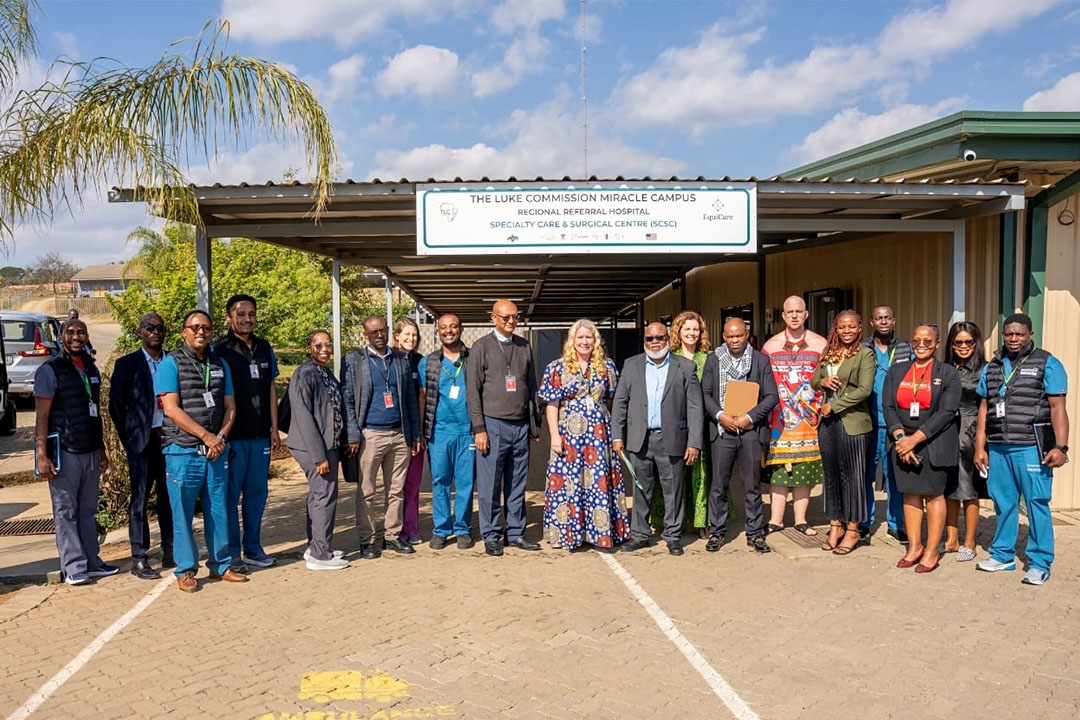
MBABANE – A young doctor in Eswatini who dreams of becoming an orthopaedic surgeon can now pursue that specialist journey closer to home, following regional accreditation of The Luke Commission (TLC) Miracle Campus Regional Referral Hospital.
The hospital has officially been accredited by the College of Surgeons of East, Central and Southern Africa (COSECSA) as a training centre for General Surgery and Orthopaedic Surgery, opening a new pathway for specialist surgical training in the Kingdom.
TLC is currently the only hospital in Eswatini listed for FCS Orthopaedic Surgery training, meaning aspiring orthopaedic surgeons no longer have to look outside the country as their only route to specialist training.
For patients, the development could also mean stronger specialist expertise being built within the local healthcare system, reducing reliance on external opportunities for both medical training and specialist services.

TLC Legal Adviser and Spokesperson Zakhele Dlamini said the accreditation marked an important step in strengthening Eswatini’s ability to develop specialist surgeons locally.
“The COSECSA accreditation is a significant milestone for Eswatini because it means that the country is strengthening its capacity to train specialist surgeons within its own borders,” Dlamini said.
He said the long-term benefit could reach patients as Eswatini develops a larger pool of specialists familiar with the country’s disease burden, healthcare realities and patient needs.
“This can ultimately reduce dependence on sending patients and doctors outside the country for specialist services and training,” he said.
For a doctor beginning a specialist career, training at home can also mean remaining connected to the healthcare system and communities they may later serve. Dlamini said local training could help retain skills while reducing some of the financial, logistical and personal challenges associated with leaving the country.
The benefits could extend beyond individual surgeons. Specialist doctors can mentor other medical professionals, share knowledge and strengthen the wider healthcare workforce through teaching and supervised clinical practice.
The accreditation therefore goes beyond a classroom qualification. Surgical trainees require exposure to real patients, supervised operations, specialist mentorship and multidisciplinary healthcare practice.
Dlamini said TLC’s clinical environment and specialist network provide a platform for such practical learning.
The development builds on TLC’s investment in specialist healthcare over the past two decades. More than 60 specialists from various disciplines have contributed through mentorship, training, specialist expertise and patient care.
TLC currently has five COSECSA Fellows and more than 40 licensed and registered doctors, supported by a multidisciplinary medical team and a workforce of nearly 400 people.
Dlamini said the accreditation demonstrates that institutions in Eswatini can build the infrastructure, systems and clinical capacity required to meet recognised regional standards.
“This accreditation represents years of work by an extraordinary medical team and opens a new chapter for specialist surgical training in Eswatini,” he said.
“We now have the opportunity to help develop surgeons who will care for patients, teach those who come behind them and strengthen healthcare capacity for generations.”
The milestone forms part of TLC’s wider University Without Borders vision, which seeks to expand access to quality medical education beyond geographical boundaries.
Dlamini said the significance of the accreditation extends beyond TLC to the Ministry of Health, young doctors, medical students and, most importantly, patients.
“For a young doctor who dreams of becoming a surgeon, that journey can now begin right here in the beautiful Kingdom of Eswatini,” he said.
The accreditation followed an independent regional assessment process, with TLC acknowledging the support of His Majesty’s Government through the Ministry of Health, the Eswatini Medical and Dental Council and the Eswatini Higher Education Council.
With specialist training now being established locally, Eswatini has an opportunity to build a stronger pipeline of surgeons who can train at home, serve at home and pass their skills on to the next generation.
#HealthcareInEswatini #MedicalTraining #OrthopaedicSurgery #EswatiniPositiveNews
(Courtesy Pic)