



BY SIFISO NHLABATSI
MBABANE – Government has proposed reserving procurement contracts worth up to E1 million for citizen-owned Micro, Small and Medium Enterprises (MSMEs), in a move that could give more emaSwati businesses access to lucrative State tenders.
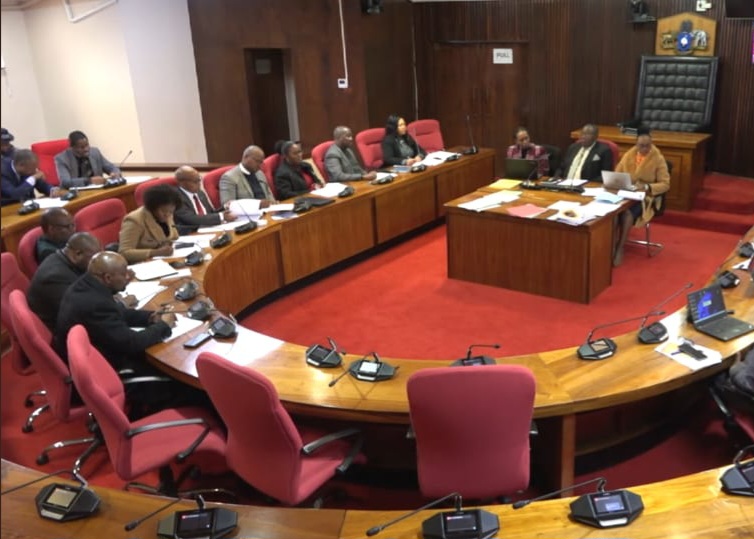
The proposal is contained in the Citizens Economic Empowerment Regulations, 2026, which were tabled in Parliament on Wednesday by the Ministry of Commerce Industry and Trade.
Under the proposed regulations, a procurement contract not exceeding E1 million shall be reserved for citizen-owned MSMEs and targeted citizen-owned MSMEs, subject to public procurement laws.
The regulations further provide that a State institution may reserve not less than 50 per cent of its annual procurement expenditure for targeted citizen-owned companies.

This percentage would progressively increase in accordance with rules to be issued by the Minister responsible for commerce, industry and trade.
The proposed measures could significantly widen the market available to local businesses, particularly smaller enterprises that have traditionally struggled to compete for large Government contracts.
Government is also proposing to make it compulsory for successful large contractors to share business with smaller citizen-owned enterprises.
A primary contractor awarded a contract exceeding the prescribed threshold would be required to subcontract at least 30 per cent of the total contract value to citizen-owned MSMEs.
The contractor would also have to submit a subcontracting plan as part of its tender.
This means that even businesses unable to compete directly for major tenders could benefit by becoming part of the supply chain of larger contractors.
The regulations also propose that citizen empowerment should form part of the criteria used when evaluating tenders.
These criteria would include citizen ownership and control, employment of citizens, subcontracting to citizen-owned enterprises, supplier development and local value addition.
Failure to apply mandatory empowerment weightings could result in the procurement process being reviewed.
The regulations have also identified a number of sectors where non-citizen companies would only be allowed to participate through approved joint ventures with targeted citizens.
These include large-scale agricultural inputs supply and distribution, where turnover exceeds E8 million, petrol stations, retail businesses including supermarkets with turnover above E8 million, wholesaling, as well as large-scale cross-border transport and international courier services.
For these businesses, a minimum of 50.1 per cent targeted citizen ownership would be required.
Quarrying and sand mining would also be covered, with a minimum targeted citizen ownership of 25 per cent, subject to environmental and mining permits.
The joint venture arrangement could give local entrepreneurs an opportunity to enter sectors that require significant capital and technical expertise, while allowing non-citizen companies to continue contributing through partnerships.
The proposed regulations do not only focus on ownership and procurement, but also seek to improve the participation of targeted citizens in employment and management.
Companies and State institutions would be required to implement measures including employment equity audits, workforce demographic assessments, inclusive recruitment and promotion practices, targeted training and mentorship programmes and accessible grievance mechanisms.
They would also be expected to ensure equitable representation of targeted citizens at board level, management and supervisory level and across all occupational levels.
Annual reports would have to be submitted to the Council detailing the measures implemented, the results achieved, challenges encountered and corrective action taken.
For a business to qualify for preferential procurement treatment, it would have to meet a number of requirements.
The company would have to be registered in accordance with Eswatini law, comply with tax, labour, procurement and social security obligations and possess a valid empowerment compliance certificate.
The regulations distinguish between different levels of citizen participation.
A targeted citizen-owned company is defined as one wholly owned and controlled by one or more targeted citizens.
A citizen-influenced company is one in which between five and 25 per cent of equity is owned by Eswatini citizens, while a citizen-empowered company has between 25 and 50 per cent citizen ownership.
The proposed framework could therefore create opportunities for businesses at different levels of citizen participation, while giving priority to companies with stronger citizen ownership and control.
The E1 million threshold is likely to be of particular interest to MSMEs, as it creates a defined procurement space for smaller businesses.
Combined with the proposed 50 per cent annual procurement reservation and 30 per cent subcontracting requirement, the measures could see more Government expenditure flowing to local enterprises.
The regulations are aimed at eliminating barriers to equitable participation in employment, procurement, enterprise development and management control.
The Minister responsible for commerce, industry and trade may, on the recommendation of the Council, make rules for the effective implementation and administration of the regulations.
The Citizens Economic Empowerment Regulations, 2026 would come into force on the date of their publication in the Gazette.
#CitizensEconomicEmpowerment #E1Million #EswatiniBusiness #CitizenOwnedBusinesses #MSMEs #EconomicEmpowerment #LocalProcurement #EswatiniEconomy #EmpowermentRegulations


