


BY SIFISO NHLABATSI
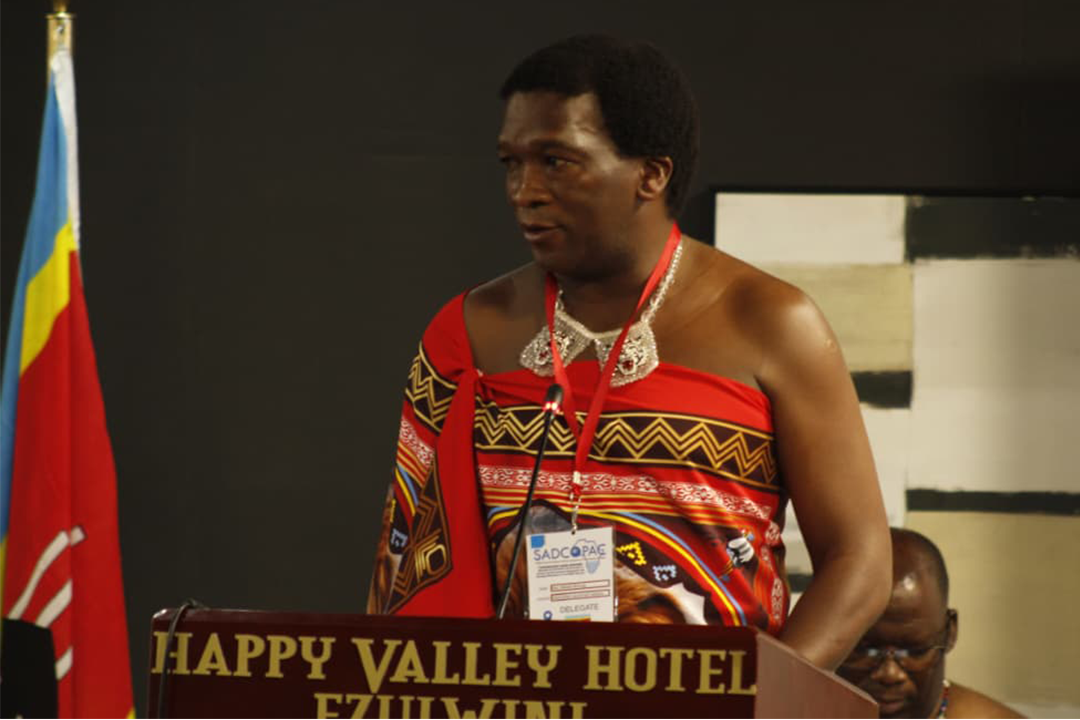
EZULWINI – SADCOPAC Secretary General Madala Mhlanga has told Public Accounts Committees (PACs) across the SADC region to stop waiting for scandals, audit findings and financial losses before taking action.
Mhlanga said oversight institutions needed to become more proactive by identifying and preventing risks before they translated into financial losses and scandals.
He was speaking during the opening of the 18th Annual Conference and 22nd Annual General Meeting of the Southern Africa Organisation of Public Accounts Committees (SADCOPAC) held on Monday at the Happy Valley Hotel in Ezulwini.
Mhlanga, who is also the Deputy Speaker of the House of Assembly and Chairperson of the Public Accounts Committee of the Parliament of Eswatini, said the traditional approach to oversight had largely been reactive.

“For too long, oversight has been reactive. We wait for the audit report, we respond to the scandal, we account after the loss. But our citizens are asking for more,” he said.
He said citizens wanted oversight institutions to answer a more fundamental question – whether they had identified risks early enough to prevent the loss of public resources.
“They are asking, ‘Did you see this coming? Did you prevent it? Did you protect the public purse before it was too late?’” Mhlanga said.
He said this required a shift towards what he termed anticipatory governance, where accountability institutions work together to identify emerging threats and intervene before damage occurs.
According to Mhlanga, Public Accounts Committees, Supreme Audit Institutions (SAIs), law enforcement agencies, civil society and the media could no longer afford to operate as isolated institutions.
He said the institutions needed to function as an integrated accountability chain with a common objective of safeguarding public value.
“This is anticipatory governance. And it requires an integrated accountability system where PACs, SAIs, law enforcement, civil society, and the media function not as separate institutions, but as one chain, with one purpose, to safeguard public value,” he said.
Mhlanga said the need for preventive oversight had become more urgent as countries in the region faced growing fiscal pressures, climate shocks, digital disruption and complex emergencies.
He warned that these challenges could no longer be treated as occasional crises because they were increasingly becoming part of the operating environment of governments.
He said oversight institutions therefore had to be equipped to identify vulnerabilities before they developed into major threats to public finances and service delivery.
One of the areas he highlighted was the oversight of State-owned enterprises (SOEs), which he said could simultaneously serve as engines of development and sources of significant fiscal risk.
Mhlanga said contingent liabilities, unreported government guarantees and weak governance at SOEs had the potential to push countries towards serious financial difficulties.
He called for PACs to ask tougher questions, SAIs to conduct deeper audits and investigators to trace suspicious financial transactions earlier.
“We must move from disclosure to enforcement,” he said, stressing that prevention should take precedence over government bailouts after losses had already occurred.
Mhlanga also warned that illicit financial flows had evolved alongside technology and were increasingly digital, borderless and instantaneous.
He said oversight institutions risked falling behind criminals if they continued relying on outdated tools and approaches.
“If we do not retool with digital forensics, data analytics, and cross-border MOUs, we will be auditing yesterday’s crime with yesterday’s tools,” he said.
He further called for stronger cooperation in monitoring climate finance, saying the large amounts of money being invested in climate-related programmes created opportunities for abuse if there was inadequate verification.
SAIs, investigators and civil society, he said, should work together to establish whether climate funds were reaching their intended projects and beneficiaries.
Mhlanga also raised concerns over the increasing digitisation of public procurement, social grants and service delivery.
While digital systems could improve transparency, he said they could also conceal bias and fraud on a larger scale.
He questioned who would audit algorithms and verify the data used by government digital systems, calling for greater cooperation between SAIs, civil society and journalists.
On disasters, Mhlanga said accountability was often most needed when it was most difficult to enforce because emergency situations could result in the suspension of normal procedures and rapid movement of public funds.
He called for a regional accountability “playbook” incorporating pre-approved transparency measures, real-time tracking of expenditure and post-crisis audits.
Mhlanga said SADCOPAC’s role was to provide a platform for member states to share experiences, standardise best practices and speak with one voice on public accountability.
He urged delegates to ensure that the conference produced concrete action rather than merely another communique.
“Let us leave here with commitments, not just conclusions,” he said.
#SADCOPAC #MadalaMhlanga #PublicAccountability #AnticipatoryGovernance #PublicFunds #GoodGovernance #Eswatini #SADC #Parliament #Oversight #EswatiniPositiveNews