


…when titles fade, character remains…
…leadership is tested when nobody is watching…
…a badge does not automatically make a leader…
…responsibility must come before recognition…
BY NELIWE NGUBANE
MBABANE— What if the applause stopped, the certificates disappeared and nobody called you a leader?
Would you still serve, speak up, take initiative and do what is right?
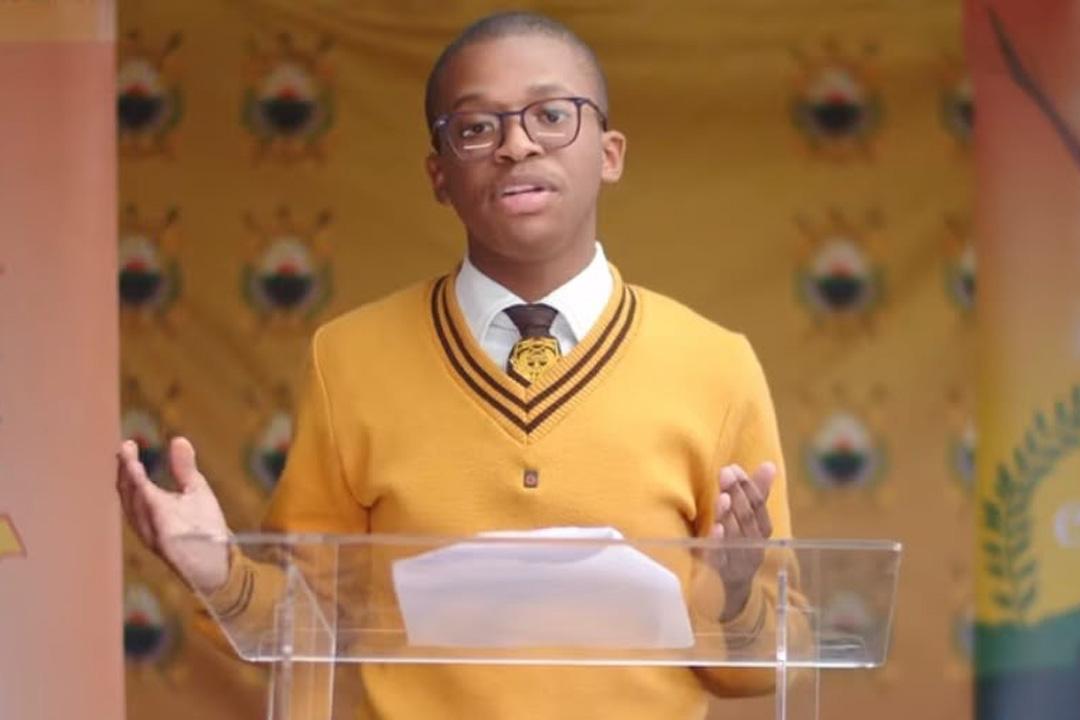
For Ka-Boyce High School pupil Phiwayinkosi Dlamini, that question cuts to the heart of what leadership should mean.

Taking the mic for Municipal Council of Mbabane Mic Drop Monday, Dlamini delivered his thought-provoking speech, “Responsibility Before Recognition: Leadership Without Titles,” challenging the idea that leadership begins with a position, badge or public recognition.
Instead, he argued that genuine leadership begins with the willingness to carry responsibility, even when there is no audience.
“What if the world never applauded you? What if nobody knew your name, handed you a certificate, gave you a title, most importantly, called you their leader? Would you still do what needs to be done?” Dlamini asked.
His message presents a different perspective on leadership, particularly for young people who are often told that they are the leaders of tomorrow.
Dlamini questioned why young people should wait for tomorrow to lead when there are responsibilities that can be taken up today.
He argued that a person does not need to be a councillor to care about Mbabane, a prefect to influence their school or hold political office to speak up about issues affecting their community.
“You don’t need a title to do the right thing,” he said.
For Dlamini, leadership is therefore not something that should be postponed until a person receives a position. It is demonstrated through everyday decisions, service and initiative.
The pupil used prefectship as an example, pointing out that wearing a badge does not automatically make someone a leader.
According to Dlamini, someone with a badge may fail to act responsibly when nobody is watching, while someone without one may be helping others, taking initiative and solving problems.
“A badge doesn’t automatically make you a leader,” he said.
This, he suggested, is where the real test of leadership lies: not in what people see, but in what an individual chooses to do when there is no recognition attached.
Dlamini also extended his argument to the city of Mbabane, drawing attention to the relationship between leadership and community responsibility.
While councillors hold formal positions, he argued that leadership should ultimately be judged by how responsibility is carried out.
“A city is not just its council. A city is its people,” he said.
His message places responsibility on both those who hold official positions and ordinary residents, encouraging people to move away from asking who is supposed to solve a problem and instead consider what contribution they can make.
The new dimension in Dlamini’s message is its challenge to a recognition-driven culture, where titles, followers, certificates and applause can sometimes become the measure of success.
He called for a different approach — one where action comes before recognition and service comes before personal gain.
“If you only act responsibly when people are watching, you are not leading. You are performing,” Dlamini said.
For young people, the message is particularly relevant. Prefects, head boys, students and young community members may have different responsibilities, but Dlamini argues that each has an opportunity to contribute.
“If you’re a prefect at school, lead. If you’re a head boy, serve. If you’re a councillor, represent. And if you’re a student, contribute. And if you have no title at all, lead anyway,” he said.
Dlamini’s speech ultimately shifts the focus from who gets recognised as a leader to who behaves like one.
His argument is that leadership cannot depend entirely on public approval because recognition can disappear, titles can change hands and applause eventually fades.
“Titles can be given. Recognition can be taken away. Applause eventually fades, but character remains,” he said.
Through Mic Drop Monday, Dlamini has placed a familiar leadership debate into the hands of a young voice, asking his audience to reconsider what it means to lead in school, in communities and in everyday life.
His challenge is not to wait for a badge, certificate or position.
It is to start with responsibility.
“So don’t wait for someone to recognize you as their leader. Give them something worth recognizing,” Dlamini concluded.
#MicDropMonday #PhiwayinkosiDlamini #KaBoyceHighSchool #LeadershipWithoutTitles #ResponsibilityBeforeRecognition #YouthVoices #YoungLeaders #Leadership #LeadByExample #Character #Responsibility #YouthLeadership #Mbabane #Eswatini #PositiveNews #EPN #EswatiniPositiveNews #ChangeMakers #InspiringVoices
(Courtesy Pic)