


BY THEMBA ZWANE
EZULWINI – Acting Commissioner of the Anti-Corruption Commission (ACC) Maphevu Mkhatshwa has outlined three critical areas that will benefit from the Memorandum of Understanding (MoU) signed between the ACC and the Office of the Auditor-General (OAG), saying the partnership will strengthen the country’s fight against corruption.
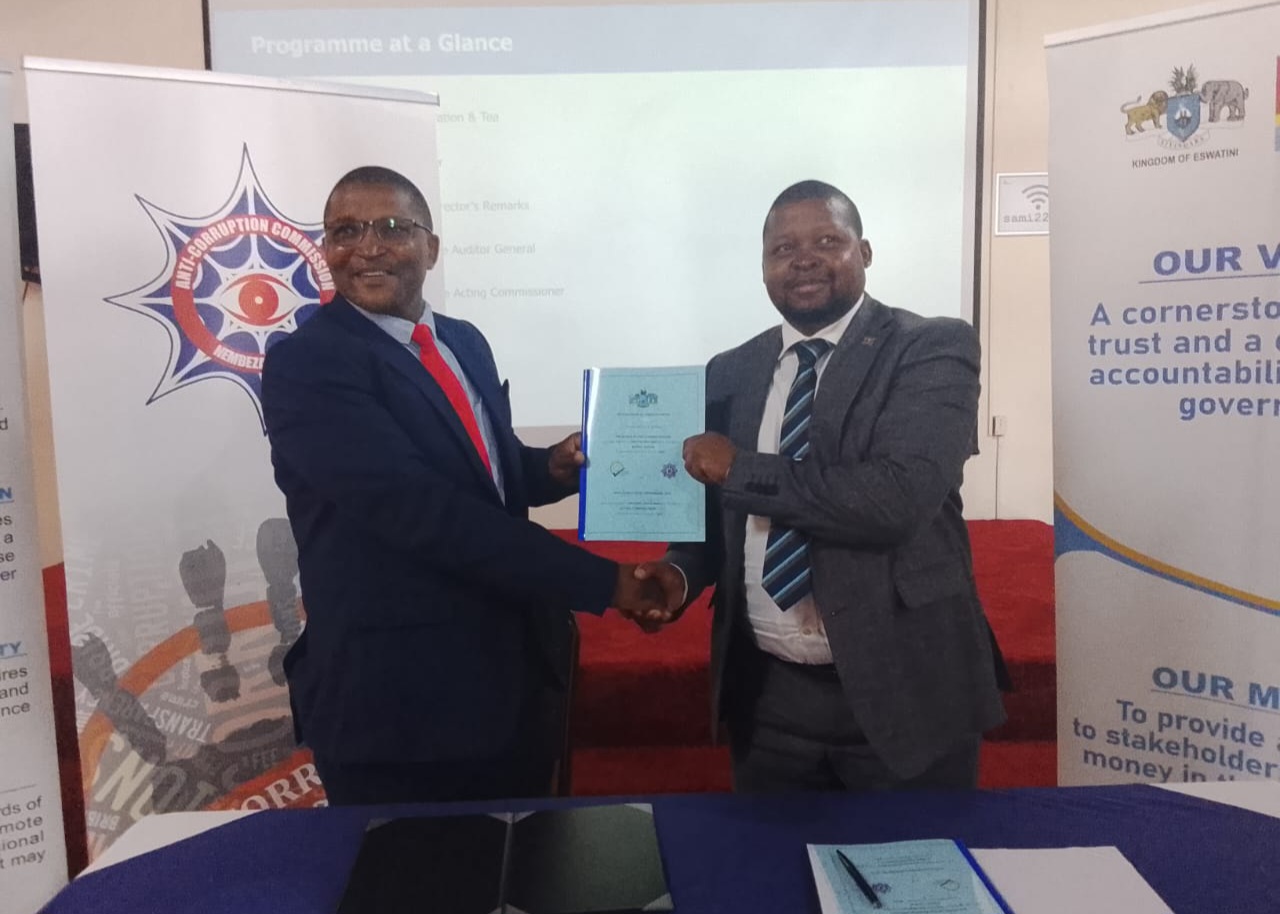
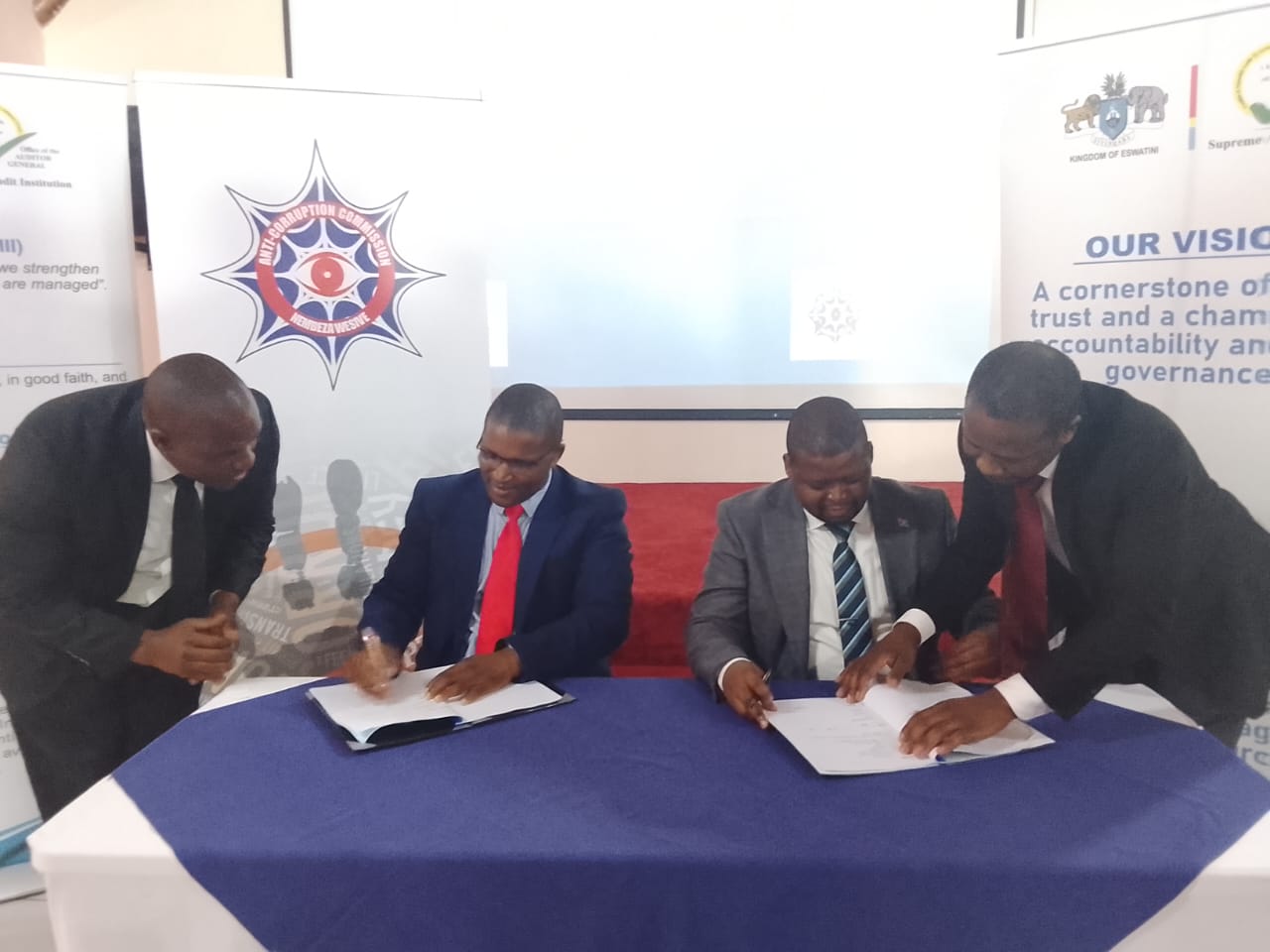
Mkhatshwa was speaking during the signing of the MoU between the two institutions at SibaneSami Hotel, Ezulwini, on September 23, 2026.
He described the signing as a historic milestone in Eswatini’s pursuit of integrity, accountability, transparency and justice, saying the agreement would help narrow the space in which corruption can thrive.
According to the Acting Commissioner, the MoU represents a strategic step forward because it bridges the gap between financial detection and criminal enforcement.

“Our auditors are adept at uncovering financial irregularities and systemic vulnerabilities, while anti-corruption agencies possess the authority to hold wrongdoers accountable for corrupt practices through robust enforcement mechanisms,” Mkhatshwa said.
He identified speed and efficiency, resource optimisation, and systemic prevention as the three key benefit areas arising from the partnership.
SPEED AND EFFICIENCY
Mkhatshwa said the agreement would establish streamlined communication channels between the two institutions, allowing for a faster transition from the identification of a red-flagged audit finding to the initiation of a formal criminal investigation.
He said the arrangement would strengthen the link between audit findings and enforcement action, ensuring that information pointing to possible wrongdoing can be communicated more effectively between the institutions.
The Acting Commissioner said this was particularly important in an environment where financial crimes were becoming increasingly sophisticated, fast-moving and deliberately obscured.
“The modern corrupt actor no longer operates in isolation; they are organized, interconnected, and relentless in their schemes to loot public resources,” he said.
RESOURCE OPTIMISATION
The second benefit area identified by Mkhatshwa is the optimisation of resources through the elimination of redundant efforts and the use of complementary expertise.
He said the partnership would integrate the forensic accounting capabilities of the audit institution with the investigative and asset recovery skills of law enforcement.
This, he explained, would allow the two institutions to leverage their respective strengths while avoiding duplication of efforts in dealing with cases involving suspected corruption and financial irregularities.
Mkhatshwa said the MoU establishes important communication protocols between the institutions, subject to existing data protection laws and guidelines, while also safeguarding the independence of both institutions.
SYSTEMIC PREVENTION
The third benefit area is systemic prevention, which Mkhatshwa said would involve using audit insights to identify high-risk public sectors and implement preventive measures before public funds are compromised.
He said the approach would allow the institutions to move beyond responding to corruption after it has occurred by identifying vulnerabilities that could expose public resources to abuse.
“In order to combat this effectively, we must continue to build a stronger network of integrity, one that unites law enforcement, oversight agencies, and local and international partners,” he said.
Mkhatshwa stressed that collaboration was no longer optional but an absolute necessity in combating corruption.
“An audit without enforcement is toothless; a criminal investigation without a rigorous audit is incomplete,” he said.
He further said the initiative was a cornerstone of the National Anti-Corruption Policy, which emphasises collaboration domestically and internationally.
He noted that the initiative reflected Eswatini’s commitment to adopting best practices, including those outlined by the United Nations Convention against Corruption, which advocates partnership and cooperation as essential tools in the fight against corruption.
Mkhatshwa also reminded emaSwati of Section 63(g) of the Constitution of the Kingdom of Eswatini, which states that the exercise and enjoyment of rights and freedoms are inseparable from the performance of duties and obligations.
The provision, he said, places a duty on every citizen to protect and preserve public property and to combat the misuse and waste of public funds and property.
In conclusion, Mkhatshwa said the institutions entrusted with safeguarding public resources were now moving in harmony.
“Together, we are stronger, more coordinated, and committed to ensuring that public funds serve the public interest,” he said.
He thanked the Auditor-General for the shared vision and commitment to the partnership and called for unified action to build a more transparent, accountable and just society.
#ACC #AuditorGeneral #AntiCorruption #Eswatini #PublicFunds #Accountability #Transparency #GoodGovernance #CorruptionPrevention #PublicResources #FinancialIntegrity #LawEnforcement #Audit #AssetRecovery