


BY PHUMELELE GAMEDZE
MBABANE – Fourteen urban areas in Eswatini have received Municipal Drought Management Plans to guide them in preparing for and responding to possible water shortages as a strengthening El Niño raises the risk of dry conditions.
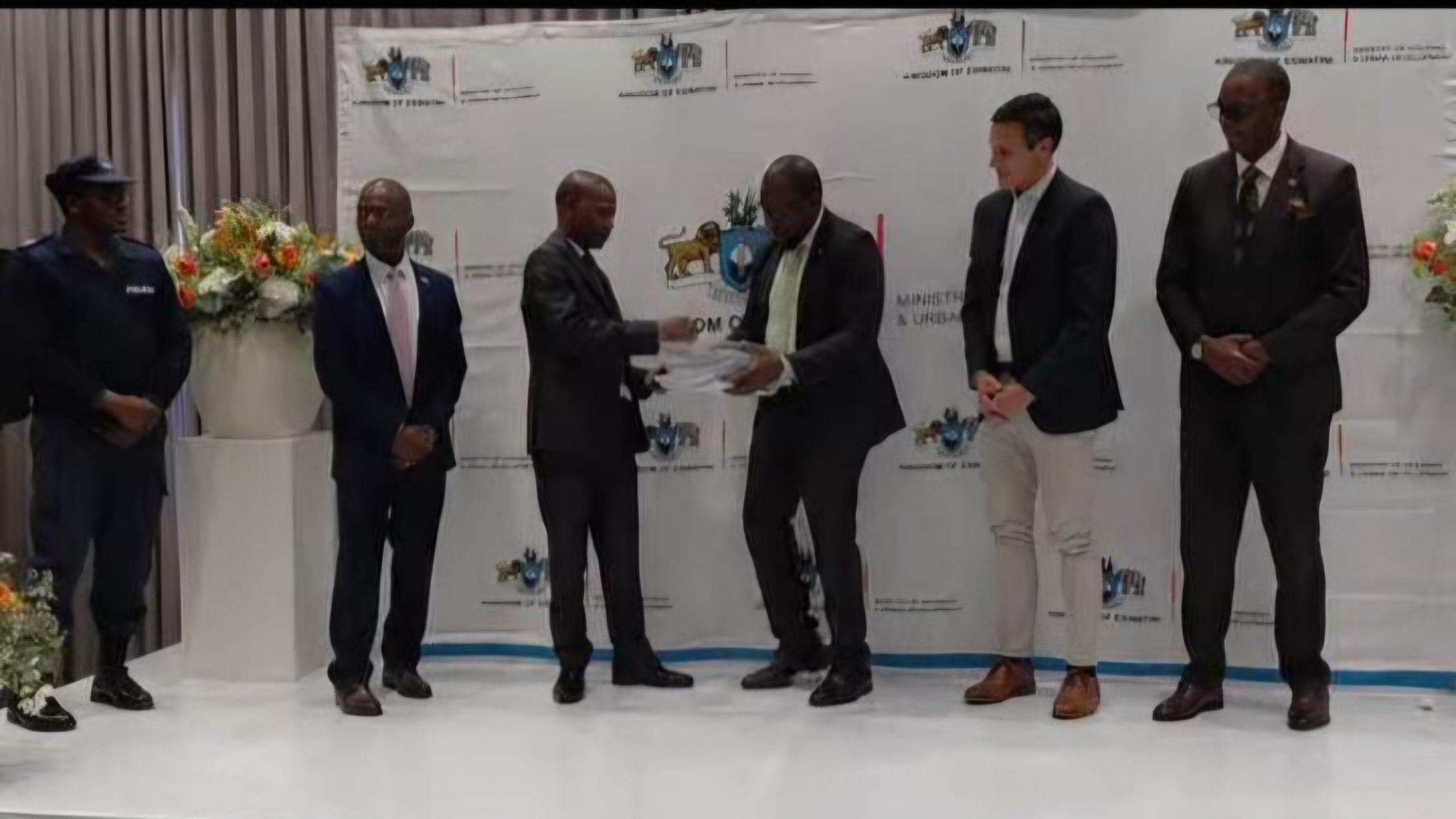
The plans were officially launched and handed over on Wednesday, September 23, 2026, at the Hilton Hotel, with Minister of Housing and Urban Development Hon. Appolo Maphalala receiving the plans from the National Disaster Risk Management Authority (NDRMA) before handing them over to the respective urban authorities.
The launch comes as international climate agencies report that El Niño is already firmly established and expected to strengthen further. The World Meteorological Organisation (WMO) says there is a near 100 per cent likelihood that the phenomenon will persist through February 2027, with rainfall and temperature patterns expected to be significantly affected.
NDRMA Acting CEO Sandile Thwala stressed the importance of having plans in place before a disaster strikes.

The Municipal Council of Mbabane said the plans are intended to help urban authorities plan ahead and learn from water shortages experienced around 2015, with the aim of protecting residents, businesses and critical urban systems.
The need for such preparedness is supported by Eswatini’s experience during the 2015/16 El Niño drought. According to the World Bank, water provision came under severe pressure, with major towns affected and Mbabane experiencing water rationing. Emergency interventions included the construction of a pipeline from Luphohlo Dam to the capital at a reported cost of E110 million.
A study on the socio-economic impact of the drought also found that water rationing placed pressure on urban infrastructure, including causing pipe bursts and road damage in Mbabane.
NDRMA Project Manager Gcebile Dlamini emphasised the need to fast-track implementation of the plans, while also pointing to the importance of developing similar plans for urban areas that have recently been declared.
The plans are expected to give urban authorities a clearer framework for identifying drought risks, preparing for possible water shortages and coordinating responses when conditions deteriorate.
Ezulwini Town Council CEO Mathokoza Shongwe thanked NDRMA on behalf of the towns and cities, saying the plans would help urban authorities know what action to take to mitigate the effects of natural disasters.
The wider drought-preparedness programme has already supported the development of the 14 municipal plans, alongside drought monitoring and early-warning systems, groundwater monitoring, the Composite Drought Index and the National Drought Intelligence Hub and Reporting Platform.
Maphalala, who handed over the plans to the urban authorities, openly reflected on the fact that he had not been involved in their conception and planning stages.
He likened his role at the launch to that of Biblical Simon of Cyrene, who was brought in to carry Jesus’ cross despite not having been involved in what had happened before.
Maphalala said that although Simon participated for only a short period, his participation remained part of the record. He drew a similar comparison with his own role, saying it would be recorded that he received the drought plans and handed them over to the towns and cities.
But the Minister also raised a broader concern: whether enough awareness is reaching the public about the possible implications of El Niño.
He questioned whether the country’s communication around the developing weather phenomenon was creating enough concern, particularly in light of the hardship experienced during the 2015/16 drought.
Maphalala also pointed to water infrastructure linked to Luphohlo Dam, saying pipes intended to help draw water from the dam were still lying beside the MR19 road near Sigulaneni Bus Station.
Eswatini is not starting from zero.
In June, NDRMA warned that there was sufficient evidence to justify early preparedness, while making it clear that an El Niño warning was not itself a drought declaration. NDRMA Communications Manager Magman Mahlalela said the authority would continue monitoring developments with the Eswatini Meteorological Services and international partners.
At the time, long-term meteorologist Sifiso Nzalo also cautioned that El Niño does not automatically translate into drought in Eswatini, although the developing climate signal required continued monitoring.
The latest international outlook, however, shows that El Niño has strengthened considerably. The International Research Institute for Climate and Society reported on September 21 that the Niño 3.4 index had reached about +3.0°C in mid-September, with all 22 forecast models indicating further strengthening and persistence into early 2027.
For residents, the real test of the newly launched plans will therefore not be how neatly they sit on shelves, but how quickly they translate into action when water sources come under pressure.
#DroughtPreparedness #ElNino #Eswatini #WaterSecurity