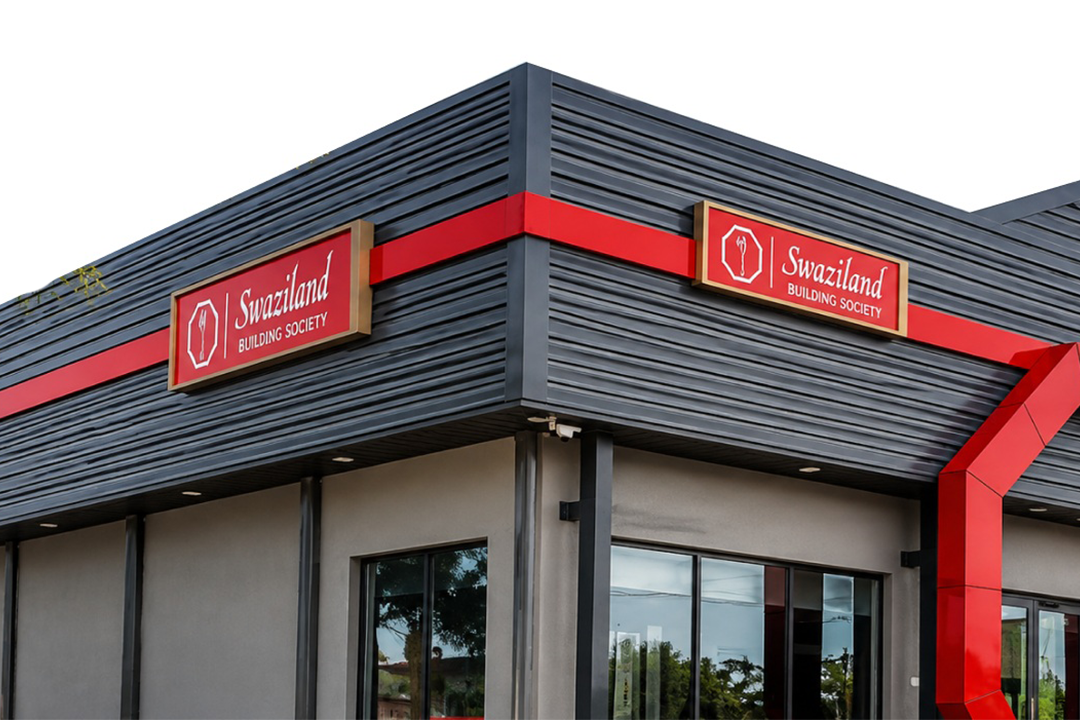




- Swaziland Building Society one of two granted provisional licences
BY THEMBA ZWANE
MBABANE – The Central Bank of Eswatini (CBE) approved two provisional bank licences during the 2025/2026 financial year, while two other banking licence applications remained under review at the close of the financial year.
According to the CBE’s 2025/2026 Annual Economic Review, the Bank received and evaluated five banking licence applications across various categories during the year.
Of these, two were approved for provisional licences, one was rejected and two remained under review at year-end.
The two successful applicants were Letshego Eswatini Bank and SBS Bank Eswatini, marking a significant development in the country’s banking sector as new players seek entry into the financial services market.

Letshego Eswatini Bank received its provisional licence in June 2025 to operate as a digital bank. The application had been submitted in October 2024 and underwent a comprehensive assessment by the CBE before the provisional licence was granted.
SBS Bank Eswatini, formerly operating as Swaziland Building Society, was subsequently granted a provisional licence in October 2025 to operate as a medium-sized commercial bank. The CBE said the application, submitted on June 30, 2025, was subjected to a comprehensive review against the country’s banking laws and regulatory framework.
The approval of the two licences represents a potential expansion of competition and choice within Eswatini’s banking industry.
Letshego’s entry is particularly significant for digital banking, while SBS Bank’s transformation from a building society into a commercial bank represents a major structural development for one of the country’s longest-established financial institutions.
The CBE previously said SBS Bank Eswatini had demonstrated satisfactory documentation, adequate management experience and a strong capital position during its licensing assessment. Its proposed operations were also assessed as having prospects for supporting financial inclusion.
However, the latest figures indicate that the licensing process remains active, with two applications yet to be concluded.
The CBE is responsible for licensing, regulating and supervising banks and other financial institutions in Eswatini. Its Financial Regulation Department reviews and analyses licence applications in consultation with other divisions and departments before decisions are made.
The development comes as the country’s banking sector continues to evolve. The CBE currently identifies First National Bank of Eswatini, Standard Bank Eswatini, Nedbank Eswatini and Eswatini Bank among the country’s commercial banks, alongside Swaziland Building Society as a building society.
The provisional licences, however, do not automatically mean the two institutions are operating as fully licensed banks. In the case of SBS Bank Eswatini, the CBE stated that the institution would have to satisfy regulatory and legal requirements attached to its provisional licence before receiving a full banking licence and becoming operational as a bank.
Similarly, Letshego’s provisional licence was granted for a period not exceeding 12 months, during which the bank-in-organisation was required to prepare for operationalisation and satisfy conditions imposed by the regulator.
The latest licensing figures therefore point to a banking sector undergoing gradual expansion, with two new entrants receiving regulatory approval while two further applications remain in the CBE’s assessment pipeline.
The CBE’s mandate is to promote a sound and stable financial structure, with bank supervision forming part of its responsibility to ensure financial institutions operate safely and in compliance with applicable prudential requirements.
#MyCBE #CentreOfExcellence #SBSBankEswatini #FinancialInstitution # #CentralBankOfReference #LetshegoEswatiniBank