



By SIFISO NHLABATSI
LOBAMBA – The Eswatini Revenue Service (ERS) could soon stop relying on delayed government subventions to finance its operations and instead retain a percentage of the taxes it collects if Parliament approves the Eswatini Revenue Service (Amendment) Bill, 2026.
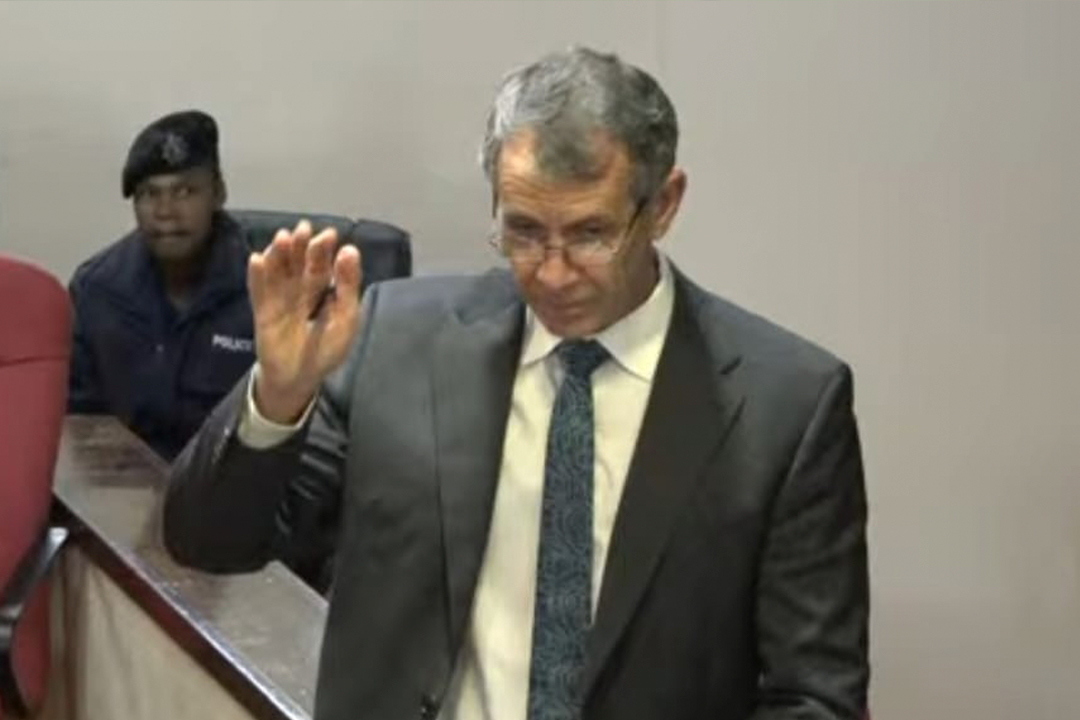
Finance Minister Neal Rijkenberg said the proposed amendment seeks to address cash flow challenges that have affected the tax authority whenever government subventions are delayed due to Treasury constraints.
Presenting the Bill in the Senate, Rijkenberg said the amendment contains only one substantive change, which would allow ERS to retain a prescribed percentage of tax revenue collected before remitting the balance to the Consolidated Fund.
He explained that ERS is currently funded through government subventions, but delays in releasing the funds often disrupt the organisation’s operations.

“At the moment, the way ERS receives its income is by subvention. Unfortunately, when government’s cash flow is tight, the subvention sometimes comes later, and those delays cause a lot of pain and stress for the organisation’s operations,” said Rijkenberg.
He said the proposed funding model recognises that ERS is the institution responsible for collecting taxes and should therefore have immediate access to operational resources.
“The thinking is that the tax is passing through them, so the plan now is to have them get a certain percentage from the collection,” he said.
Using a biblical analogy, the minister said, “Do not muzzle the ox,” explaining that just as an ox should be allowed to eat while working, ERS should retain a small portion of the revenue it collects to sustain its operations.
Rijkenberg said the percentage retained would be determined annually and could be around three percent, although the exact figure would be declared each year.
“Every time they collect taxes, they will withhold that certain percentage and use that money to do the work that they do. This is to ensure that ERS is not stifled,” he said.
The minister emphasised that the amendment consists of only one clause and is intended solely to improve the efficiency and financial stability of the revenue authority.
The minister stated that this will allow the system to keep working without interruptions. He stated that it is what they collect that they can take a percentage of. “If ypu look at this year I think we budgeted about E720 million for the subvention to ERS if I recall correctly, if you take the E18 billion collection goal and put it into the percentage it goes back to the about E700 million or so,”the minister stated.
The proposal received support in the Senate from Senator Isaac Magagula, who said institutions entrusted with important national responsibilities should not be crippled by funding delays.
“There is nothing more worrying than being mandated to carry out a national responsibility and finding that funds are not available to perform that function,” said Magagula.
He said the amendment would ensure that ERS officials continue carrying out their mandate even when government experiences temporary cash flow constraints that delay subvention payments.
The Bill forms part of a broader package of financial legislation currently before Parliament as government seeks to modernise the country’s tax administration framework.
If passed, the amendment is expected to give ERS a more predictable and sustainable source of operational funding while reducing its dependence on government subventions that are vulnerable to Treasury cash flow pressures.
(Courtesy Pic)
#Eswatini #ERS #EswatiniRevenueService #Finance #TaxReform #TaxCollection #Parliament #Senate #NealRijkenberg #Government #PublicFinance #FiscalPolicy #RevenueCollection #EconomicNews