



BY LINDELWA MYENI
MBABANE – That old E1 coin lying forgotten in a drawer may still be useful after all, while a torn banknote does not necessarily mean that all its value has been lost.
The Central Bank of Eswatini (CBE) is taking practical currency education directly to communities, helping emaSwati understand what to do with old coins and damaged banknotes instead of simply throwing them away or keeping them indefinitely.
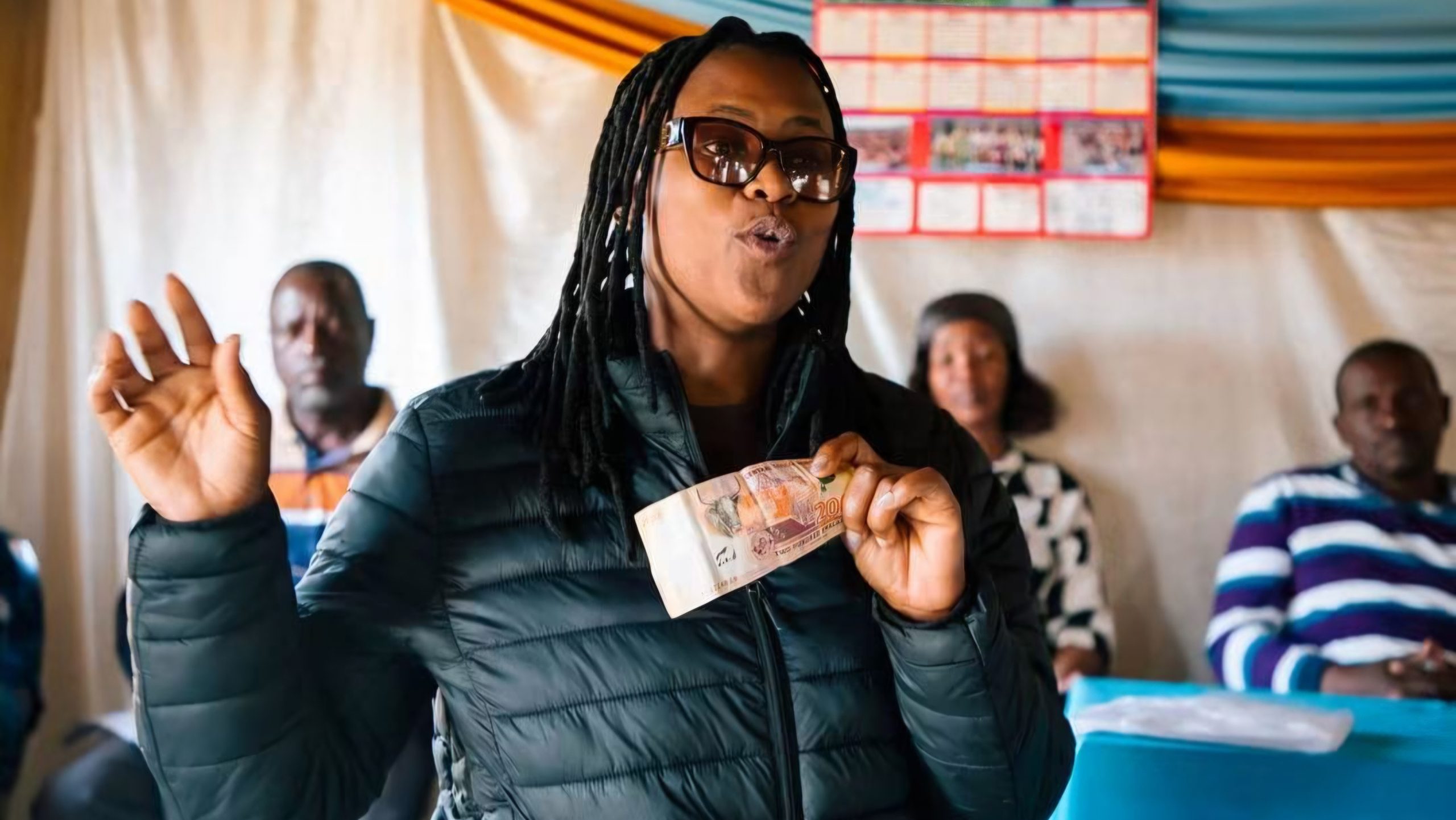
Through its ongoing Tinkhundla outreach programme, the Bank is educating members of the public about how old coins are exchanged and how the value of mutilated banknotes is determined.
Currency Processor Nontobeko Dlamini shared the information during a Vusela exercise held at Mhlangatane Inkhundla on Monday, where residents were taken through some of the rules governing damaged and older currency.
One of the key messages was that the Central Bank does not buy old coins.
Instead, old coins can be exchanged for newer coins currently in circulation, while retaining the same monetary value.
Dlamini used a 1979 E1 coin as an example, explaining that a person presenting such a coin would receive a newer circulating E1 coin minted after 2015.
“For example, if you have a 1979 E1 coin, you get a circulating E1 coin minted after 2015,” she explained.
The outreach also provided important information for people who find themselves with torn, burnt or otherwise damaged banknotes.
According to Dlamini, the amount a person can recover from a damaged note depends largely on how much of the note remains and whether important identifying features can still be seen.
A person can receive the full value of a damaged banknote when at least three-quarters of the note remains intact, all authorised signatures are visible and at least one complete serial number can still be identified.
This means that damage alone does not automatically make a banknote worthless, provided sufficient portions and security-identifying information remain available for verification.
There are also circumstances where a damaged banknote qualifies for only half of its original value.
Half-value payment applies when one complete signature and serial number remain visible on the face of the banknote.
For example, a damaged E100 banknote that meets the requirements for half-value compensation would be exchanged for E50.
However, members of the public have also been advised that not every badly damaged note can be exchanged.
Where a banknote does not meet the Central Bank’s requirements for either full-value or half-value payment, no compensation is made.
Importantly, emaSwati do not always have to travel directly to the Central Bank to seek assistance with damaged notes.
Commercial banks provide the mutilated-banknote exchange service on behalf of the Central Bank, making the service more accessible to members of the public.
The initiative forms part of a broader effort to take financial education closer to communities and ensure that people understand the financial services and systems available to them.
The Central Bank is conducting the Tinkhundla visits together with several partners, including the Eswatini Communications Commission (ESCCOM), Financial Services Regulatory Authority (FSRA) and Ombudsman of Financial Services (OFS).
Through the outreach programme, the institutions are working to strengthen financial literacy and provide communities with reliable information that can help them make informed financial decisions.
For ordinary households, the message is simple: before throwing away a damaged banknote or assuming an old coin has become useless, members of the public should first establish whether the currency can still be exchanged.
(Courtesy Pic)
Related Posts