


BY LINDELWA MYENI
MBABANE – Government has completed four school infrastructure projects worth close to E4 million at Zondwako Inkhundla, bringing improved learning facilities and staff accommodation to local schools while benefiting about 1 007 people.
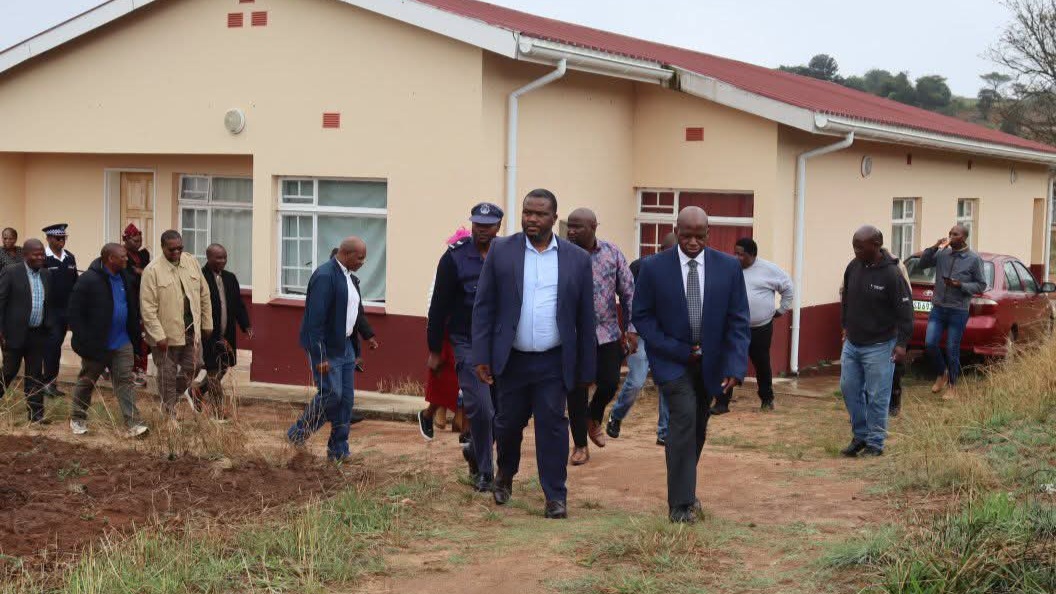
The projects, financed through the Regional Development Fund (RDF), were inspected by Minister of Tinkhundla Administration and Development S’khumbuzo Dlamini as Government assessed how community-driven development projects are changing lives at grassroots level.
The investment has delivered practical improvements across four schools in the area, ranging from teachers’ accommodation and school fencing to carpentry work aimed at creating a better environment for teaching and learning.
At Bhunya Primary School, two semi-detached staff houses have been constructed, while Bhunya Central High School benefited from carpentry fitting.

Bhunya Usuthu High School received new fencing, while a semi-detached staff house was constructed at Zondwako Primary School.
Collectively, the four projects cost close to E4 million and are expected to serve 1 007 beneficiaries.
For Government, the developments demonstrate how funds channelled through the RDF can translate into visible improvements in communities, particularly when projects respond to needs identified at local level.
Speaking during the tour, Dlamini said the occasion was about more than simply viewing newly completed buildings and facilities.
“Today is not merely about handing over completed infrastructure. It is an opportunity for us to witness first-hand how Government resources can be translated into tangible development that responds to the needs of our communities,” he said.
The minister said the RDF remained one of Government’s important mechanisms for taking development directly to communities and addressing poverty across all four regions of the country.
Through the fund, communities are able to identify priority projects that respond to challenges faced in their respective areas, allowing public resources to be directed towards development that has an immediate impact on people’s lives.
Dlamini said he was particularly pleased that the latest projects were centred on education, which remains an important foundation for the country’s long-term development.
He said development should not only be measured through major national infrastructure projects, but should also be seen in the everyday facilities that affect communities directly.
In schools, he said, this could mean improved classrooms, secure school premises, suitable accommodation for teachers and facilities that create a better environment for pupils to learn.
“The fact that these projects are directly related to schools is particularly significant as education remains one of the most important foundations for the development of our country,” Dlamini said.
The completion of staff houses at Bhunya Primary School and Zondwako Primary School is particularly significant because teacher accommodation forms part of creating an environment in which schools can function effectively.
Similarly, fencing at Bhunya Usuthu High School strengthens the school’s physical infrastructure, while the carpentry fitting undertaken at Bhunya Central High School adds to improvements intended to enhance the institution’s learning environment.
Dlamini stressed that money invested in schools should not be viewed only in terms of bricks, buildings and other physical structures.
He said such investment ultimately contributes towards the future of children and the communities in which they live.
The four Zondwako projects therefore represent Government’s wider effort to use the RDF to take development closer to people through projects identified according to community needs.
For the schools and communities benefiting from the close to E4 million investment, the improvements are visible evidence of public resources being turned into infrastructure that can serve pupils, teachers and residents for years to come.
(Courtesy Pic)