



BY GCWALISILE MHLABANE
SIDVOKODVO – Industries have been challenged to make workplace safety part of every business decision, with the Eswatini Electricity Company (EEC) warning that no target, project or business objective should come at the cost of a worker’s life.
For many workers, safety is more than a rule written in a policy document—it can mean the difference between completing a day’s work and returning home safely to their families.
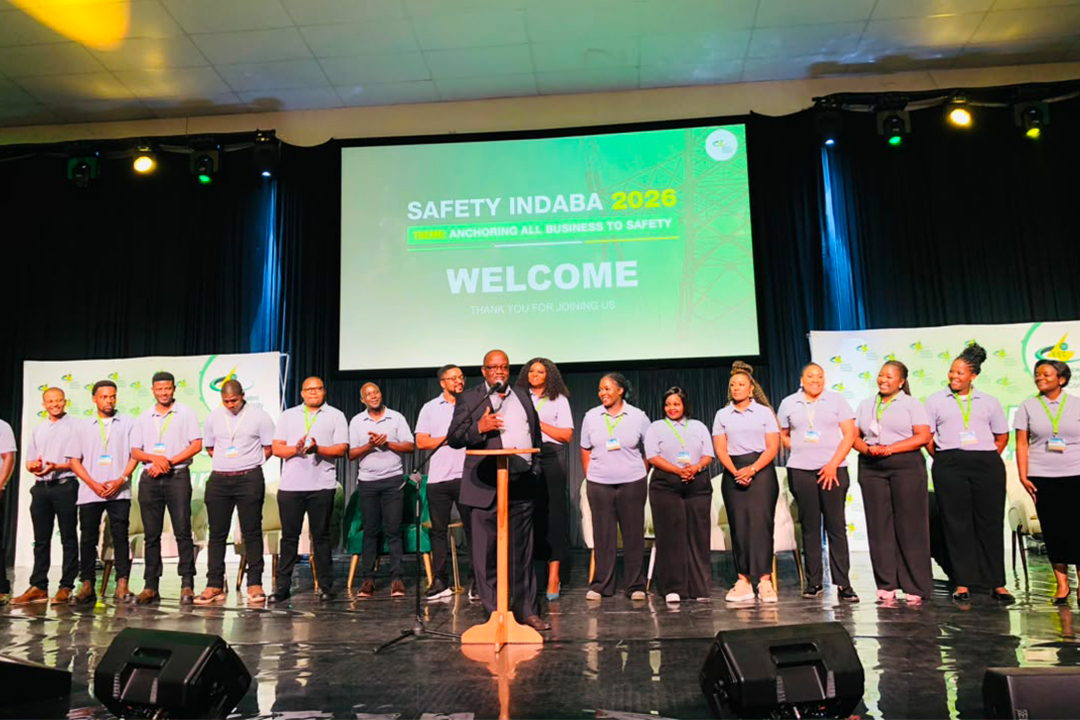
The call was made at the third EEC Safety Indaba 2026, held on September 17, 2026 at The Luke Commission Event Centre in Sidvokodvo under the theme “Anchoring All Business to Safety.”
The Indaba brought together industry leaders, safety professionals, employees, contractors and other stakeholders to examine how organisations can move beyond compliance and make safety part of everyday business.

The discussions emphasised that targets can be achieved, equipment can be repaired and projects can be completed, but a life lost because of an unsafe decision cannot be restored.
Opening the event, EEC Managing Director Mphumuzi Maziya said safety should not be treated as the responsibility of one organisation or individual, but as a collective responsibility across industries.
He said business success should ultimately be measured by whether employees return safely to their families.
“Safety has the full commitment of EEC leadership,” Maziya said. “Because at the end of every project, every target achieved, every megawatt delivered, every connection made and every business objective accomplished, there is something more important: our people going home safely to the people they love.”
Maziya said safety culture is tested when organisations face pressure, particularly when stopping unsafe work could have financial consequences.
“That is where our safety culture is truly revealed,” he said.
He said safety should influence planning, budgeting and operations instead of being considered only after decisions have already been made.
Maziya cited EEC’s 2025 Safety Culture Survey, which identified gaps in leadership accountability, communication, employee engagement and contractor management.
He said EEC had since strengthened incident reporting, introduced safety moments and enhanced contractor monitoring in response to the findings.
However, Maziya stressed that systems alone cannot create a strong safety culture.
“Policies can tell us what to do. Procedures can tell us how to do it. Regulations can tell us what is required. But culture determines what we actually do when the pressure is on,” he said.
The Indaba also expanded the safety conversation to include employees’ emotional and psychological wellbeing.
Mental Health Consultant and University of Eswatini lecturer Siyabonga Mabuza, who presented on “Psychological Safety – Trauma Recovery,” said workplace safety should extend beyond physical injuries to include mental and emotional wellbeing.
Mabuza explained that trauma can result from workplace experiences or personal circumstances and may remain hidden while an employee continues with normal duties.
“Trauma does not always look like crying,” Mabuza said.
He said trauma can manifest through burnout, fatigue, loss of enthusiasm, declining confidence and self-esteem, as well as difficulties with concentration and memory.
He also highlighted vicarious trauma, where people can be psychologically affected by another person’s traumatic experience.
Mabuza urged employees to recognise when they are struggling and seek appropriate assistance. He outlined four recovery steps: realise, recognise, respond and seek help.
The Indaba also examined how different sectors can turn safety policies into practical action during a panel discussion titled “From Policy to Practice – How Different Sectors are Anchoring Safety into Business Strategy.”
Eswatini Royal Insurance Corporation Risk Manager Portia Hlophe highlighted proactive risk management as an important approach to reducing workplace injuries and operational incidents.
“A good safety programme reduces injuries and incidents in the workplace,” Hlophe said.
She said strong safety standards can protect employees while reducing workplace accidents and related claims.
The discussions reinforced the need for safety to be reflected in leadership decisions, workplace systems and organisational culture across industries.
Maziya said EEC ultimately wants to build an interdependent safety culture where workers do not simply protect themselves but also look out for the safety of their colleagues.
“We are not policing one another. We are protecting one another,” he said.
He said the success of the Safety Indaba would not be measured by the quality of the discussions alone, but by the changes organisations make afterwards.
“Let us not merely talk about safety. Let us anchor it into every decision we make and every action we take,” Maziya said.
The message from the Indaba was therefore clear: workplace safety cannot remain a policy requirement that exists on paper. It must become part of how organisations lead, plan, operate and make decisions, with the protection of human life remaining at the centre of business.
#EEC #SafetyIndaba2026 #WorkplaceSafety #SafetyFirst #Eswatini #OccupationalSafety #SafetyCulture #EmployeeWellbeing #RiskManagement #BusinessSafety


