


BY GCWALISILE MHLABANE
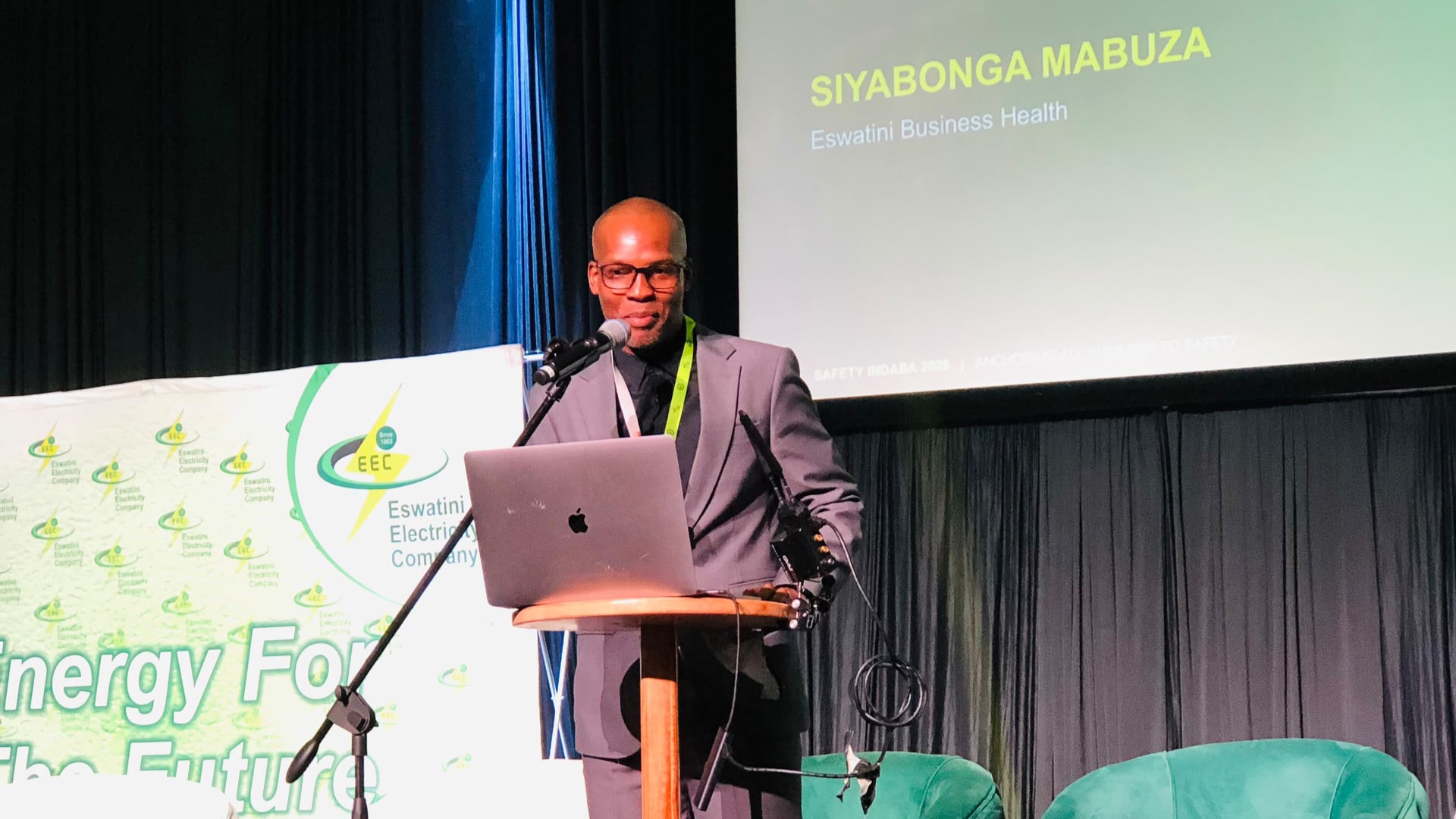
SIDVOKODVO – “Taking care of yourself is one of the greatest gifts that you can give to yourself and your organisation.” This was the message from Mental Health Consultant and University of Eswatini lecturer Siyabonga Mabuza as he challenged employees to take their psychological wellbeing as seriously as physical safety at work.
Mabuza was speaking during the Eswatini Electricity Company (EEC) Safety Indaba 2026, On September 17, 2026, at The Luke Commission Events Centre in Sidvokodvo, where he presented on “Psychological Safety – Trauma Recovery” under the theme “Anchoring All Business to Safety.”
The discussion placed hidden workplace trauma at the heart of safety, highlighting how employees can continue performing their duties while silently struggling with emotional and psychological challenges.
Mabuza explained that trauma can result from workplace experiences as well as personal circumstances and may accumulate over time until an individual reaches a point where they can no longer cope.

He urged employees to regularly check in with themselves by asking whether they are okay, whether they are coping and whether their coping mechanisms are helping them become better versions of themselves.
“Trauma does not always look like crying,” Mabuza said.
He explained that trauma can manifest through burnout, fatigue, exhaustion, loss of enthusiasm, reduced confidence, declining self-esteem and difficulties with concentration and memory.
Employees may also withdraw, avoid certain tasks or meetings or struggle to adjust to changes in their roles and responsibilities.
Mabuza cautioned that such behaviour should not automatically be viewed as poor performance or a lack of commitment, as it could be a sign that an employee is dealing with unresolved trauma.
He also highlighted vicarious trauma, where a person is psychologically affected after witnessing or learning about another person’s traumatic experience, even though the event did not happen directly to them.
According to Mabuza, workplace trauma may also be associated with bullying, harassment, difficult relationships, toxic workplace behaviour and disappointment linked to changes in roles or missed opportunities.
“Learn to accept people as who they are and adjust yourself,” he advised, encouraging employees to focus on what they can control instead of constantly trying to change other people.
Mabuza further called on organisations to become more trauma-informed when supporting employees who are recovering from difficult experiences.
He said workplaces should provide clear structures, predictable processes and clear performance expectations because employees dealing with trauma may respond better to stability than unexpected changes.
He also cautioned managers and colleagues against telling people experiencing trauma to simply “be strong”, saying they should instead be given appropriate support and space to recover.
The mental health consultant encouraged employees to seek professional assistance when they realise they are no longer coping, noting that counsellors can provide support while human resources departments can assist employees in accessing appropriate services.
Mabuza outlined four important steps in the recovery process — realise, recognise, respond and seek help.
He urged employees not to spend more energy hiding their struggles than addressing them, stressing that acknowledging a problem is an important part of recovery.
He said organisations also have a responsibility to ensure that employees are not re-traumatised through insensitive treatment, adding that respect and kindness among managers and colleagues can contribute to a safer working environment.
Mabuza said safety should ultimately begin with individuals taking an honest inventory of their own wellbeing and being willing to seek help when necessary.
“Try to talk to someone,” he urged, emphasising that asking for help should not be viewed as a weakness.
He concluded by reminding participants of the responsibility employees have to themselves and their organisations.
“You owe us the best version of yourself,” Mabuza said.