


BY MFANUFIKILE KHATHWANE
LOBAMBA – Minister of Finance Neal Rijkenberg says businesses that deliberately refuse to comply with tax laws should be shut down to allow compliant operators to take their place in the market.
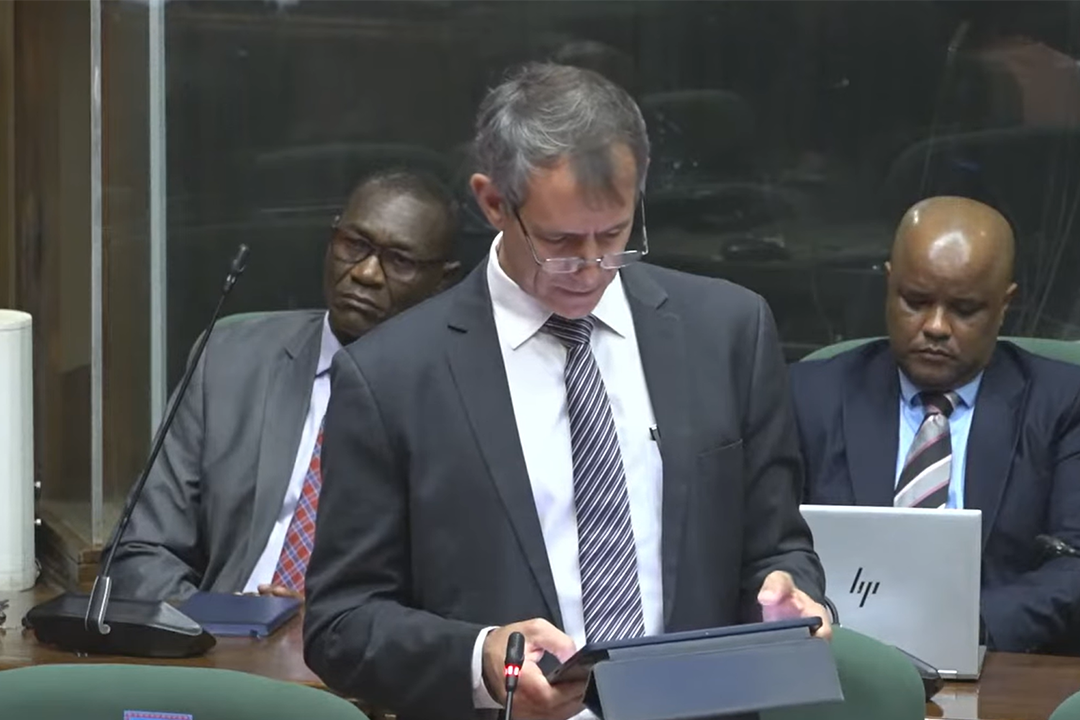
The minister made the remarks on March 9, 2026, during the House of Assembly Portfolio Committee budget debate for the Ministry of Finance, where Members of Parliament sought clarity on tax enforcement and support for the elderly.
The minister uttered this statement when responding to Mayiwane Member of Parliament Sicelo Khunga Nkhosi Dlamini, who sought clarity on whether businesses that refuse to comply with paying taxes should be closed so that others willing to operate properly can reopen them.
The minister stressed that if a company deliberately cheats the tax system, authorities must intervene decisively.

“If ultimately you do not want to pay tax and you are going to cheat the tax system, ERS needs to shut you down. They need to close your bank account and throw the law at you,” said Rijkenberg.
The minister explained that tax evasion creates an unfair environment for businesses that comply with the law, as those avoiding tax gain an unjust competitive advantage.
He added that closing non-compliant businesses does not mean economic activity will stop.
“If someone shuts down, it does not mean no one will ever do that business again. Someone else will take that space and hopefully the next person will operate properly and pay tax,” he said.
Rijkenberg emphasised that taxes are essential for government to fund services and infrastructure demanded by the public.
“We cannot allow businesses not to pay tax while people are demanding roads and services from government. It is unfair when one business pays tax and another does not,” he said.
During the debate, the minister also explained how Value Added Tax (VAT) works, noting that the money collected through VAT does not belong to the business.
He said businesses add the tax to their invoices and later remit it to government after deducting VAT paid on their own purchases.
“When you invoice a client, you add the VAT on top. That money belongs to the taxman, not the company,” he explained.
Rijkenberg further defended the performance of ERS, describing it as a high-performing parastatal carrying out a difficult task.
“They have a tough job. They are not always liked, but they do their work with integrity,” he said.
Meanwhile, the minister also addressed concerns about the elderly grant following questions raised by Mafutseni Member of Parliament Sabelo Mtsetfwa.
Mtsetfwa argued that if the grant could not be increased in the current financial year, government should ensure it rises to more than E1,000 in the next budget, saying senior citizens deserve meaningful support.
Rijkenberg acknowledged the concern and said government also wished to improve the grant but faced heavy financial pressure in the current budget.
He explained that much of the available funding had been absorbed by salary review obligations, including a 4.5 per cent adjustment and back pay for public servants.
The minister, however, indicated that there could be room to improve the grant in the next financial year.
He said government was considering committing at least an additional E100 to the monthly grant for elderly beneficiaries in the next budget cycle.
“I feel strongly about supporting the elderly. If we skip this year, next year we should at least add E100 as a minimum,” he said.
Rijkenberg noted that such an increase would require about E172 million annually due to the large number of beneficiaries.
He expressed optimism that the next budget might create space for improvements since government would no longer be dealing with the current salary review and back pay pressures.
The minister said government would continue balancing social support needs with the country’s fiscal realities.
#TaxCompliance #ERS #BudgetDebate