


BY GCWALISILE MHLABANE
MANZINI– For an Eswatini business hoping to place its products on shelves beyond the country’s borders, producing something good is only part of the journey.
The product must also satisfy the quality, safety and technical requirements demanded by buyers and regulators in the market it hopes to enter.
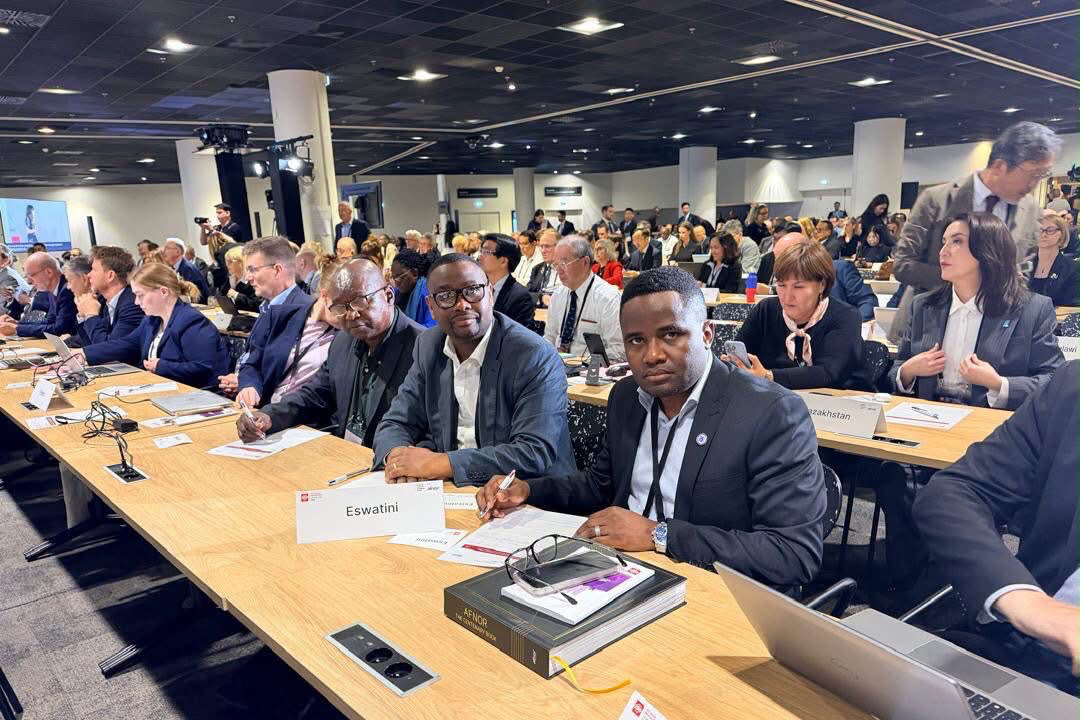
It is against this backdrop that the Eswatini Standards Authority (ESWASA) has taken the country’s interests to Paris, France, where some of the world’s leading standards experts, policymakers, businesses and regulators have gathered for the 2026 International Organization for Standardization (ISO) Annual Meeting.
Led by Executive Director Ncamiso Mhlanga, the ESWASA Executive Committee is participating in the five-day gathering, which runs from September 28 to October 2, 2026.

For Eswatini, the discussions are more than another international conference.
They touch directly on the ability of local manufacturers, farmers, processors and service providers to prove that what they produce can meet recognised international requirements and compete confidently in foreign markets.
International standards provide common benchmarks for areas such as product quality, safety, performance and management systems.
For a local company seeking regional or international customers, meeting the required standards can make the difference between having a good product and having a product that a foreign buyer is prepared to accept.
The Paris meeting is being held under the theme “Building trust in a changing world”, with discussions examining how standards can support global trade, technological change, responsible innovation and stronger economies.
ISO confirmed that the meeting, hosted in Paris from September 28 to October 2, is bringing together global leaders, policymakers, industry representatives, civil society and standards experts to examine challenges ranging from artificial intelligence and cybersecurity to climate resilience and international trade.
For Eswatini businesses, this growing international standards environment is particularly important as companies seek opportunities beyond the relatively small domestic market.
A producer may have the capacity to manufacture more goods, but reaching customers in South Africa, elsewhere in Africa or further abroad may require evidence that those goods comply with recognised technical, quality or safety standards.
That is where the work of a national standards body such as ESWASA becomes important.
By participating in international standards discussions, ESWASA is able to keep abreast of developments that may eventually affect local companies, while also exchanging technical knowledge with other standards institutions.
The authority is also participating in the 60th meeting of the ISO Committee on Developing Country Matters, known as ISO/DEVCO.
The discussions have focused on challenges facing developing economies, including trade, food safety, climate change, artificial intelligence and building the technical capacity required to implement standards.
This has particular relevance for smaller economies such as Eswatini, where businesses may have ambitions to export but face technical and compliance requirements that can become barriers if they are not understood early enough.
Strengthening domestic knowledge of international standards can therefore help companies prepare before approaching new markets rather than discovering costly requirements only after attempting to export.
ISO itself has grown into a vast international standards network. The organisation says it brings together 170 national standards bodies and has published more than 25 000 International Standards and related documents, covering sectors ranging from agriculture, healthcare and food safety to technology.
Another major subject in Paris has been digital transformation.
Delegates have been exposed to technologies and tools changing the way standards are developed and implemented, while discussions have also examined cybersecurity and the rapidly expanding use of artificial intelligence.
Quality management has received considerable attention as well.
The meeting comes shortly after ISO launched ISO 9001:2026, the latest edition of one of the world’s most widely used quality management standards.
According to ISO, more than one million organisations worldwide use the ISO 9001 framework. The 2026 edition is intended to help organisations strengthen performance, resilience, customer confidence and their ability to operate within increasingly interconnected supply chains.
For an Eswatini company seeking to grow, such standards are not simply certificates to hang on an office wall.
They can influence how a company manages its operations, maintains consistency, responds to customer expectations and demonstrates its credibility to potential business partners.
The benefits can also reach consumers.
When products and services are produced against recognised standards, consumers are provided with clearer benchmarks on issues such as quality, safety and reliability.
Trading partners, meanwhile, can have greater confidence that products supplied by an Eswatini company meet recognised requirements.
Opening the General Assembly, ISO President Dr Khaled Soufi emphasised that trust in the modern global environment could no longer simply be assumed, but needed to be built and sustained through cooperation.
That message carries particular significance for international commerce.
A buyer thousands of kilometres away may know little about an individual Eswatini manufacturer. Recognised standards provide one way of demonstrating that a business operates according to requirements understood beyond its home market.
World Trade Organization Deputy Director-General Jean-Marie Paugam also highlighted the importance of predictability, international cooperation and standards in strengthening confidence across borders.
The discussions come at a time when businesses are navigating changing technologies, increasingly complex supply chains, climate pressures and different regulatory requirements across markets.
For Eswatini, ESWASA’s presence in Paris therefore provides an opportunity to remain connected to conversations that could shape the environment in which local businesses operate in the years ahead.
The real value of the engagement, however, will be seen when knowledge gained internationally is brought home and translated into practical support for businesses.
That includes helping producers understand the standards applicable to their industries, strengthening technical capacity and preparing local companies to meet requirements before they knock on the doors of regional and international buyers.
For an entrepreneur producing food, manufacturing goods or supplying specialised services in Eswatini, the global market may appear far away.
But the technical requirements governing those markets are increasingly relevant at home.
The stronger Eswatini becomes at helping its businesses understand and meet recognised international standards, the better prepared those businesses will be to compete for customers well beyond the Kingdom’s borders.
(Courtesy Pic)