


BY SIFISO NHLABATSI
MBABANE – Eswatini is looking to draw lessons from Zimbabwe’s agricultural development model as the Kingdom seeks to strengthen food security, climate resilience and rural livelihoods.
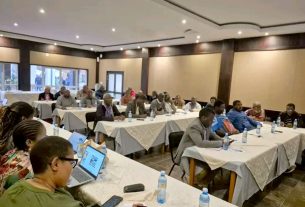
This emerged during Agriculture Minister Mandla Tshawuka’s multi-day benchmarking visit to Zimbabwe, where he led a high-level Eswatini delegation on a tour of agricultural projects in the Midlands and Mashonaland East provinces.
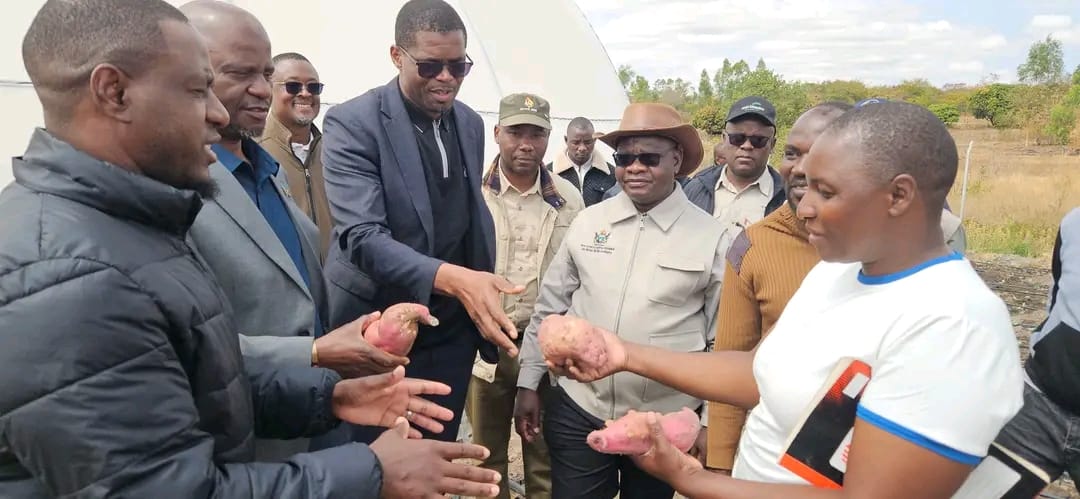
According to Zimbabwe’s Ministry of Agriculture, Mechanisation and Water Resources Development, the delegation’s visit focused on Zimbabwe’s approaches to climate-smart agriculture, food production and rural economic development.
In Mashonaland East, Tshawuka was accompanied by Zimbabwe’s Agriculture Permanent Secretary Professor Obert Jiri and Mashonaland East Minister of State Itai Ndudzo during a tour of agricultural projects in Goromonzi.

The Zimbabwean Ministry said the delegation’s first stop was Gosha Village Business Unit (VBU), where the visitors were introduced to a community-based agricultural enterprise designed to operate on a commercial basis.
According to the ministry, VBUs operate as registered companies under the name of the village head, with the objective of creating profitable and business-minded enterprises within rural communities.
At Gosha VBU, the ministry said 23 members are divided into two teams and have planted 1 000 cabbages, with nearby schools and community members identified as their primary market.
The model attracted the attention of the Eswatini delegation as it demonstrates an approach to organising rural residents around productive agricultural enterprises rather than limiting farming to household consumption.
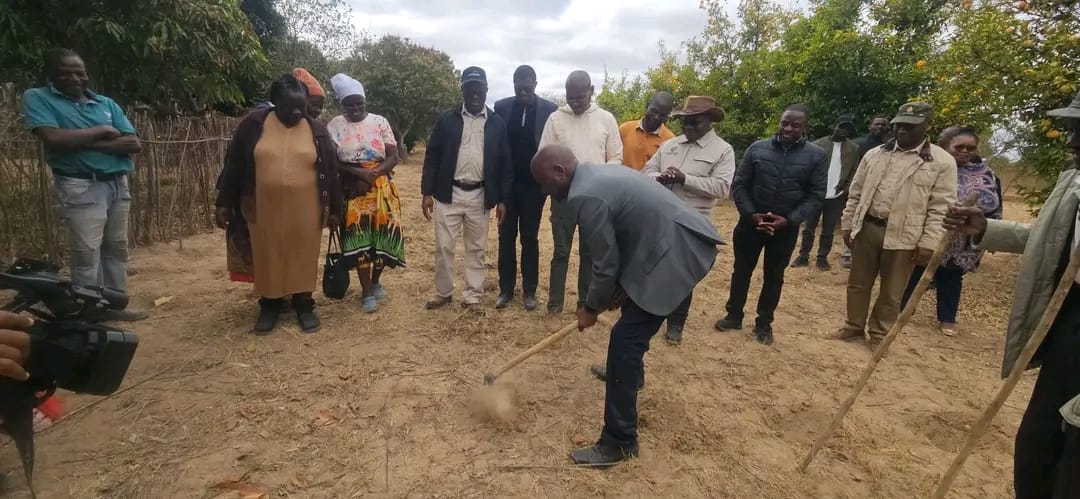
The delegation subsequently toured Pfumvudza farming plots, where preparations were already under way.
Zimbabwean officials used the visit to encourage farmers to embrace conservation agriculture ahead of anticipated drought conditions.
The Pfumvudza/Intwasa programme is one of Zimbabwe’s interventions aimed at supporting smallholder farmers to produce food using conservation agriculture techniques, particularly in an environment of increasing climate variability.
The Zimbabwean Ministry said the visit provided the Eswatini delegation with an opportunity to assess how such approaches could contribute to climate-resilient agriculture and food security.
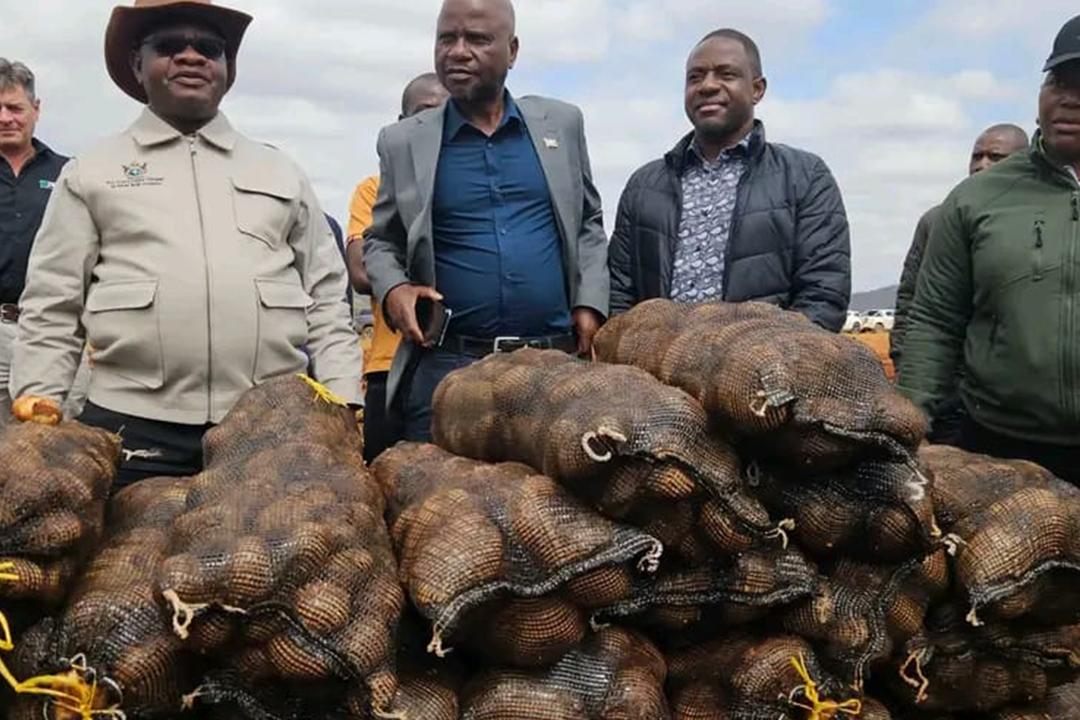
The delegation also visited Mount Lothian Farm, where potatoes and wheat are being cultivated.
According to the Zimbabwean Ministry of Agriculture, the farm produced close to 84 tonnes of potatoes last year and currently has 95 hectares under potato production.
The visit to Mount Lothian exposed the Eswatini delegation to Zimbabwe’s commercial farming model and its potential contribution to domestic food supplies.
The Mashonaland East tour formed part of a wider benchmarking mission that also took the delegation to agricultural operations in Zimbabwe’s Midlands Province.
According to information released by Zimbabwean authorities, the delegation visited Precabe Farm in Kwekwe, where it observed large-scale production of winter wheat, barley, maize, soya beans and horticultural crops.
The delegation also toured Grain Marketing Board silos in Kwekwe to gain an understanding of grain storage, agro-processing and strategic grain reserve management.
The Zimbabwean Ministry of Information, Publicity and Broadcasting described the visit as part of growing agricultural cooperation between Zimbabwe and Eswatini, with Tshawuka expressing interest in lessons that could be adapted to strengthen rural livelihoods and food security in the Kingdom.
Tshawuka said the visit provided an opportunity for the two countries to exchange knowledge and experiences on agricultural productivity.
Zimbabwean officials, meanwhile, said the interest shown by Eswatini reflected regional recognition of Zimbabwe’s agricultural initiatives and its efforts to integrate smallholder farming, commercial agriculture and rural development.
For Eswatini, the timing of the benchmarking mission is significant as the country continues to pursue food sovereignty and increased sustainable agricultural productivity.
The Kingdom’s Ministry of Agriculture identifies food sovereignty and self-sufficiency, employment creation and the commercialisation of agriculture among its strategic priorities.
The Zimbabwean experience therefore provides several areas for consideration, particularly in strengthening community-based agricultural enterprises, promoting conservation farming and expanding commercial production.
(Courtesy Pic)
#Eswatini #Zimbabwe #Agriculture #FoodSecurity #ClimateSmartAgriculture #MandlaTshawuka #Pfumvudza #VillageBusinessUnits #RuralDevelopment #FoodSovereignty