


BY THEMBA ZWANE
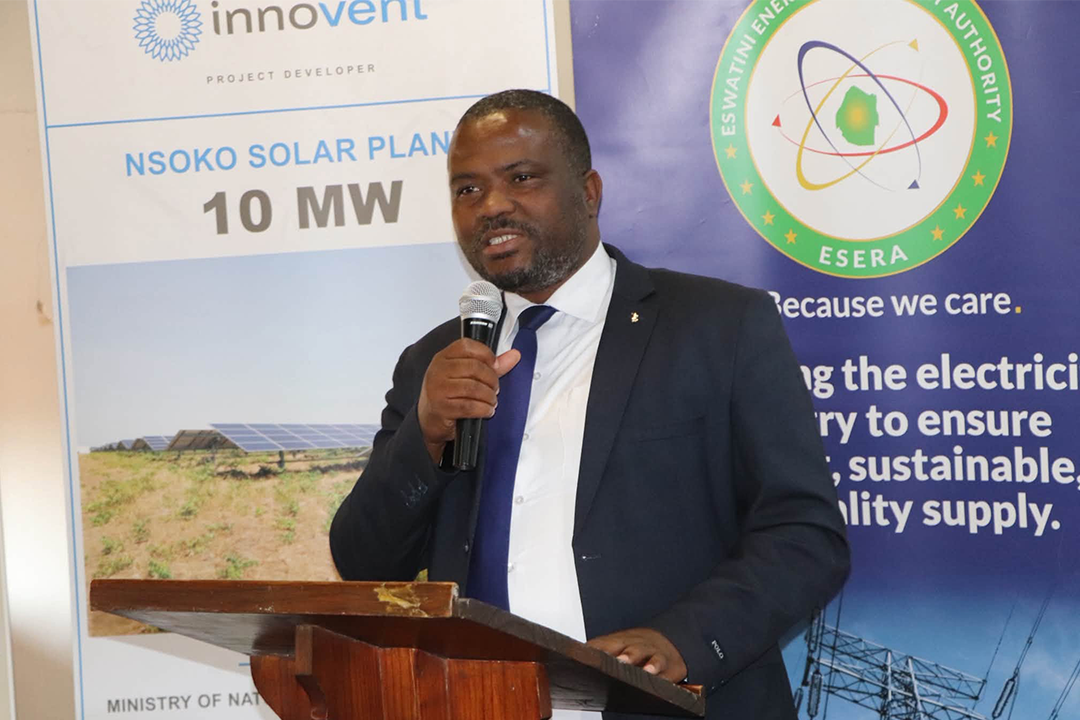
MBABANE – Eswatini’s push to strengthen its energy security through locally generated renewable power has attracted fresh international attention, with global renewable-energy publication SolarQuarter highlighting the Kingdom’s launch of the 10MW Nsoko Solar Power Plant.
The development places Eswatini’s renewable-energy drive among a number of major solar developments currently taking place across Africa, according to SolarQuarter’s Africa Weekly report published on August 12.
The publication described the Nsoko project as an important addition to Eswatini’s domestic renewable-generation capacity as the Kingdom works to diversify its electricity supply and reduce reliance on imported power.
SolarQuarter reported that the project is expected to contribute towards a more resilient and sustainable electricity system, while helping Eswatini make greater use of its own renewable-energy resources.

The international coverage comes as Eswatini accelerates efforts to increase domestic electricity generation and reduce the country’s exposure to electricity imports.
The 10MW Nsoko Solar Power Plant is part of the country’s wider expansion of utility-scale solar generation.
Its significance extends beyond the additional megawatts. Increasing locally generated solar power gives Eswatini another avenue to strengthen energy security at a time when reliable electricity supply remains critical to economic activity, industry and investment.
The Nsoko project is also part of a broader renewable-energy programme being driven by the Eswatini Energy Regulatory Authority (ESERA), which has been advancing independent power producer projects to increase private-sector participation in electricity generation.
Eswatini’s solar ambitions include a 75MW solar procurement programme, under which several projects have been planned or awarded.
The country’s renewable-energy pipeline has also attracted international attention previously. In December 2025, Green Building Africa reported on the launch of the 20MW Tsamela Solar PV Plant, describing it as the first project under ESERA’s 75MW solar procurement programme.
The Tsamela project is expected to generate approximately 47,788MWh in its first year of operation, with an estimated reduction of about 4.8 per cent in Eswatini’s electricity imports based on 2025 electricity data.
The growing solar programme is particularly significant for Eswatini because the Kingdom has historically relied heavily on electricity imports to meet domestic demand.
SolarQuarter said the Nsoko development could help reduce exposure to imported electricity while supporting a more resilient national power system.
The development is therefore not simply an environmental initiative. It forms part of a broader national economic and energy-security strategy aimed at increasing the amount of electricity produced within Eswatini.
The country’s renewable-energy plans envisage a substantial expansion of solar generation in the coming years. The Africa Solar Industry Association’s 2026 outlook lists Eswatini’s objective of achieving 50 per cent renewable energy in its power mix by 2030, alongside plans for significant expansion of centralised solar and wind generation.
The latest SolarQuarter report is significant because Eswatini was featured alongside much larger African renewable-energy markets, including Kenya, Uganda, Zambia and Tanzania.
The coverage puts the Kingdom’s energy transition into an international context and highlights the growing role of Eswatini in Africa’s renewable-energy expansion.
With projects such as Nsoko and Tsamela advancing, Eswatini is seeking to move from being predominantly dependent on imported electricity towards a system in which a greater share of its power is generated domestically from renewable resources.
For the Kingdom, the expansion of solar power could ultimately mean greater energy independence, improved supply resilience and a stronger foundation for economic growth.
#Eswatini #SolarEnergy #RenewableEnergy #EnergySecurity #NsokoSolar #SolarPower #CleanEnergy #EnergyTransition #GreenEnergy #Electricity #ESERA #SustainableDevelopment #AfricaEnergy