


- Inflation Declines as Economic Stability Improves
- Private Sector Credit Growth Boosts Confidence
- Strong Financial Sector Supports 2026 Outlook
BY MBONGENI NDLELA
MBABANE – Eswatini’s economy is projected to remain on a positive growth path in 2026, supported by improving financial stability, moderating inflation, stronger private sector activity and rising investor confidence.
According to the Central Bank of Eswatini’s Monthly Statistical Release for March-April 2026, the country continues to record encouraging economic indicators despite global economic uncertainties.
The report highlights that inflationary pressures have continued easing, creating a more stable environment for households, businesses and investors. The positive outlook comes as the country also records stronger private sector credit growth and improved financial sector liquidity.
The Central Bank recently maintained the discount rate at 6.75 percent, a move aimed at balancing economic growth while safeguarding price stability.

In its latest monetary policy communication, the Central Bank said the domestic economy remained resilient.
“The domestic economy is expected to maintain a positive growth trajectory supported by improved economic activity across key sectors,” reads part of the Central Bank assessment.
The report further indicates that private sector credit continued expanding during the review period, a sign that businesses and consumers are increasingly accessing financial support for investment and consumption.
Economic analysts say the growth in credit extension reflects improving confidence within the economy.
The Central Bank statistical release showed that commercial banks remained adequately capitalised and liquid, strengthening the country’s financial system and positioning Eswatini favourably for sustained growth.
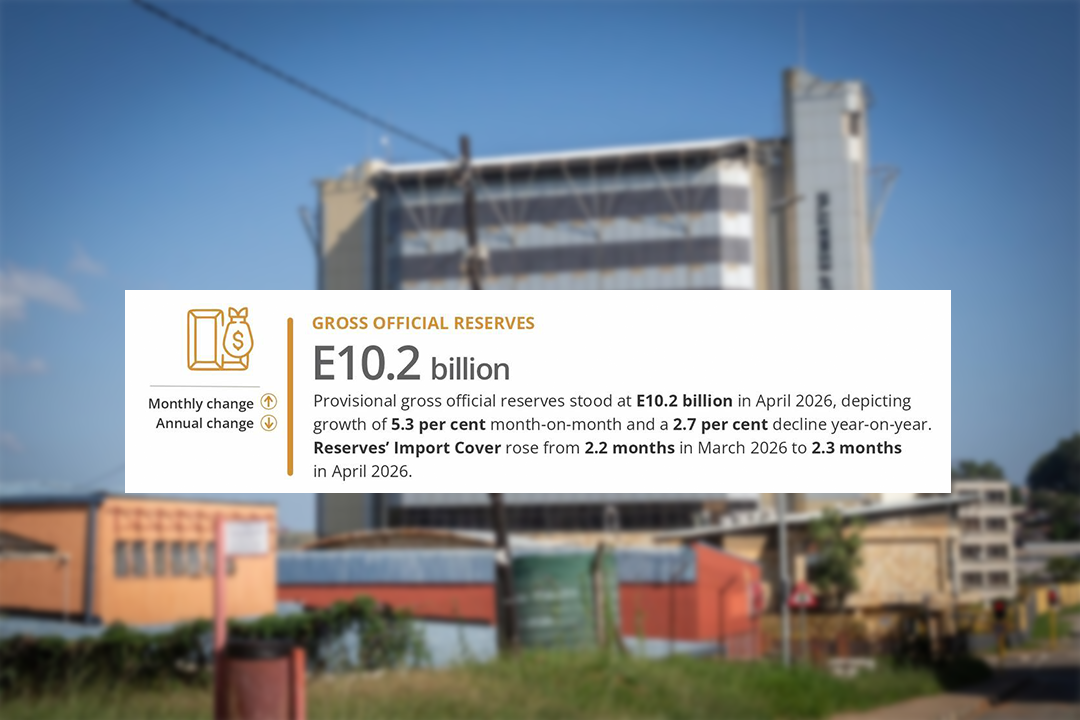
Foreign reserves also remained at comfortable levels, providing continued support to the local currency and helping cushion the economy against external shocks.
The improving inflation outlook is expected to bring relief to consumers and businesses as prices stabilise.
According to recent inflation projections published by the Central Bank, inflation is expected to remain manageable in 2026 following gradual declines recorded over recent months.
This development is expected to support consumer spending, business expansion and economic recovery.
Government’s ongoing infrastructure development projects, digital transformation programmes and support for entrepreneurship are also expected to contribute positively towards economic performance.
His Majesty King Mswati III previously announced that Eswatini was entering a “transformative era of digital connectivity” following major investments in ICT infrastructure, fibre connectivity and innovation.
The Central Bank has also maintained optimism regarding the country’s medium-term economic prospects.
“Financial sector stability remains strong and supportive of economic growth,” the Bank stated in its recent economic reviews.
The positive projections come at a time when Eswatini continues attracting investor interest in sectors such as manufacturing, energy, mining, agriculture, ICT and financial services.
Recently, government intensified efforts to market Eswatini as an investment destination through international engagements and investment promotion initiatives.
The continued stability in the banking sector, combined with prudent monetary policy and ongoing economic reforms, is expected to strengthen Eswatini’s economic competitiveness within the region.
Analysts believe that if current trends continue, Eswatini could record stronger economic expansion over the next few years while creating more opportunities for businesses and young entrepreneurs.
The Central Bank’s latest financial projections paint a picture of an economy steadily rebuilding momentum, supported by policy stability, improved financial conditions and growing confidence in the country’s economic future.
Sources: Central Bank of Eswatini Monthly Statistical Release March-April 2026, Monetary Policy Statements and Inflation Forecast Reports.