


BY SIFISO NHLABATSI
MBABANE- Executors should only be paid after completing the winding up of an estate.
This is one of the key recommendations made by the Judicial Commission of Inquiry into allegations of impropriety, maladministration and abuse of power at the Office of the Master of the High Court.
The Commission found that executors were in some cases being paid before completing their work and without submitting reports detailing the work they had performed.
“The Commission heard and saw in certain files that there was high turnover rate of executors who were paid before they finalized the winding up of an estate and without submitting a report of work done,” the report states.
The Commission said the practice was a serious concern because some estate files appeared to become sources of income for executors without corresponding completion of the work required to finalise the estates.

“In other instances, it appeared that certain files were feeding troughs for executors who simply made a quick buck out of the estate late files,” the Commission said.
The findings have prompted the Commission to recommend that the proposed Administration of Estates Bill clearly prescribe how executors and interim curators should be remunerated.
Under the proposed framework, the Master would retain discretion to reduce, increase or disallow an executor’s remuneration in circumstances where the executor fails to satisfactorily discharge his or her duties.
The Commission further recommended that legislation should specifically provide that an executor should not be entitled to receive remuneration before completing the work or until the estate has been distributed.
It said executor compensation should ideally be paid once the executor had finalised the winding up of the estate.
The Commission said several factors should be considered when determining the amount payable to an executor.
These include the value of the estate, the care and responsibility involved, the amount of time spent performing the executor’s duties, the skill and ability demonstrated by the executor and the success achieved in administering the estate.
The Commission’s findings also raised questions about the existing system for determining executor fees.
It noted that the Master had issued a directive that was not in line with Schedule E and questioned the authority of the Master to issue the schedule.
The Commission also found that the Master appeared not to be taxing executor fees or remuneration as required by the law.
In some estates, executors were found to be claiming both fees and remuneration.
The Commission identified this as a potential conflict of interest because an executor administering an estate may also be called upon to process his or her own fees as counsel for the estate.
“This clearly creates a conflict of interest which should be avoided at all times,” the Commission said.
The Commission’s concerns come against the background of a broader examination of the administration of estates at the Master’s Office.
The inquiry found that delays in winding up estates were among the administrative shortcomings contributing to complaints from beneficiaries and other people dealing with the office.
The Commission recommended that the Master should ensure executors provide periodic reports before submitting the final Liquidation and Distribution Account.
The proposed payment system would therefore link an executor’s remuneration more closely to the completion and quality of the work undertaken.
The Commission also recommended that the legislation governing estates be reviewed and modernised.
It said the Administration of Estates Act of 1902 and other laws governing the Master’s Office were largely enacted during the colonial era and did not adequately address several issues affecting modern estate administration.
The concerns over executor payments were accompanied by findings about the collection of fees by the Master’s Office itself.
The Commission found that Schedule E of the Administration of Estates Act was outdated and contained fees as low as 50 cents.
It recommended that the schedule be amended to increase the fees payable.
The Commission also raised concerns about how Master’s Office fees were being collected.
Section 120 of the Administration of Estates Act provides that the Master should collect prescribed fees through revenue stamps affixed to relevant documents.
However, during visits to various Master’s Office branches, the Commission found that fees were being collected in cash and kept in drawers using a form of receipting procedure that was not known to Government.
The Commission said the Master should ensure that officers were aware of the requirements of Section 120 and establish a uniform procedure for receipting fees for the benefit of the Consolidated Fund.
More serious concerns emerged over the use of unauthorised general receipt forms.
The Commission discovered that members of the public were being issued receipts titled “temporal general receipt” for money paid to the Master’s Office.
According to the report, the receipts did not have serial numbers and were not issued in duplicate as required by Government financial instructions.
The Commission listed estates and amounts of money that were reportedly missing as a result of the use of these unauthorised receipts.
It also noted that the Master had reported the loss suffered by Government through the use of the forms to the police.
The findings on executor remuneration and the collection of Master’s fees form part of wider recommendations aimed at strengthening financial controls at the Master’s Office.
The Commission recommended better management of estate finances and stronger checks and balances around estate late accounts to safeguard beneficiaries.
It also recommended that electronic funds transfers be explored as part of improving payment systems.
The Commission further recommended stronger oversight of executors and better management of estate files.
It proposed computerisation of the Master’s Office file management system and periodic reporting by executors before final accounts are submitted.
The Commission’s recommendations are contained in its report on the inquiry which was established under Section 139(5) of the Constitution.
The hearings began on January 22 2024 and continued intermittently until May 2025 with the Commission sitting until November 14 2025.
#Eswatini #MastersOffice #Executors #EstateAdministration #JudicialCommission #EstateManagement #Accountability #FinancialControls #GoodGovernance #Justice #LegalReforms #Transparency
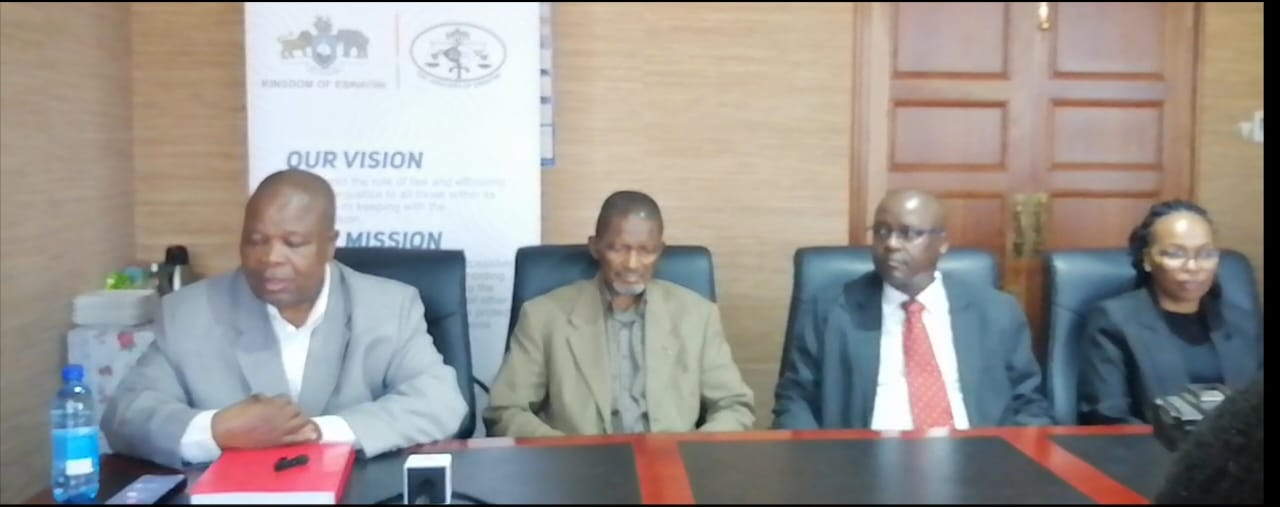
(Courtesy Pic)