



BY THEMBA ZWANE
MBABANE– Eswatini’s cereal production is facing pressure from erratic rainfall, but new international research suggests that the country’s farmers are increasingly adapting to climate change, offering hope that stronger climate-smart farming practices could help protect food production in the years ahead.
The warning comes from the latest Food and Agriculture Organization (FAO) Global Information and Early Warning System (GIEWS) country brief on Eswatini, released on August 25, 2026.
The FAO says erratic rainfall is expected to curb the country’s 2026 cereal production, while maize import requirements are expected to rise moderately during the 2025/26 marketing year. However, the situation is not without a positive side.
A new study published in Frontiers in Sustainable Food Systems on August 18, 2026 found that farmers in the drought-prone Lubombo Region are already adopting a range of measures to cope with changing weather conditions.

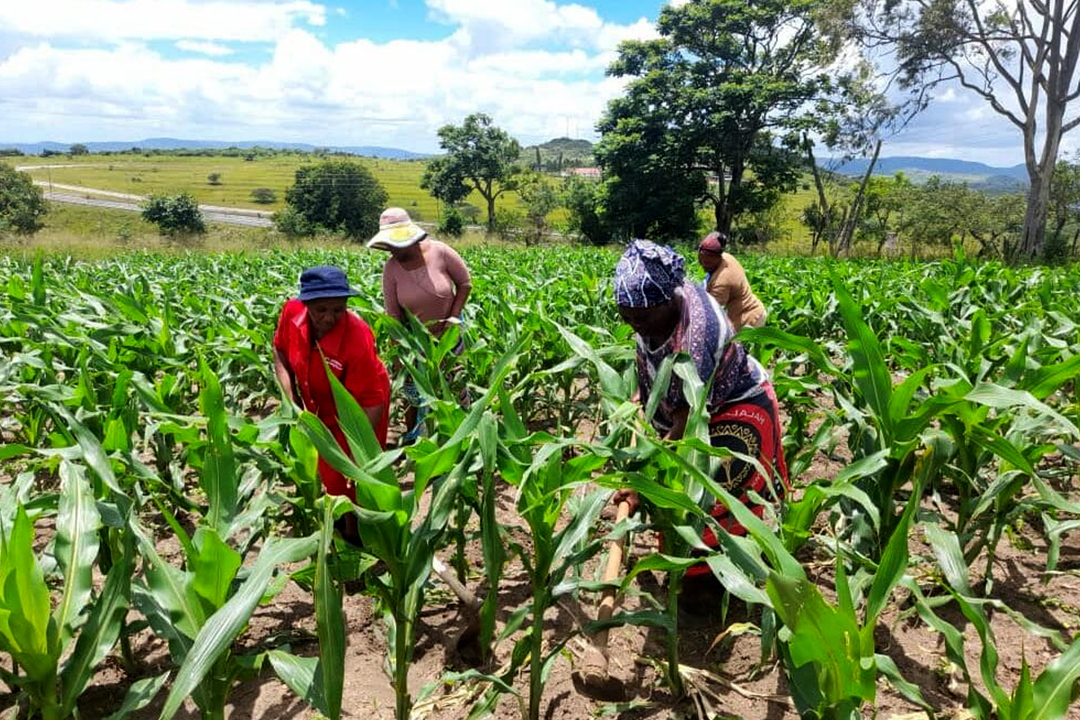
The study, based on research involving 859 households, found that crop diversification is being practised by 80.1 per cent of households, while 73.9 per cent have changed planting dates and 68.6 per cent are using drought-tolerant crops.
These findings provide an important counterpoint to the latest FAO warning: while unpredictable rainfall is putting pressure on production, farmers are not simply standing still. They are changing the way they farm.
The research found that climate-change awareness, agricultural training, access to extension services and participation in farmer groups all increase the likelihood that households will adopt adaptation measures.
The researchers said these approaches can strengthen household resilience and help sustain agricultural production and food and water security under increasing climate pressure.
ROOM TO BUILD RESILIENCE
The findings point to an opportunity for Eswatini to turn the current agricultural challenge into an acceleration of climate-smart farming.
According to the study, small-scale irrigation and agroforestry are among the measures farmers consider highly effective, although their adoption remains relatively low.
Only 19.5 per cent of surveyed households were using small-scale irrigation, while 23.1 per cent were practising agroforestry.
The gap suggests that there is significant room to expand farming methods that can make production less dependent on unpredictable rainfall.
The study identifies access to finance, credit, information and extension services as some of the major barriers preventing wider adoption.
This provides a clear roadmap for intervention: improving farmers’ access to climate information, agricultural training, finance, irrigation and extension support could enable more households to adopt the practices already proving useful.
NOT A STORY OF DEFEAT
The latest FAO assessment therefore comes at a time when evidence shows that Eswatini’s farming communities are already developing ways of responding to climate shocks.
Rather than portraying the country’s food-production outlook simply as a story of declining harvests, the emerging picture is one of pressure accompanied by adaptation.
The challenge is to ensure that successful practices move beyond individual households and become more widely accessible.
The international research specifically recommends strengthening extension services, improving access to finance and climate information, and supporting collective action among farmers.
This is particularly important as the country continues to deal with food-security pressures. The latest IPC analysis estimates that about 222,000 people, or 18 per cent of the population, were experiencing high levels of acute food insecurity between June and September 2026, with irregular rainfall among the factors driving the deterioration.
Yet the research from Lubombo demonstrates that farmers have already begun responding to the changing environment.
For Eswatini, the message from the latest international assessments may therefore be less about losing hope over the next harvest and more about investing urgently in the farming systems of the future.
If climate-resilient crops, diversified production, improved planting decisions, irrigation, farmer training and reliable climate information can reach more farming households, the country could strengthen its ability to withstand the increasingly unpredictable weather patterns affecting agricultural production.
The FAO warning is consequently a call for preparedness — but the evidence of adaptation among Eswatini’s farmers offers a reason for optimism.
The harvest may be under pressure, but the capacity to adapt is already growing.
#Eswatini #Agriculture #FoodSecurity #FAO #ClimateChange #Farmers #ClimateSmartAgriculture
(Courtesy Pic)