


- Artists discover the art of turning waste into value
- Ngwenya Glass showcases sustainability in action
- EITF links creativity with green economy opportunities
BY NELIWE NGUBANE
NGWENYA – What happens when yesterday’s bottle, used cooking oil and old newspapers are given a second chance? At Ngwenya Glass, waste does not simply disappear, it is transformed into something beautiful, useful and valuable.
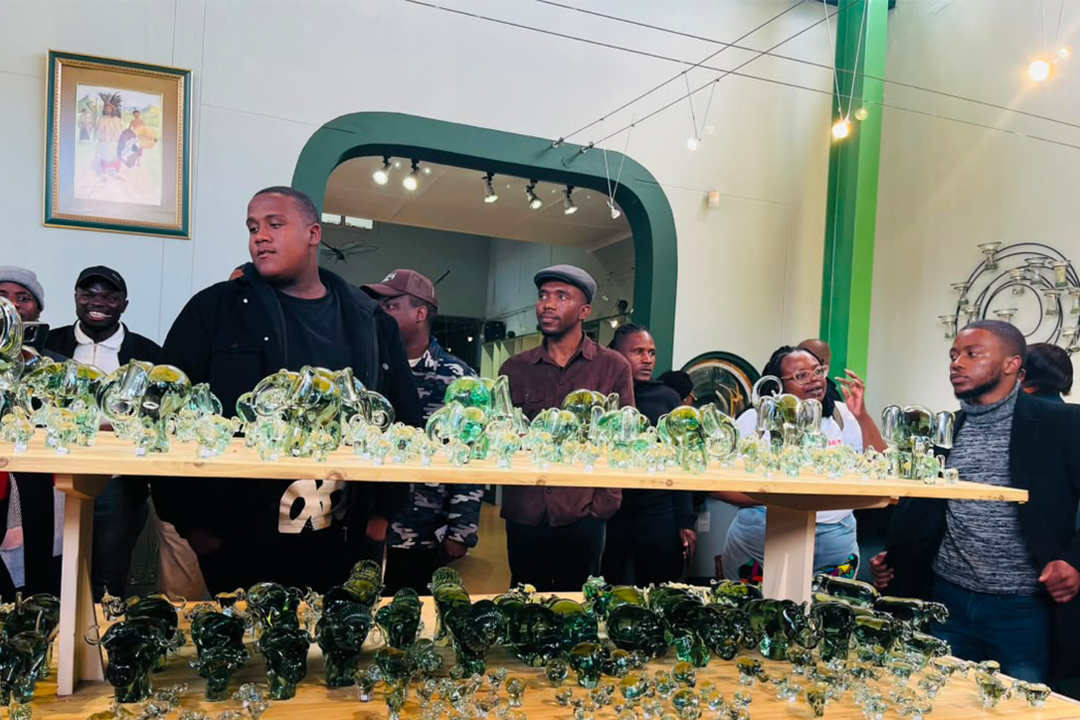
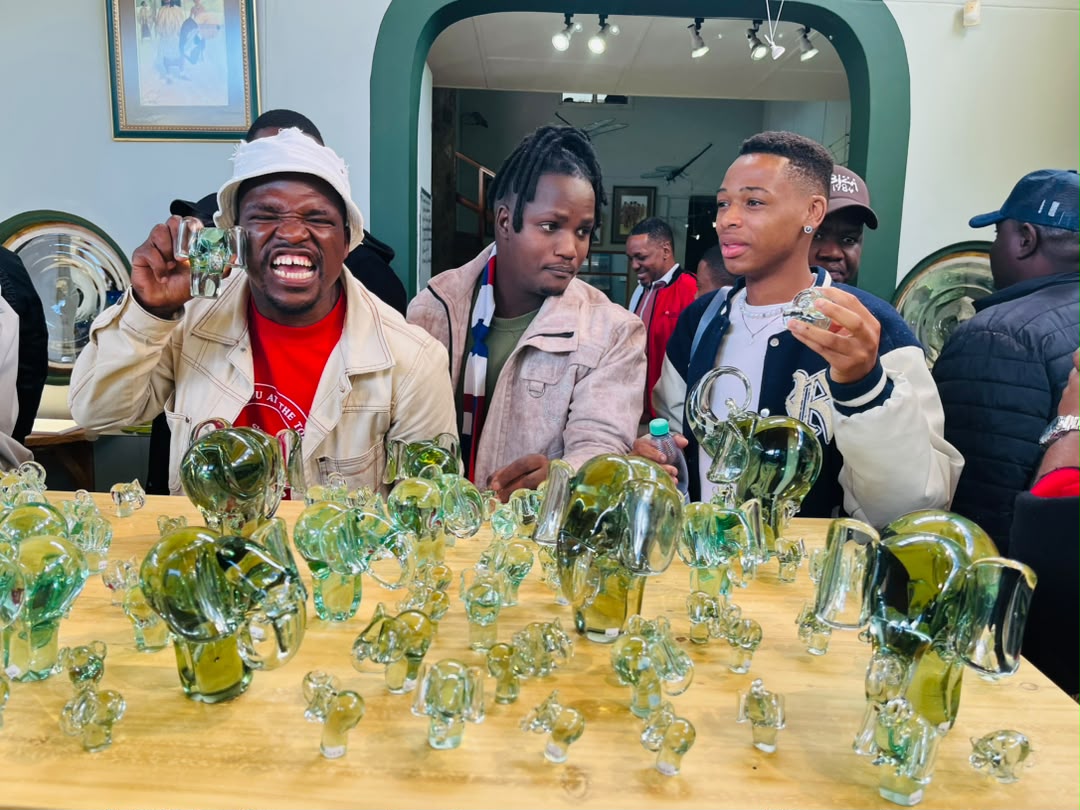
This was the lesson delivered to about 25 local artists during a sustainability-focused tour of Ngwenya Glass – Eswatini on Friday, as part of activities linked to the 2026 Eswatini International Trade Fair (EITF).
The artists were taken through the glass-making process by Ngwenya Glass administrator Zethu Nkhosi, who demonstrated how discarded materials can be turned into finished products while supporting a more sustainable economy.
The tour forms part of EITF 2026’s theme, “Unlocking Green Economy Opportunities for Sustainable Trade Promotion,” with the artists set to entertain visitors during the nine-day trade fair, running from 29 August to 6 September 2026.

Nkhosi first introduced the artists to the glass-forming process, giving them an up-close look at the heat, skill and precision behind the colourful products produced at the factory.
She explained how recycled glass bottles are collected, prepared and fed into the furnace, where they are melted before skilled glassblowers shape the molten material into different creations.
Ngwenya Glass uses 100 per cent recycled glass, mainly discarded soft-drink bottles and jars collected from across Eswatini. The molten glass is then handmade and mouth-blown into products ranging from drinking glasses and tableware to vases and animal ornaments.
The sustainability story, however, does not stop with the glass.
Nkhosi showed the artists how the factory incorporates other discarded materials into its operations, including used cooking oil to fuel the furnace and old newspapers for shaping and packaging products. The factory’s official information also states that its furnace uses recycled fuel, while its packaging makes use of old newspapers.
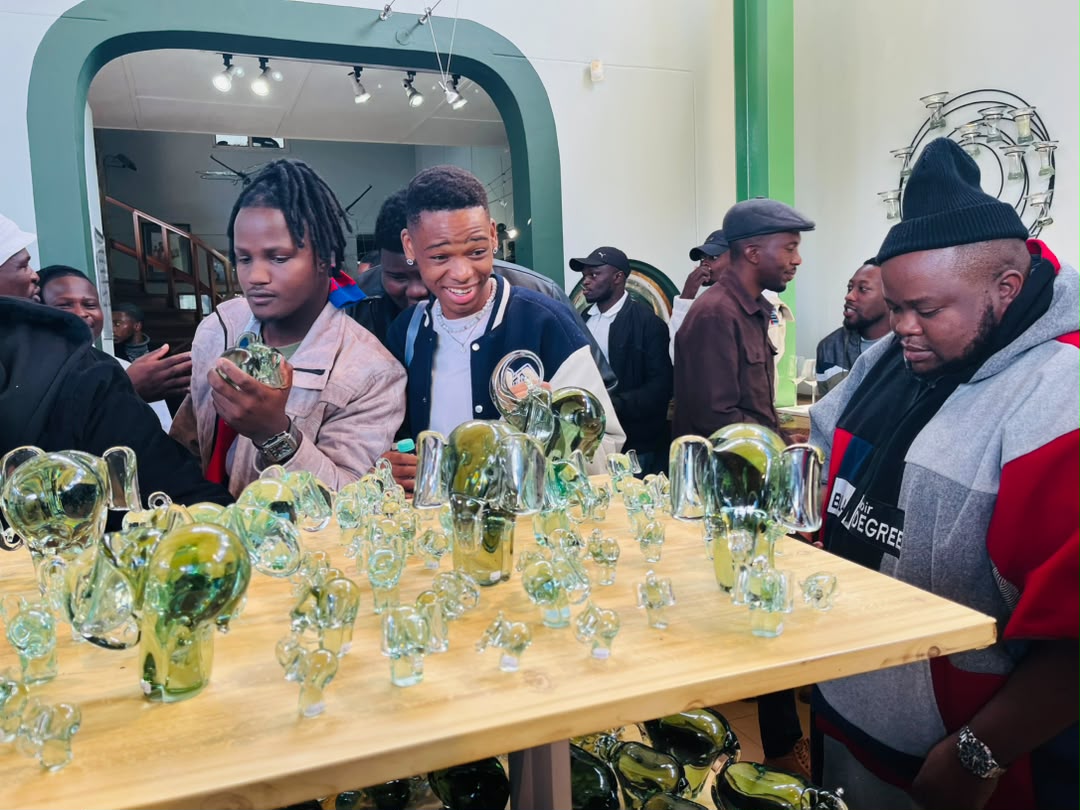
“We are showing them that what people consider waste can actually become something useful and beautiful,” Nkhosi said during the tour.
The artists also got to see how broken bottles can be redirected from waste streams into new creations, reinforcing the message that sustainability can be practical, creative and economically valuable.
According to information on Ngwenya Glass’ production process, once the recycled glass is melted, glassblowers shape it while it is still molten. The finished pieces are then gradually cooled in a specialised oven, known as a Lehr, before being ground, polished and checked for quality.
For the visiting artists, the tour offered more than a behind-the-scenes look at a popular Eswatini attraction. It connected the creative industry to the broader conversation around green enterprise, responsible production and sustainable trade.
The visit also highlighted how local businesses can turn environmental challenges into economic opportunities — creating jobs, supporting communities and producing goods from materials that could otherwise end up as waste.
As EITF 2026 prepares to bring together businesses, entrepreneurs, exhibitors, artists and thousands of visitors, the Ngwenya Glass tour provided a fitting preview of what this year’s theme seeks to achieve: a future where economic growth and environmental responsibility work hand in hand.
#EITF2026 #GreenEconomy #SustainableTrade #NgwenyaGlass #Sustainability #EswatiniArtists #LocalTalent #Recycling #CircularEconomy #Eswatini #TradeFair2026