


…Jobs, climate resilience, technology and youth opportunities take centre stage
BY PHUMELELE GAMEDZE
MBABANE— For a young emaSwati searching for a job, a farmer worried about the next drought or a rural pupil hoping to access the opportunities of the digital world, decisions made thousands of kilometres away at the United Nations could ultimately have very real consequences at home.
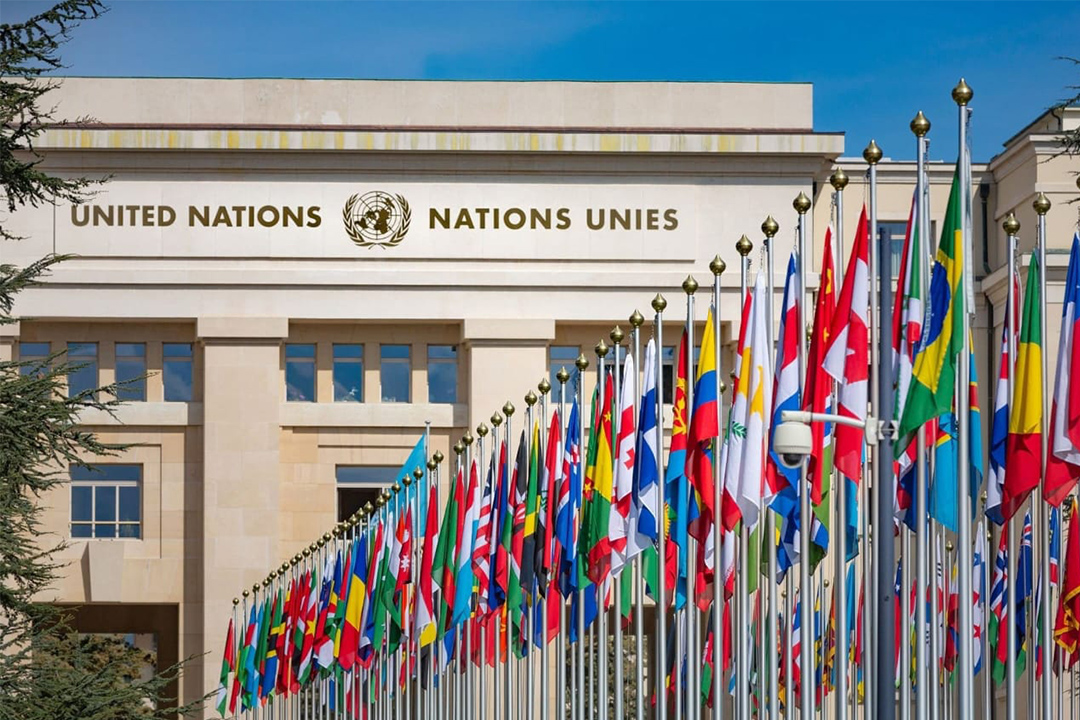
That is the promise—and the challenge—behind the United Nations Pact for the Future, an ambitious global agreement aimed at ensuring that today’s decisions create better opportunities for generations to come.
Adopted by world leaders on 22 September 2024 during the UN Summit of the Future in New York, the 56-page Pact brings together commitments covering some of the biggest challenges facing humanity, including poverty, unemployment, food security, climate change, peace, technology and the future of young people.

While such international agreements can sometimes feel distant from the everyday struggles of ordinary citizens, many of the issues addressed in the Pact are already being felt across communities in Eswatini.
At the heart of the agreement is a straightforward principle: progress made today should not come at the expense of tomorrow’s generation.
For emaSwati, that principle can be understood through everyday questions.
Will a young graduate be able to find meaningful employment? Will a small-scale farmer have the resilience to survive prolonged drought or changing rainfall patterns? Will an entrepreneur be able to access finance to grow a business? And will children in rural communities have the technology and skills necessary to compete in an increasingly digital economy?
These are some of the areas where the success or failure of the Pact could eventually be measured.
POVERTY, JOBS AND OPPORTUNITY
One of the major priorities contained in the Pact is accelerating efforts to fight poverty and hunger while advancing the Sustainable Development Goals.
World leaders also committed themselves to improving development financing, particularly for developing countries.
For ordinary households, however, development financing only becomes meaningful when it translates into opportunities that improve people’s lives.
A successful global commitment would ultimately need to contribute towards environments where young people can secure jobs, farmers can produce enough food, businesses can grow and families can access opportunities capable of improving their livelihoods.
The challenge therefore goes beyond signing agreements.
It is about translating global commitments into programmes that can eventually be felt in homes, schools, farms and businesses.
CLIMATE CHANGE HITS CLOSE TO HOME
Another major focus of the Pact is climate change.
World leaders maintained the goal of limiting global warming to 1.5°C above pre-industrial levels while supporting the transition away from fossil fuels and towards net-zero emissions by 2050.
For a rural farmer, however, climate change is far more than language contained in an international agreement.
It can mean rainfall arriving too late.
It can mean crops failing after months of work.
It can mean floods destroying infrastructure or prolonged dry periods putting pressure on water supplies, livestock and household food security.
That makes climate resilience particularly important to communities whose livelihoods depend heavily on agriculture and natural resources.
The Pact’s climate commitments therefore carry the potential to influence how countries prepare communities for increasingly unpredictable weather conditions.
DIGITAL FUTURE OPENS DOORS FOR YOUTH
Technology is another area where the agreement could carry major opportunities, particularly for young people.
Through the Global Digital Compact, countries agreed on a framework aimed at strengthening global digital cooperation.
Among its priorities are expanding meaningful internet access, protecting human rights online and promoting the responsible development and use of artificial intelligence.
At the time the Pact was adopted, approximately 2.6 billion people around the world were still offline.
Closing that digital divide could dramatically expand opportunities for education, entrepreneurship, employment and access to information.
For an emaSwati youngster, internet connectivity can increasingly mean much more than accessing social media.
It can provide access to online learning, markets, employment opportunities, business networks and information that would previously have been difficult to reach.
The Pact also places young people directly at the centre of discussions about the future, recognising them as agents of change rather than simply beneficiaries of development.
It calls for greater investment in young people’s development, protection of their rights and stronger participation in decision-making.
FROM PROMISES TO PEOPLE
Yet the most important test of the Pact will not be the number of commitments contained in its 56 pages.
It will be implementation.
A signature on an international document cannot, on its own, put food on a family’s table.
It cannot automatically create employment for a graduate, protect a farmer’s harvest, finance a struggling entrepreneur or connect a rural classroom to the internet.
Those outcomes depend on governments translating international commitments into practical policies, budgets and programmes that reach ordinary people.
For Eswatini, the true value of the Pact for the Future may therefore not be measured by what happens inside conference halls in New York, but by what eventually changes in communities across the country.
It will be measured by whether young people see new opportunities, whether vulnerable families experience improved livelihoods, whether farmers become more resilient and whether technology becomes a bridge to opportunity rather than another dividing line.
The world has already agreed on the kind of future it wants to build.
The bigger task now is ensuring that the promises written on paper become progress that emaSwati can see, experience and benefit from.
The future has been promised. The real work is making it happen.
(Courtesy Pic)