


BY NOKWANDA DLAMINI (INTERN)
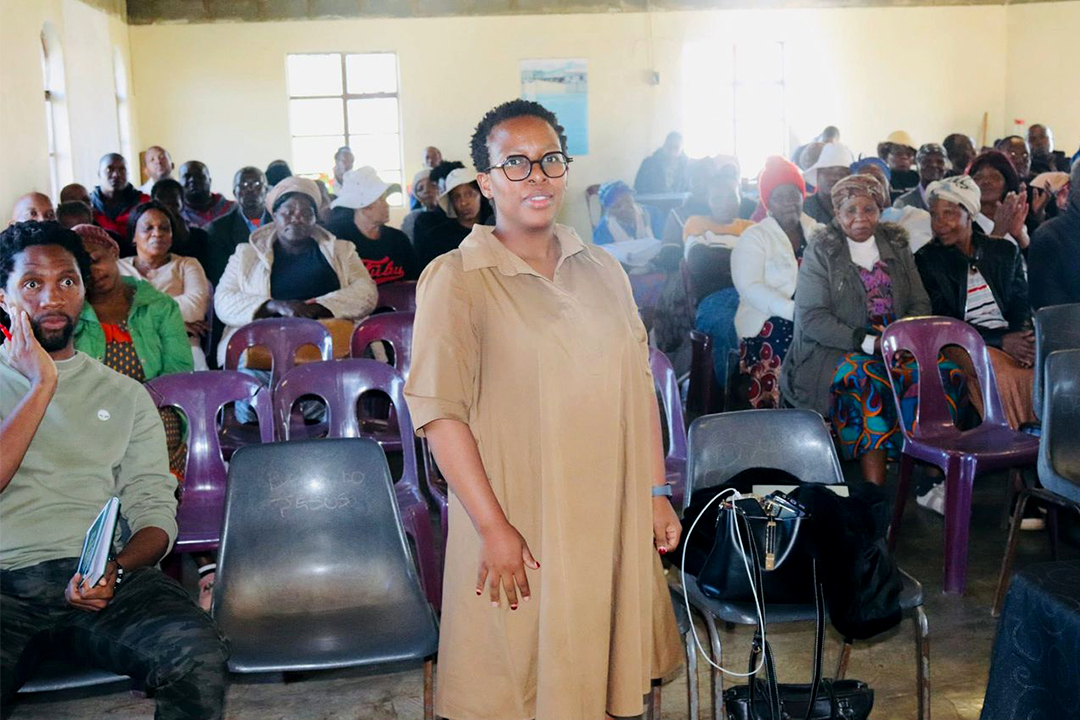
NGWENYA – Government, through the Ministry of Housing and Urban Development, engaged residents of Sivus’imiti Township during a community meeting held at Back to Jesus Church on May 10, 2026, where officials presented detailed information on the formalisation and land allocation process for the newly declared township.
The meeting brought together Ministry officials, the Ngwenya Town Board and community members to explain what the land allocation system entails, who qualifies, and how applications will be processed, as part of efforts to ensure a fair, transparent and inclusive process. The engagement also explained why the initiative is being undertaken to transform the former informal settlement into a planned and sustainable community and how it will be implemented through established legal frameworks and structured procedures.
Officials informed residents that Sivus’imiti Township was officially declared on May 4, 2026, comprising 104 plots within the Ngwenya Urban Boundary, marking a key milestone in Government’s efforts to upgrade informal settlements.
The Ministry noted that the area originated as the Nkhungu Informal Settlement near the historic Ngwenya Iron Ore Mine, where workers and their families settled decades ago. Following the closure of mining operations in the late 1970s, the settlement expanded into an unplanned community, prompting the need for formalisation.


As part of implementation, a Sivus’imiti Township Land Allocations Committee has been established to oversee the allocation process. The committee includes Ministry officials, representatives from the Ngwenya Town Board and elected community members, ensuring accountability and transparency.
Residents were guided through the application process, which includes submission of forms, affordability assessments, conditional approvals, review under Crown Lands Disposal structures and final approval by the Minister, followed by public notification.
Authorities also outlined key conditions such as payment arrangements, development requirements, zoning regulations and ownership terms. Special consideration for vulnerable groups, including widows, child-headed households and long-term tenants, was also highlighted.
The engagement underscores Government’s commitment to inclusive urban development, community participation and improving living conditions through planned and resilient human settlements.
#Eswatini#HousingDevelopment #UrbanPlanning#Sivusimiti #CommunityDevelopment
(Courtesy Pics)