



…local businesses seek market access
…procurement could create jobs
…creatives called to be proactive
BY NELIWE NGUBANE
EZULWINI — Could Government procurement become one of the strongest pathways for creating jobs and strengthening Eswatini’s local creative and manufacturing industries?
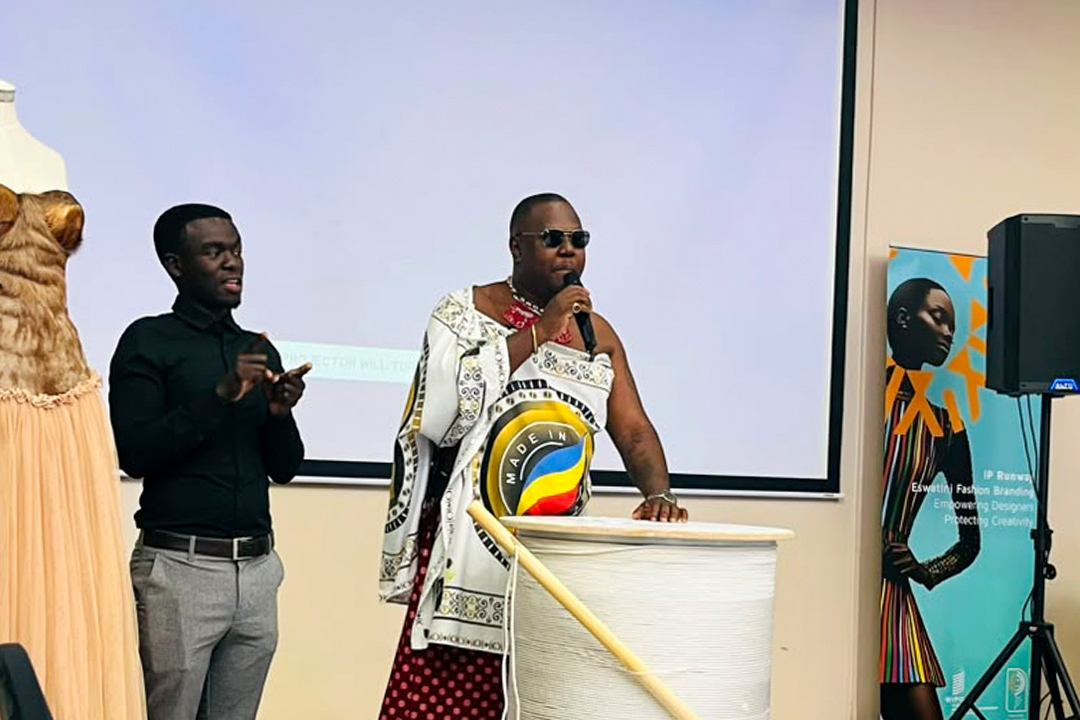
This is the question raised by A Peculiar People director Melusi “Zox” Dlamini during the IP RUNWAY: THE BUSINESS OF FASHION, FURNITURE & ART, held today at The Royal Villas.
Speaking on the “Made in Eswatini®” vision, Dlamini respectfully appealed to Government to consider using public procurement to create more opportunities for local entrepreneurs, designers, manufacturers and creatives where the required capacity already exists.
Dlamini said Eswatini has a growing pool of entrepreneurs and innovators producing quality and innovative products, but many continue to face challenges such as limited visibility, market access, opportunities and trust.
He suggested that Government could play an important role in addressing these challenges by becoming a significant customer of local businesses.
“If Government can become the biggest customer of this sector, we can create something incredibly powerful: predictable demand.”
Dlamini proposed that where local capacity exists, Government could explore opportunities to localise the design and production of apparel for security forces, healthcare personnel and other public institutions.
He said consistent demand could give local businesses greater confidence to invest, increase production and create employment.
According to Dlamini, increased local procurement could also help keep more money circulating within the domestic economy while strengthening Eswatini’s manufacturing base.
Dlamini emphasised that the creative sector was not seeking special treatment, but opportunities to demonstrate what local businesses can offer.
“We are not asking for favours. We are asking for opportunities to compete, to produce, to learn and to grow.”
He said Government procurement could potentially become an investment in Eswatini’s productive capacity by helping small businesses grow into sustainable and competitive enterprises.
Dlamini also acknowledged that creatives have a responsibility to actively demonstrate their capabilities rather than waiting for opportunities.
He encouraged designers to collaborate, showcase their work and proactively engage policymakers and decision-makers.
He further suggested that local furniture and artwork could be considered for Government offices, while locally designed clothing could be showcased by leaders during public engagements and when representing Eswatini abroad.
Dlamini encouraged creatives to understand the needs and preferences of their potential clients, including their sizes, styles and preferences, so that they can develop products that meet real market demands.
He also urged creatives to think strategically about brand ambassadors, noting that Government leaders and policymakers could help demonstrate the quality and potential of local products.
“We need to be proactive. We need to know their sizes, their preferences, their favourite colours.”
Dlamini ultimately called for greater collaboration between Government and the creative sector, saying local leaders should have an opportunity to experience and support Eswatini-made products.
His remarks presented public procurement not as an entitlement for local creatives, but as a potential platform through which Government, entrepreneurs and the creative industry could work together to expand opportunities, strengthen local production and contribute towards job creation.
#MadeInEswatini #IPRunway #CreativeEconomy #LocalProcurement #JobCreation #FashionEswatini #PeculiarPeople