


BY THEMBA ZWANE
MBABANE – Government and it’s parastals, the Eswatini Standards Authority (ESWASA) and Eswatini Competition Commission (ESCC) are working towards strengthening consumer protection and ensuring that the economy remains resilient and competitive.
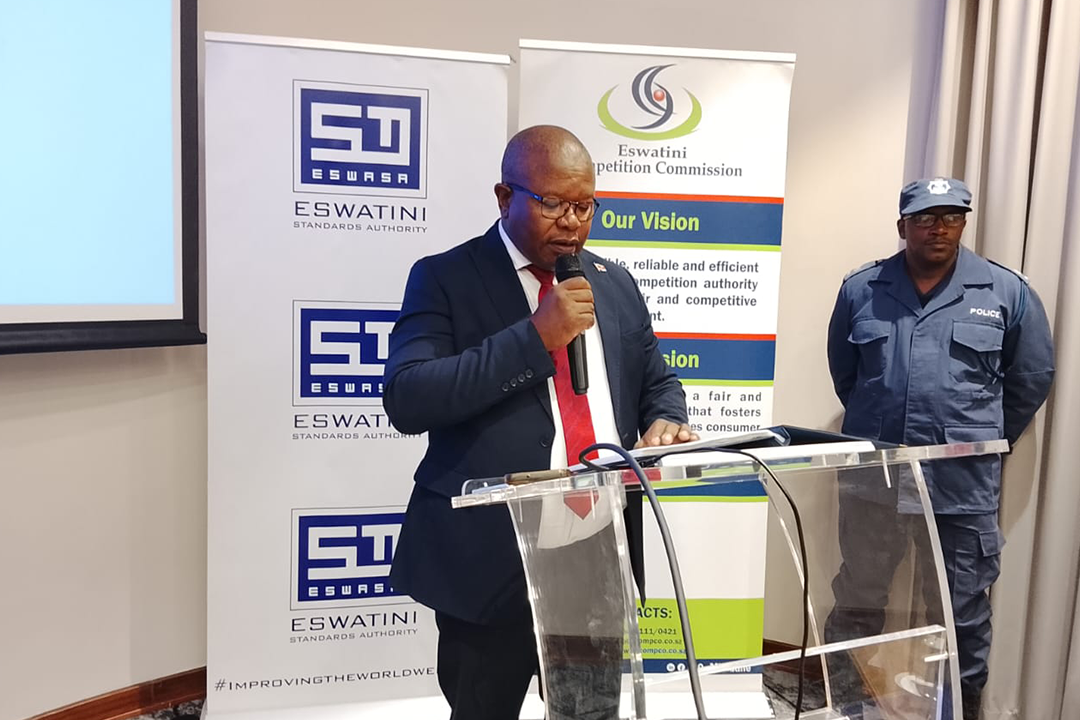
This was revealed by Minister of Commerce, Industry and Trade, Manqoba Khumalo, during a workshop for Senators and Members of Parliament serving in the Ministry’s Portfolio Committees on June 10, 2026 at Hilton Garden Inn.
Khumalo said the work of ESWASA and the Competition Commission was closely interconnected.
Standards promote quality and safety. Competition promotes fairness and efficiency.

Economy remains resilient and competitive
“Together, these institutions help create an environment where businesses can grow, consumers are protected, and the economy remains resilient and competitive,” he said.
The minister said their contribution was directly aligned with Government’s development priorities under the Nkwe Programme of Action, particularly in relation to economic growth, employment creation, poverty reduction, industrial development, and economic empowerment.
At the workshop, he said in addition to the valuable presentations from the Eswatini Standards Authority and the Eswatini Competition Commission, Honourable Members will also receive an important briefing from the Intellectual Property Department. He said Since the enactment of the Intellectual Property Act, significant strides have been made in establishing a modern framework for the protection of innovation, creativity and intellectual assets. The presentation provided insight into the progress achieved thus far and the opportunities that intellectual property presents for the nation’s economic transformation agenda.

Trade agreements, promotion of exports
“Honourable Members, you will also receive a presentation from the Department of International Trade, a department that serves as the custodian of Eswatini’s trade interests at the national, regional and international levels. Through its coordination of trade negotiations, management of trade agreements, promotion of exports and facilitation of market access opportunities, the Department plays a critical role in ensuring that our country derives maximum benefit from regional integration arrangements and the global trading system.”
The session provided valuable insights into how trade policy and trade agreements contribute to economic growth, job creation and the competitiveness of local enterprises.
“It gives me great pleasure to welcome you all to this important workshop convened for Honourable Members of Parliament serving in the Portfolio Committees under the Ministry of Commerce, Industry and Trade.”
Khumalo expressex appreciation for all stakeholders’ attendance and continued commitment to providing effective oversight over the institutions that fall under the Ministry. He said their role as legislators was critical in ensuring that these institutions were empowered through sound legislation, adequate resources, and policy support to effectively deliver on their mandates.
To deepen collective understanding
“Today’s engagement has been organised to deepen our collective understanding of two key institutions that play a vital role in the development and growth of our economy: the Eswatini Standards Authority and the Eswatini Competition Commission,” he said.
As policymakers and legislators, Khumalo said it was important that they fully appreciated the work undertaken by these institutions, the challenges they face, and the strategic contribution they make towards achieving national development aspirations.
He noted that the Kingdom of Eswatini was pursuing an ambitious development agenda centred on economic growth, industrialisation, employment creation, consumer protection, and improved living standards for the people. Achieving these objectives, he said, required more than investment alone; it required strong institutions that ensure markets function effectively, products meet acceptable quality standards, and consumers are protected.
ESWASA, ESCC become critically important
This, he said was where ESWASA and the ESCC become critically important.
He explained that the Eswatini Standards Authority serves as the national standards body. Its mandate extends beyond developing standards. It is responsible for promoting quality infrastructure, conducting conformity assessments, facilitating certification, and ensuring that products and services available in local markets meet recognised standards of safety, quality, reliability, and performance.
In practical terms, the work of ESWASA touches the lives of ordinary emaSwati every day.
“When consumers purchase electrical appliances, food products, construction materials, children’s toys, or other goods, they expect these products to be safe and fit for purpose. Businesses similarly require standards to ensure consistency, quality assurance, and competitiveness.”
Without effective standards, Khumalo said, consumers become vulnerable to unsafe and substandard products, while legitimate businesses struggle to compete fairly against inferior goods entering the market.
Internationally recognised standards
“As our economy becomes increasingly integrated into regional and global markets, standards have become a prerequisite for trade. Products that comply with internationally recognised standards are more likely to access export markets, attract buyers, and compete successfully beyond our borders,” he said.
Therefore, he noted that, ESWASA was not merely a regulatory institution. It was an economic development institution that contributes directly to industrial competitiveness, export growth, consumer confidence, and investment attraction.
He said equally important was the work of the Eswatini Competition Commission. The Commission is entrusted with promoting and maintaining fair competition in the economy. Its role is to ensure that businesses compete on merit, innovation, efficiency, and quality rather than through anti-competitive conduct.
He said competition policy was often misunderstood as a purely regulatory issue. In reality, he said it was a powerful economic development tool.
Create opportunities for new and emerging enterprises
“Competitive markets encourage innovation, lower prices, improve product quality, expand consumer choice, and create opportunities for new and emerging enterprises to participate in the economy. Where competition is weak, consumers pay higher prices, innovation is stifled, and economic opportunities become concentrated among a few market players,” said the legislator.
He said the Eswatini Competition Commission therefore plays a critical role in safeguarding market integrity, protecting consumers, fostering investor confidence, and supporting economic growth.
He said its works aligns closely with Government’s commitment to promoting inclusive economic development, supporting entrepreneurship, and creating opportunities for Micro, Small and Medium Enterprises.
Compete fairly, contribute to national development
Through the enforcement of competition and consumer protection laws, the Commission helps create a level playing field that allows businesses of all sizes to compete fairly and contribute meaningfully to national development.
The workshop therefore presented an important opportunity for meaningful engagement and knowledge sharing.
The minister encouraged all parliamentarians to use the platform to ask questions, seek clarification, and engage openly. He also requested that the session not be a lecture but be interactive.
#Government #CommerceMinistry #ESWASA #ESCC #Eswatini #Senator #MPs