



BY GCWALISILE MHLABANE
MANZINI– Government is considering new sector-specific allowances that could provide greater support to nurses and other healthcare workers serving in rural and challenging environments, as senior officials intensify efforts to understand their working conditions.
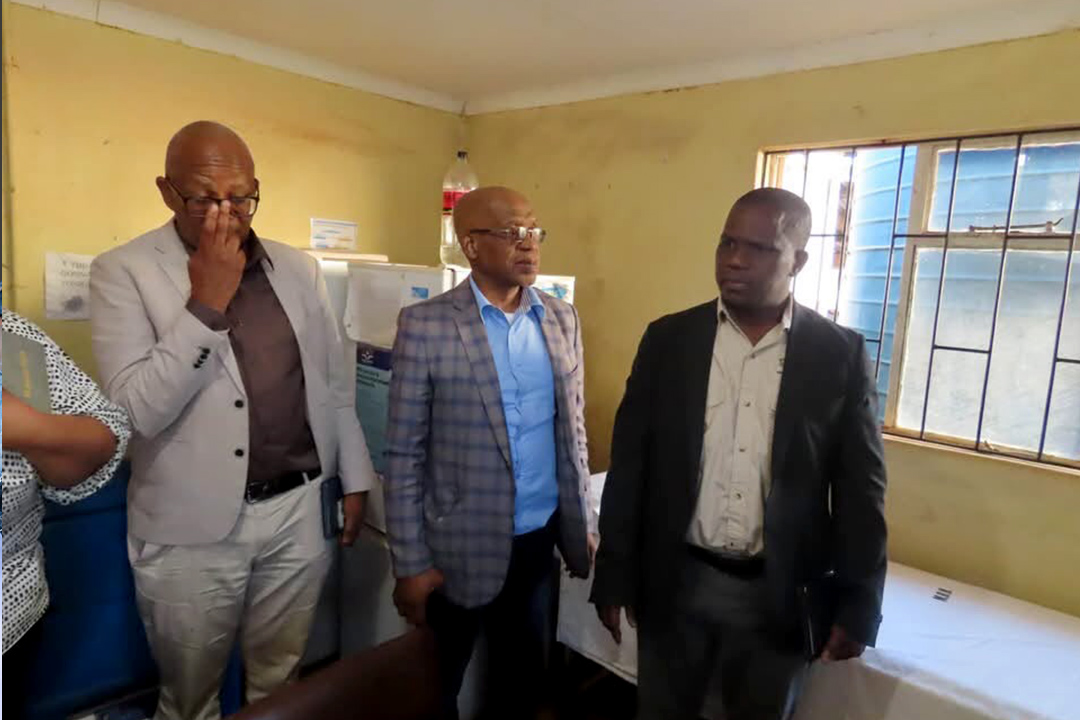
The Principal Secretary in the Ministry of Public Service, Mthunzi Shabangu, Principal Secretary in the Ministry of Health, Khanyakwezi Mabuza, and Secretary to Cabinet Victor Nxumalo, in his capacity as Chairman of the Joint Negotiations Forum (JNF) and bilaterals with Public Sector Unions (PSUs), together with the Government Negotiations Team (GNT) and the National Executive Committee of the Swaziland Nurses Association (SNA), visited Bhawini Clinic in Mahlangatsha Inkhundla and New Heaven Clinic under Methula Inkhundla on August 19, 2026.
The ground visit provided senior Government officials with an opportunity to engage directly with nurses and support staff, assess their working environment and gain first-hand insight into challenges affecting healthcare workers and service delivery at the two facilities.
At the centre of the engagements was the Salary Review report, which has recommended the introduction of new sector-specific allowances to recognise employees working under particular conditions.

Speaking to healthcare workers, Shabangu said the recommendations include measures aimed at supporting employees deployed to rural areas where access to basic services can be challenging.
“The Salary Review report has recommended the introduction of new sector-specific allowances to compensate various instances, such as hardship working conditions for those workers posted to rural areas,” said Shabangu.
He explained that the proposed hardship allowance would target workers operating in areas where essential amenities are not readily available.
“This is for those workers posted to rural areas where transport, accommodation and basic amenities such as electricity, water and sanitary facilities are not readily available,” he said.
The report has also recommended an infectious diseases allowance for medical staff who regularly come into contact with patients suffering from infectious diseases.
“The report also recommends the introduction of an infectious diseases allowance for medical staff who are in regular contact with patients suffering from infectious diseases,” Shabangu said.
However, Shabangu clarified that the proposed allowances would not apply automatically to all civil servants.
“These allowances require prior determination or workforce segmentation since they will not apply to all civil servants,” he explained.
This is where the ongoing site visits become important, as Government seeks to identify employees and workstations that meet the requirements for the proposed allowances.
The workforce segmentation process is intended to ensure that the allowances are targeted appropriately and reflect the actual conditions experienced by employees in different parts of the country.
“The site visits are intended to ensure that the allowances appropriately respond to the needs and working realities of healthcare workers,” said Shabangu.
For nurses and support staff, the visits provided an opportunity to engage directly with senior Government officials and share challenges experienced while delivering essential healthcare services to their communities.
The engagements also demonstrated Government’s commitment to listening to frontline workers and using information gathered at facility level to inform decisions on conditions of service.
Government officials assured healthcare workers and community members that efforts to improve working conditions would go hand in hand with strengthening the quality and responsiveness of healthcare services.
The site visits form part of Government’s wider engagement with frontline workers across the civil service, with similar assessments expected to continue at other workstations considered deserving or eligible for the newly recommended allowances.
For rural nurses, the proposed measures could provide greater recognition of the realities they face while serving communities, particularly where transport, accommodation and basic amenities remain limited.
The initiative also signals a more targeted approach to conditions of service, with Government seeking to ensure that employees working under distinct circumstances receive support that reflects their specific working environment.
As the workforce segmentation exercise continues, the focus remains on ensuring that any allowances introduced are fair, evidence-based and responsive to the needs of frontline workers.
#Eswatini #Government #RuralNurses #HealthcareWorkers #SalaryReview #PublicService #HealthServices #WorkingConditions
(Courtesy Pic)