


BY SIFISO NHLABATSI
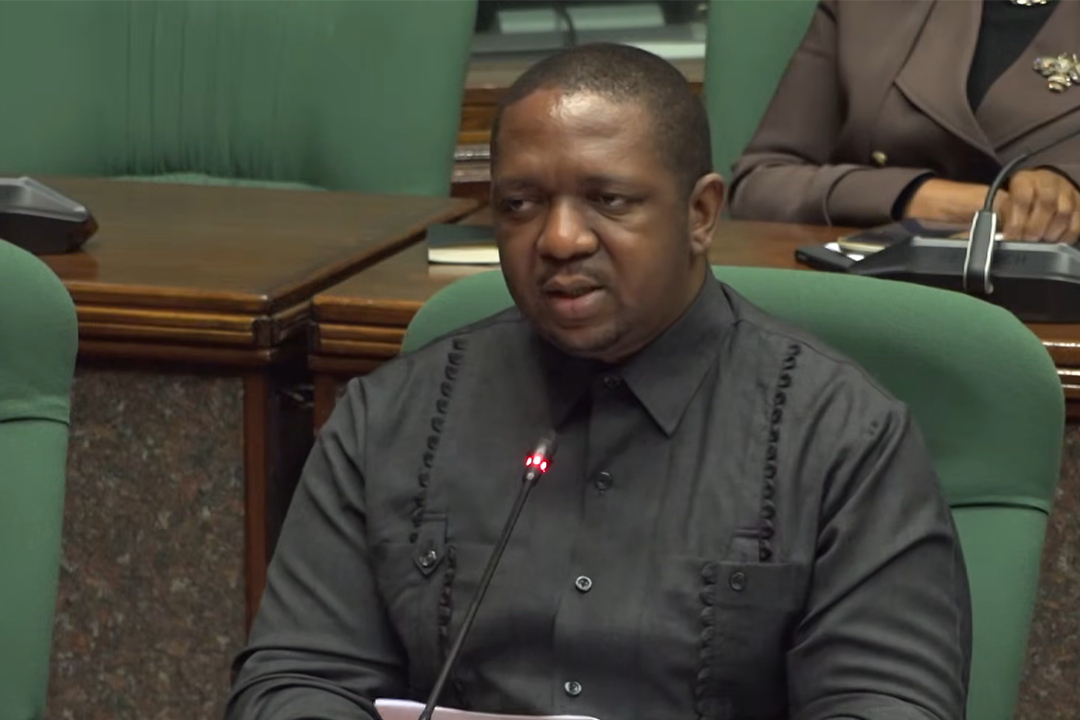
LOBAMBA – Minister of Labour and Social Security Phila Buthelezi has commended Student Representative Councils (SRCs) for helping maintain peace and stability at institutions of higher learning, saying sustained engagement has contributed to a notable reduction in student protests.
Buthelezi said the country had gone for years without witnessing major student protests, attributing the prevailing calm to continuous engagement between government, students and institutions.
He was responding to concerns raised during consideration of the Ministry of Labour and Social Security’s First Quarter Performance Report for the 2026/27 financial year.
The minister said government had made it a priority to engage students through their representative structures, particularly SRCs, to ensure that concerns affecting students were addressed before they escalated into protests.

“On the issue of students, it has been years since the ministry has witnessed protests because we engage with learners,” Buthelezi said.
He said students had raised a number of concerns affecting their welfare, while the ministry had also communicated its concerns to students and institutions.
Buthelezi thanked SRCs for their commitment to working with government and institutions to resolve challenges through dialogue.
He said the ministry had also engaged institutions of higher learning, emphasising the importance of cooperation among all stakeholders in maintaining peace.
The minister’s comments came amid discussions on government support for tertiary students, particularly the adequacy of student allowances.
During the first quarter, the Scholarship Unit spent E32.26 million against an annual budget of E700 million allocated for various student-related costs, including meals, accommodation, personal allowances, uniforms, teaching practice, projects, internships, books and field allowances.
Deputy President of the Senate Senator Ndumiso Mdluli questioned whether empirical studies could be undertaken to determine what students actually require to meet their basic needs.
Buthelezi acknowledged that the current E2 000 allowance was not sufficient but said it represented what government could afford under the prevailing financial constraints.
He said previous studies had been conducted and projections made on the level of funding required for tuition and student allowances. However, government could not meet those projections because of limited financial resources.
The minister said government hoped to improve student allowances as its revenue position improved.
Buthelezi also raised concern over the social pressures facing some students, noting that some beneficiaries were using their allowances to support their families because they came from households where they were breadwinners.
He further acknowledged the contribution of the Fezeka Foundation, which has assisted students through donations.
On calls for government to reconsider providing students with cash for meals, Buthelezi said the ministry would have no objection if students preferred a return to the canteen system.
He recalled that during his time as a student, meals were provided through canteens, saying students may have lacked other things but did not go without food.
He said the cash allowance system appeared to have created challenges, as some students ended up using money intended for meals on other needs.
Buthelezi maintained that any decision to return to a canteen-based meal system would have to be considered in consultation with students.
The minister said the reduction in industrial action was a positive development, stressing that continued dialogue remained critical in preventing disputes from escalating into protests.
#Eswatini #EswatiniGovernment #StudentProtests #SRC #StudentLeadership #HigherEducation #TertiaryEducation #StudentWelfare #Government #LabourAndSocialSecurity #PhilaButhelezi #Dialogue #PeaceInInstitutions #Education #EswatiniPositiveNews #EPN