


….. commends journalists for accurate and impactful reporting
BY MBONO MDLULI
EZULWINI– Members of the media have been praised for their continued efforts in delivering accurate and reliable information to the public, reinforcing their critical role in Eswatini’s democratic development.
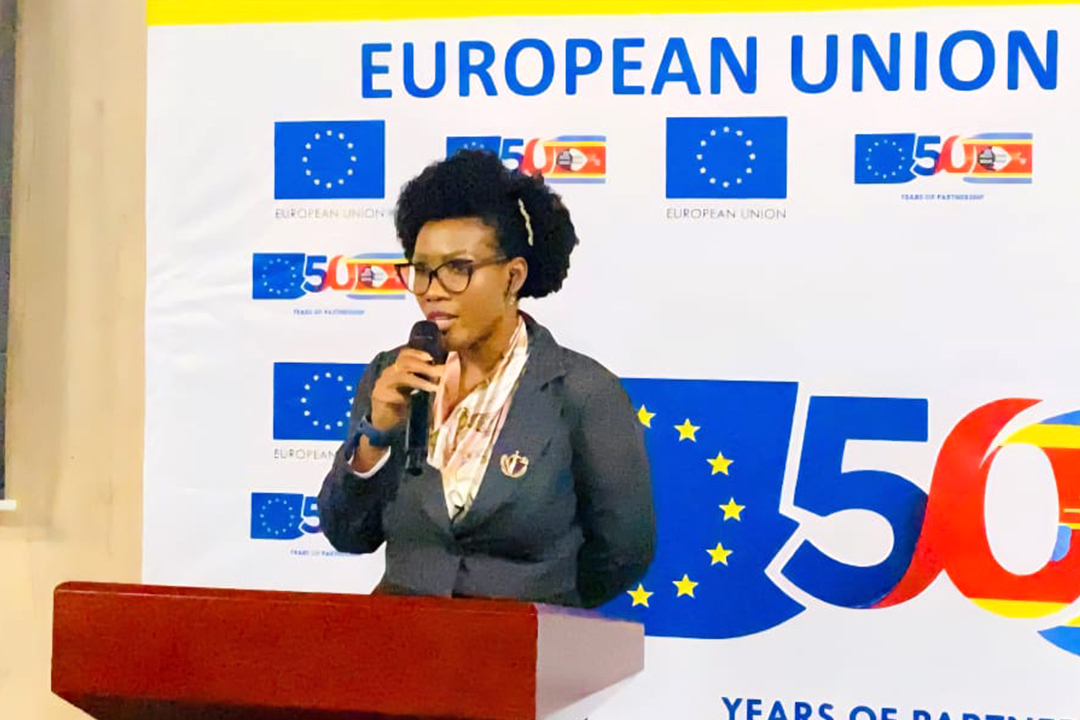
The commendation was made by lawyer Gabsile Xolile Mnisi during the commemoration of World Press Freedom Day held on Thursday, 30 April 2026 at Happy Valley Hotel in Ezulwini. This day is usually commemorated on May 3, every year.
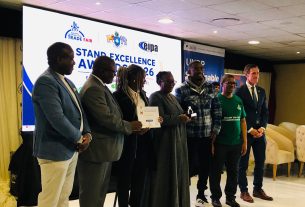
The event, organised by the Eswatini Editors Forum in partnership with the European Union (EU) in Eswatini, brought together journalists, legal practitioners, students and civil society to reflect on the state of media freedom in the country.

Media recognised as pillar of democratic accountability
In her address, Mnisi emphasised the central role played by the media in promoting transparency and accountability within society.
“Another point I should say is that the media play a vital role in the system of democratic checks and balances, in that, in a properly functioning society, the general public depends on the media for accurate information on the basis of which information they make their daily life decisions,” she said.
She highlighted that access to credible information empowers citizens to make informed choices and actively participate in national development.
Mnisi further noted that the media has been instrumental in raising awareness about constitutional rights, helping citizens better understand legal protections and opportunities available to them.
Constitution provides strong foundation for media freedom
Reflecting on the legal framework, Mnisi described the Constitution as a progressive instrument that guarantees freedom of expression and media freedom under Section 24.
“I should say that so much has been said about Section 24 of the Constitution that guarantees media freedom,” she stated.
However, she also pointed out that this right is not absolute, noting the existence of limitations designed to protect broader societal interests.
“It is not without its laws, in that I have observed that there is what we call a drawback clause to Section 24 that says you can report and access freedom of speech provided that there are other pieces of legislation that are trying to safeguard public peace, public order and public health,” she explained.
Challenges in balancing rights and restrictions
Mnisi acknowledged that while these legal provisions are necessary, their application can sometimes create challenges in fully exercising freedom of expression.
“It seems that in practice, the subordinate legislation which operationalises the drawback clause takes precedence over the constitutionally entrenched right of freedom of association and speech,” she said.
She cited real-life examples where citizens have faced difficulties in expressing themselves due to regulatory processes and restrictions, highlighting the need for a balanced approach in interpreting the law.
Despite these challenges, Mnisi maintained that the Constitution remains one of the country’s most significant achievements.
“To me, the Constitution is one of the best things to have ever happened to us as a country,” she said.
Media’s role in advancing legal awareness
Mnisi credited the media for playing a key role in educating the public about important legal developments and social progress.
She pointed to increased awareness around women’s rights, including the ability for women to acquire property in their own capacity, as well as landmark court decisions that have reshaped legal frameworks in the country.
Among these was the Sacolo case, which addressed issues around marital power, as well as cases that have clarified workers’ rights and freedom of expression in the workplace.
“We’ve also had groundbreaking and paradigm-shifting cases being reported… and the media has played a pivotal role in sensitising the public on their constitutional rights,” she said.
Importance of responsibility and ethical journalism
While commending the media, Mnisi also cautioned that journalism carries significant responsibility, noting its potential impact on individuals and society.
“It goes without saying that the media is a very potent tool in the hands of any person with malicious intent towards one. So, hence, it’s important that we be kept on checking one another,” she said.
Her remarks underscored the need for ethical reporting and mutual accountability among stakeholders to ensure that the power of the media is used responsibly.
Collective commitment to strengthening media landscape
The event also featured participation from the Eswatini National Association of Journalists, the Press Club of Eswatini, as well as students and academics from the University of Eswatini and Limkokwing University of Creative Technology.
Discussions throughout the day reflected a shared commitment to strengthening media freedom while promoting professionalism and ethical standards.
Mnisi’s remarks concluded on a positive note, reaffirming confidence in the media’s continued role in shaping an informed, engaged and empowered society.
(Courtesy Pic)