


BY THEMBA ZWANE
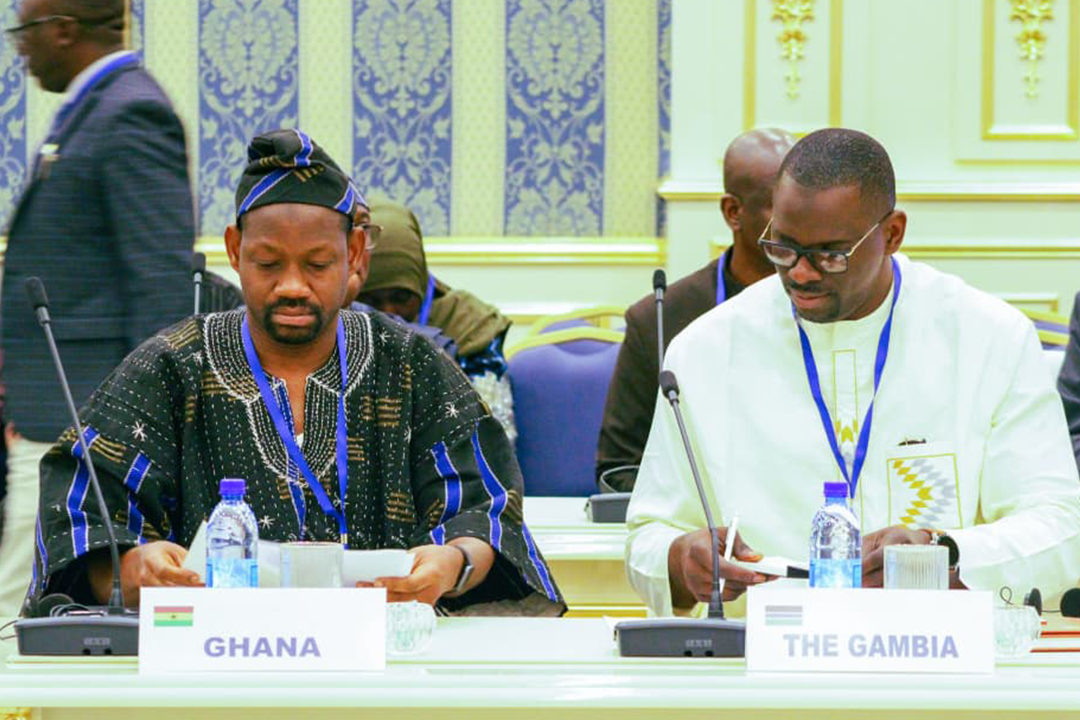
EZULWINI – Issues of continental migration, refugees and displaced people were among key issues discussed by Parliamentarians at the OACPS West Africa Region Parliamentary Group Meeting.
Representative of the Secretariat, addressed in detail issues or challenges of migration and refugees displacement in Africa and how rectification of the Samoa Agreement by member states of the OACPS could bring solutions.
“The priority remains to protect the integrity of the agreement while continuing to engage member states effectively. In this regard, the Secretariat continues its efforts to sensitise member states on the importance of ratifying the Samoa Agreement,” said the representative.
Proposed Organisation Workshops

On the second issue concerning progress toward ratification, she said they continued to engage and support member states throughout the process. The Secretary-General has already proposed the organisation of workshops and seminars aimed at assisting countries that may still face information gaps or technical challenges relating to ratification. These engagements are intended to respond directly to the concerns and obstacles that some countries may be experiencing.
She said they therefore continued to work closely with member states, and the Secretary-General remains committed to his vision of continuous engagement and sensitisation to encourage ratification of the agreement.
At the same time, she said they continue to emphasise that delays in ratification mean the agreement remains under provisional application. A provisionally applied agreement has limitations regarding the full range of benefits and protections that member states can access.
African Regional Protocol
“For example, under the African Regional Protocol, there are important provisions relating to migration, refugees, and displaced persons. The agreement commits parties to cooperate in ensuring protection for refugees and displaced persons, including access to security, justice, legal assistance, witness protection, and other support mechanisms. However, many of these benefits cannot be fully realised until the agreement formally enters into force through ratification,” explained the Secretariat.
They mentioned that as long as ratification is delayed, the implementation of these important provisions will remain limited. Therefore, they appealed to legislators to continue engaging their respective executives and national institutions, in accordance with their domestic processes, to accelerate ratification.
Ultimately, they noted that the prioritisation of these matters rests with member states and their legislative authorities.
It was explained that the understanding was that they still retained the general part of the agreement, which provides the overall foundation and guiding principles for cooperation. What happens at regional level feeds into this broader framework.
Regional Protocols
“The general part outlines the common provisions and shared objectives, while the regional protocols focus on implementation according to the realities and priorities of each region. In this way, there is no real separation; rather, it is an administrative and practical arrangement that allows regions to organise their programmes and calendars more effectively within the same overall agreement.”
For example, it was mentioned that the Caribbean region approaches migration differently from Africa. Their experience is more centred on circular migration and skills transfer, which naturally shapes different policy responses and outcomes. It was said that these variations explain why regional approaches may differ, while still pursuing the same overall objectives of cooperation under the OACPS framework.
“Regarding the question on why priorities may have changed, the current geopolitical environment has significantly influenced the nature of cooperation with the European Union. Under the Cotonou Agreement, relations were largely shaped by historical and post-colonial ties. The Samoa Agreement, however, reflects a broader and more modern partnership approach. It seeks to respond to global challenges and contemporary development priorities, rather than relying primarily on historical connections,” the Secretariat said.
Implementation Approaches
These were said to be some of the key distinctions that explain the evolution in priorities and implementation approaches. Should members require further detail, it was said the Secretariat could also share studies and documentation that informed these changes and the implementation framework.
#OACPSEUinEswatini #WestAfricaParliamentaryGroup #Meeting #ContinentalIssues #MigrationRefugeesDiplacedPeople #Eswatini #EzulwiniPalazzo