


BY SIFISO NHLABATSI
LOBAMBA – Members of Parliament have expressed support for three World Bank financing arrangements worth a combined US$65 million (about E1.14 billion), saying the loans are critical to advancing Eswatini’s digital transformation and widening access to affordable internet and digital public services.
The support came during the Second Reading of the International Bank for Reconstruction and Development (Eswatini Post and Telecommunications Corporation) Loan Guarantee Bill, Bill No. 13 of 2026; the International Development Association (Digital Eswatini Project under the Inclusive Digitalization in Eastern and Southern Africa Multiphase Programmatic Approach Programme) Loan Bill, Bill No. 14 of 2026; and the International Bank for Reconstruction and Development (Digital Eswatini Project under the Inclusive Digitalization in Eastern and Southern Africa Multiphase Programmatic Approach Programme) Loan Bill, Bill No. 15 of 2026.
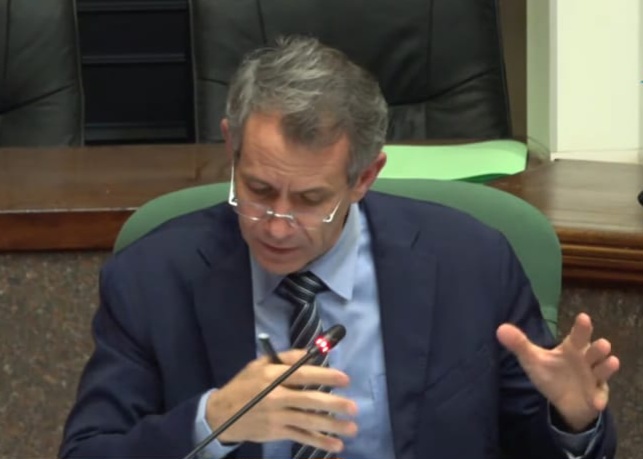
Finance Minister Neal Rijkenberg told the House that the three financing arrangements formed part of the World Bank-supported Digital Eswatini Project, which seeks to expand broadband connectivity, strengthen digital public infrastructure and improve the delivery of government services.
The World Bank has confirmed that the Digital Eswatini Project has total financing of US$65 million and is aimed at increasing access to affordable broadband internet while improving government’s capacity to deliver digital public services.

Under Bill No. 13, government is being asked to guarantee a US$26 million loan to the Eswatini Posts and Telecommunications Corporation (EPTC).
The minister explained that the financing would support EPTC’s financial stabilisation and its transition from a legacy defined-benefit pension arrangement to a modern defined-contribution scheme.
The remaining two facilities involve direct government borrowing.
Bill No. 14 provides for a US$19.7 million concessional credit from the International Development Association (IDA), while Bill No. 15 provides for a US$19.3 million loan from the International Bank for Reconstruction and Development (IBRD).
The three facilities therefore total US$65 million.
The earlier Parliamentary documentation on the proposed financing indicates that the US$26 million EPTC facility would be guaranteed by government, while the US$19.7 million IDA and US$19.3 million IBRD facilities would be government borrowing for the Digital Eswatini Project.
Rijkenberg said the financing would enable government to extend fibre infrastructure to Tinkhundla centres, health facilities and schools, while also expanding last-mile broadband connectivity.
He said the project would also support regulatory reforms, digitisation of priority government services and the development of digital public infrastructure.
Among the services targeted for digitisation are business registration, tax filing, health referrals, telemedicine, education enrolment and social-transfer verification.
The minister said the project would also establish infrastructure for digital identity, electronic payments, interoperable data exchange and cybersecurity.
He said these interventions were necessary as government increasingly moved services online.
During the debate, MPs raised questions about the loans, their conditions and the broader need for government to address pressing financial challenges.
Rijkenberg acknowledged concerns over government’s cash-flow constraints but said the Digital Eswatini loans should not be viewed as short-term budget-support financing.
He explained that the loans had been under discussion for almost three years and had progressed through the World Bank’s project-development process.
The minister also told MPs that other financing arrangements were being pursued to address government’s immediate budget-support needs.
These include potential financing from Standard Bank South Africa, the African Development Bank and the OPEC Fund, with the minister saying the three budget-support facilities could collectively exceed E3 billion.
He said the World Bank’s separate budget-support facility was facing delays because of outstanding prior actions.
Meanwhile, MPs also questioned whether government could make use of funds held under the Public Enterprises Unit’s loan guarantee fund to address financial pressures affecting government entities and micro-projects.
Rijkenberg said approximately E840 million was held in the fund, but existing regulations did not allow the fund to lend directly to distressed entities.
He said government had therefore worked on amendments to the regulations to allow the fund to provide direct financing.
The minister said the amended regulations had gone through the Attorney General’s Chambers and Cabinet and had been gazetted, with plans to table them before Parliament.
The World Bank has previously identified digitalisation as an important avenue for Eswatini to improve productivity, create jobs and strengthen public services. Its 2025 Eswatini Economic Update noted that high data costs and gaps in digital skills remained barriers to wider digital adoption.
Rijkenberg maintained that the Digital Eswatini financing would help address some of these barriers.
He said MPs’ support demonstrated an understanding of the role digital infrastructure could play in transforming the economy and improving access to services.
The three Bills will now proceed through the Parliamentary legislative process, including further scrutiny by the relevant committees.
#DigitalEswatini #WorldBank #Parliament #Eswatini #DigitalTransformation #EPTC #EconomicDevelopment #BroadbandConnectivity