


BY THEMBA ZWANE
MBABANE– Minister of Education and Training Owen Nxumalo has warned that Eswatini must urgently bridge the gaps between its education and health systems if the country is to achieve the Sustainable Development Goals (SDGs) and realise its Vision 2030 aspirations.
Nxumalo said education and health could no longer be treated as separate sectors, arguing that the wellbeing of learners was directly linked to their ability to learn, develop and contribute meaningfully to society.
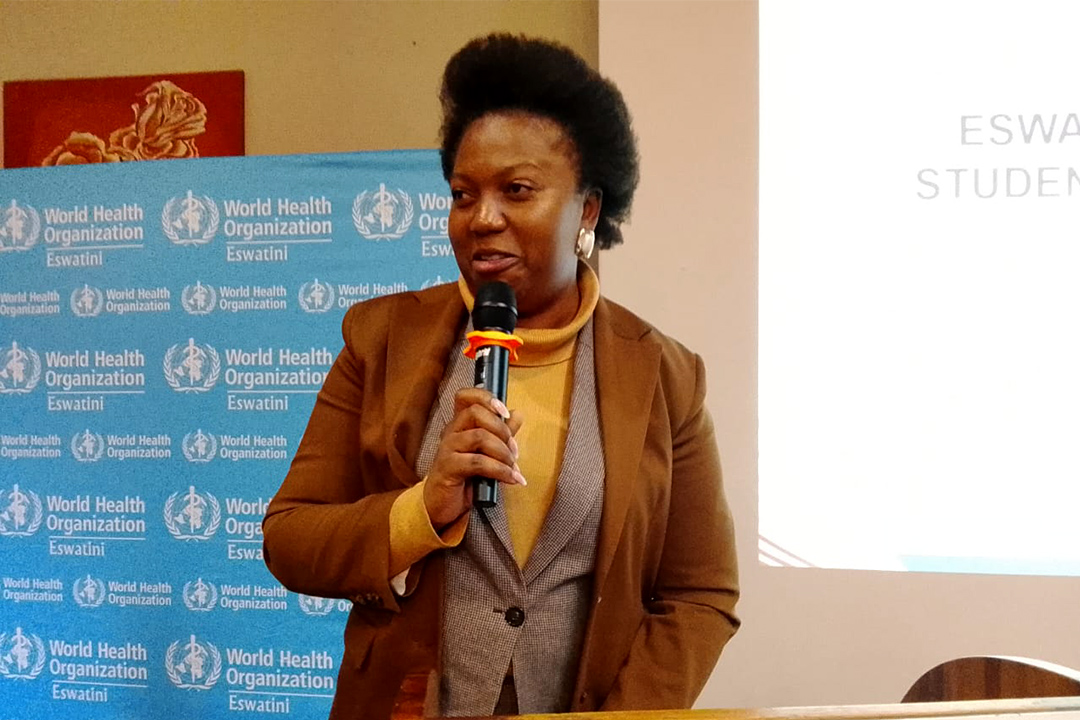
The Minister was speaking through Principal Secretary Nanikie Mnisi, who delivered his remarks on his behalf at Mountain View on Friday during the dissemination of findings from the Global School-based Student Health Survey (GSHS) and the Global School Health Policies and Practices Survey (G-SHPPS).
Nxumalo said the findings from the two surveys provided an important opportunity for the country to confront the challenges affecting learners and strengthen systems designed to protect their wellbeing.

“To achieve our national development goals, including Vision 2030 and the Sustainable Development Goals (SDGs), we must intentionally bridge the gap between education and public health,” Nxumalo said.
He said the GSHS provided a direct window into the behaviours, risks and protective factors experienced by adolescents, covering areas such as mental health, dietary behaviours, substance use, violence and sexual health.
The G-SHPPS, he added, complemented these findings by assessing what schools were actually equipped to do, including the policies, infrastructure, health services and environmental systems available to support learners.
According to the Minister, the combined findings therefore provided more than statistics, as they offered a basis for identifying weaknesses and developing interventions that respond to the realities faced by learners.
Nxumalo said the findings highlighted persistent gaps in age-appropriate sexual and reproductive health knowledge, rising unintended adolescent pregnancies and continued vulnerabilities to sexually transmitted infections (STIs) and HIV.
He stressed that education must therefore provide learners with accurate and protective information, while ensuring that referral pathways are strengthened so that young people can access youth-friendly health services without fear.
The Minister also raised concern over the mental health challenges confronting learners, citing psychological distress, anxiety and loneliness as issues requiring stronger attention within the education system.
“We must strengthen psychosocial support in our schools, ensure that our teachers are equipped with basic mental health first-aid skills to identify and support struggling learners early,” he said.
He further called for decisive action against violence and bullying in schools, saying every child deserved to feel safe.
“Every child deserves to feel safe at school,” Nxumalo said, stressing the need for zero-tolerance policies against violence and positive discipline models that promote safe, compassionate learning environments.
The Minister said the responsibility of creating health-promoting schools could not be left to the Ministry of Education and Training alone.
“Building a health-promoting school system is not a task that the Ministry of Education and Training can shoulder alone; it demands a robust multisectoral approach,” he said.
Nxumalo said collaboration between the education and health sectors, development partners, communities and other stakeholders was essential if the country was to turn the survey findings into meaningful action.
He described the evidence generated by the two surveys as a critical foundation for shaping policies and interventions that address the vulnerabilities facing adolescents.
The Minister further emphasised that the mandate of education went beyond academic achievement, saying the system had a broader responsibility to develop citizens who were intellectually sound, emotionally resilient, socially conscious and physically healthy.
“We know from empirical evidence that health and education are inseparable,” he said, warning that a hungry child could not concentrate effectively and that a child burdened by unresolved mental health challenges could struggle to learn.
The call comes as Eswatini enters the final stretch towards the 2030 deadline for the SDGs. The United Nations has similarly stressed the need for accelerated, coordinated action as fewer than five years remain to deliver on the 2030 Agenda.
Eswatini’s national development framework is also aligned with the ambition of achieving developed-country status by 2030, with health, quality education and improved livelihoods forming part of the country’s broader development priorities.
The Minister’s remarks therefore placed the GSHS and G-SHPPS findings at the centre of a broader national development challenge: closing the gaps that prevent learners from accessing the education, health protection and support they need to reach their full potential.
Nxumalo said the country must use the evidence from the surveys to take clear and deliberate action, rather than allowing the findings to remain simply as statistics.
“Having listened to the key findings presented today, the data makes it clear that we must take action, particularly in strengthening our technical and financial partnerships,” he said.
The Minister said such action was critical to ensuring that Eswatini’s schools became safer, healthier and more supportive environments for children and adolescents.
The findings, he said, should ultimately help the country move closer to its national and global development commitments by ensuring that no learner is left behind.
#Eswatini #Vision2030 #SDGs #Education #Health #GSHS #GSHPPS #AdolescentHealth #MentalHealth #SexualReproductiveHealth #SchoolHealth
(Courtesy Pic)