



BY MFANUFIKILE KHATHWANE
LOBAMBA – Businesses importing goods into Eswatini will soon face significantly higher bonded warehouse storage charges after Parliament approved sweeping amendments to the Customs and Excise Regulations, ending a fee structure that had remained unchanged for more than five decades.
The House of Assembly on Thursday adopted, with amendments, the Finance Committee Report on the Customs and Excise (Amendment) Regulations, 2026, ushering in the first revision of bonded warehouse storage fees since 1974.
The amendments mean that the long-standing daily storage fee of just E1.12 will be replaced by a new pricing structure. Goods weighing up to 500 kilograms will now attract a storage charge of E200 per day, while goods weighing more than 500 kilograms but less than one tonne will cost E400 per day.
The report was presented by Finance Committee Chairperson Marwick Khumalo and seconded by Sigwe Member of Parliament David Cruiser Ngcamphalala before receiving the House’s approval.

Khumalo told Parliament that the previous charges had become unrealistic after remaining unchanged for 52 years despite inflation, rising operational costs and major changes in the country’s trading environment.
He said the revised fees were intended to modernise customs administration and ensure that the cost of using bonded warehouse facilities better reflected present-day economic realities.
Bonded warehouses are secure storage facilities where imported goods are kept under the supervision of the Eswatini Revenue Service (ERS) before customs duties are paid or before the goods are released into the local market. Importers often use these facilities to delay duty payments or temporarily store goods awaiting distribution.
Besides revising storage charges, the regulations also update the country’s official customs entry points by incorporating facilities such as King Mswati III International Airport and Mlawula, ensuring that legislation reflects the country’s current border and trade infrastructure.
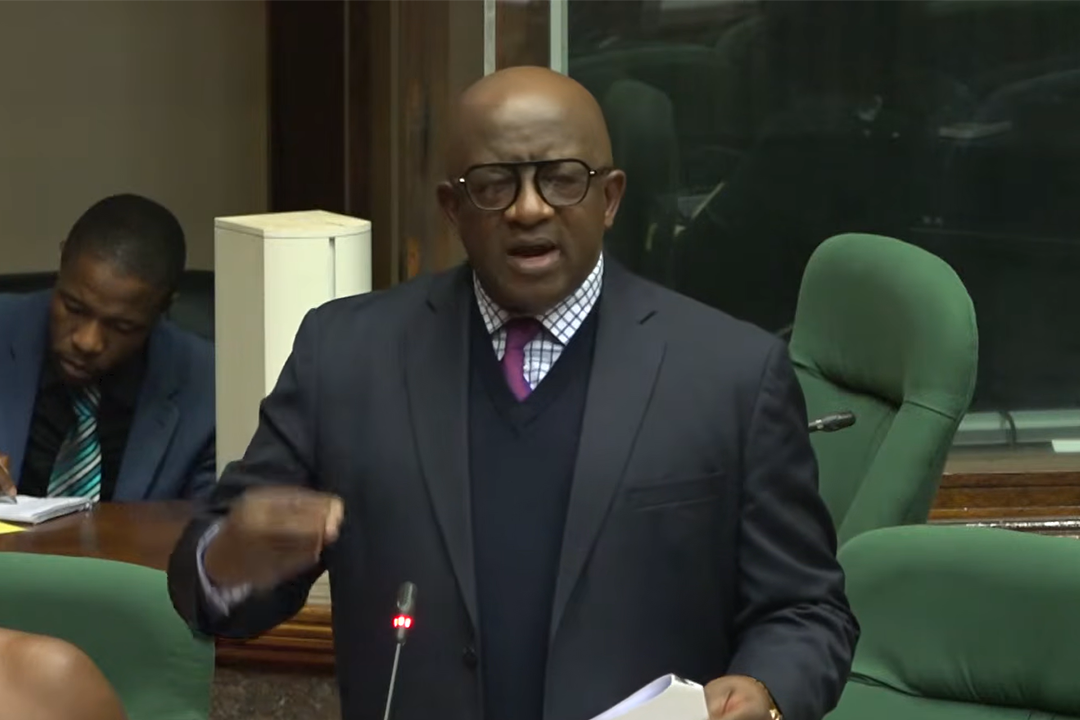
However, while supporting government’s efforts to strengthen revenue collection, Deputy Speaker Madala Mhlanga cautioned against placing excessive financial pressure on businesses and consumers.
Mhlanga said government should pursue a balanced approach that improves revenue collection without creating unnecessary costs for companies that are already operating in a challenging economic environment.
He argued that the country should also focus on controlling public expenditure and reducing reliance on borrowing instead of depending primarily on higher taxes and administrative charges to finance government programmes.
“If we expect the Eswatini Revenue Service to recover every financial shortfall through increased taxes and charges, we risk placing an unnecessary burden on emaSwati and the business community,” he told the House.
The Deputy Speaker further urged policymakers to ensure that taxation and revenue measures take into account Eswatini’s status as a developing economy rather than simply adopting approaches used in more developed countries.
During the debate, Lamgabhi Member of Parliament Sicelo Jele sought clarity on how the revised charges would be applied, expressing concern that charging fees on individual items imported in bulk could unintentionally increase costs for businesses.
Responding to the concerns, Khumalo explained that the revised amounts should not be viewed as a new tax. Instead, they are storage fees charged for the use of bonded warehouse facilities where goods detained or held by the ERS are securely stored until all customs requirements have been fulfilled and the goods are released.
In the same sitting, Parliament also received the Eswatini Public Procurement Regulatory Agency Annual Report (2024/25), tabled by Finance Minister Neal Rijkenberg, as well as the Eswatini National Petroleum Company Annual Report (2025), which was presented on behalf of Natural Resources and Energy Minister Prince Lonkhokhela by Health Minister Mduduzi Matsebula.
The Customs and Excise (Amendment) Regulations, 2026, were subsequently passed with amendments, paving the way for the new bonded warehouse fee structure to take effect.