


BY SIFISO NHLABATSI
MBABANE— Southern African Development Community (SADC) member states, including Eswatini, have been urged to harness the region’s abundant mineral, agricultural, energy and human resources to drive industrialisation, strengthen regional integration and reduce dependence on external markets.
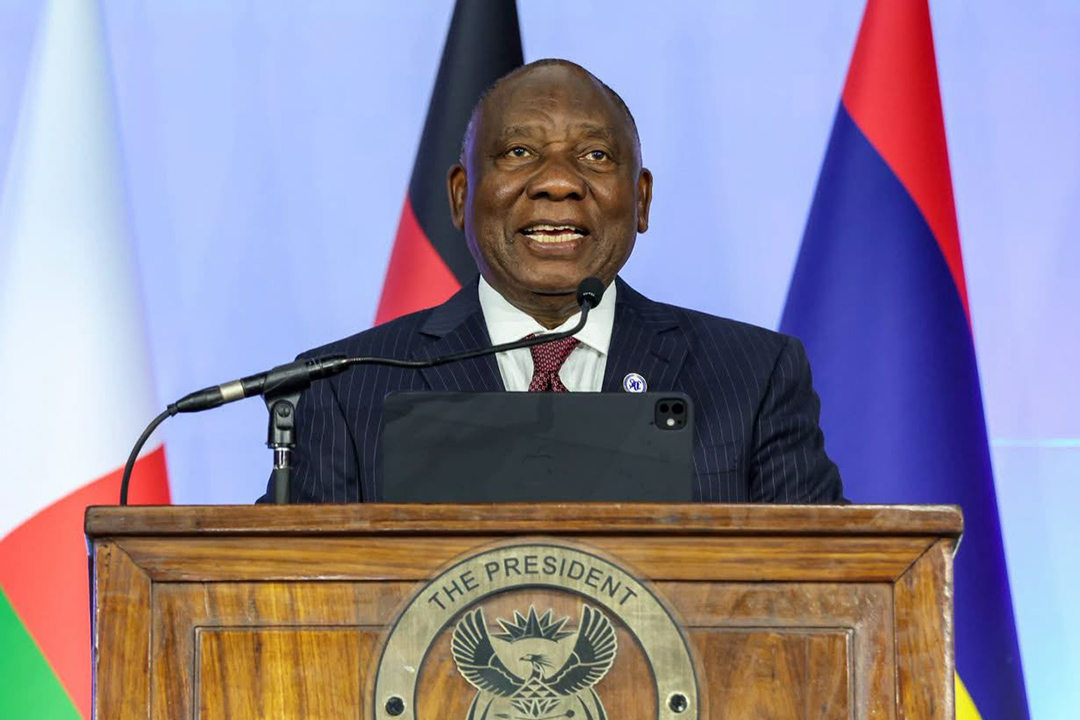
South African President and SADC Chairperson Cyril Ramaphosa made the call during the SADC Public Lecture held at the University of KwaZulu-Natal (UKZN) in Durban on Friday, ahead of the 46th SADC Summit of Heads of State and Government.
The lecture was held under the theme, “Translating SADC Vision 2050 into Action: Pathways Towards Solidarity, Equality and Shared Prosperity,” bringing together political leaders, SADC institutions, academics, business representatives, civil society, traditional and community leaders, women, youth and students.
President Ramaphosa said the region needed to move beyond declarations and translate SADC Vision 2050 into practical programmes that use the bloc’s collective resources and markets to build productive economies.

He particularly called for greater processing of critical minerals and agricultural products within the region, rather than exporting raw materials, while strengthening manufacturing and developing regional value chains.
For countries such as Eswatini, which has agricultural, manufacturing and natural resource potential, the emphasis on regional value chains could create opportunities for local producers and businesses to access wider SADC markets.
Ramaphosa also called for the removal of barriers to trade through the harmonisation of regulations and improvement of border processes. He said a stronger regional market would create opportunities for businesses, entrepreneurs and workers while increasing intra-SADC trade.
The SADC Chairperson further stressed the importance of integrated infrastructure, including transport corridors, energy systems, ports, logistics networks and digital connectivity.
Such infrastructure, he said, would help connect markets and facilitate the movement of goods and services across borders, while supporting industrial production.
On financing, Ramaphosa called for greater mobilisation of African and regional financial resources to support strategic cross-border projects. He identified regional financial institutions, pension funds, public investment institutions, commercial banks and private capital as potential sources of financing.
He said the region should reduce its dependence on external financing while increasing its ability to finance its own development priorities.
The President also highlighted pharmaceuticals, digital technology and agriculture as strategic sectors that could strengthen the region’s economic and health sovereignty.
Agriculture, in particular, was identified as an area with significant potential for improving food security, productivity and employment through increased investment in irrigation, technology, seed development, veterinary science and agro-processing.
South Africa’s Minister of International Relations and Cooperation Ronald Lamola said SADC was operating in a rapidly changing global environment characterised by geopolitical competition, trade tensions, climate and health threats, and growing competition for Africa’s resources.
He called for greater regional solidarity, self-reliance and collective action.
SADC Executive Secretary Elias Magosi reinforced the call for implementation, saying Vision 2050 must result in tangible improvements in infrastructure, industrialisation, regional value chains, employment, energy, food security and livelihoods.
He also called for greater participation by Member States and non-state actors, including the private sector, academia, civil society, women and youth.
The lecture further emphasised that regional integration should not remain confined to governments and institutions but should become meaningful to ordinary citizens.
Speakers called for stronger people-to-people connections through public awareness, educational exchanges, regional media cooperation and cultural engagement.
The engagement also featured a high-level panel discussion and an interactive session with participants on industrialisation, infrastructure, trade, human capital, peace and security and inclusive development.
#SADC #SADCVision2050 #Eswatini #Industrialisation #RegionalIntegration #SouthernAfrica #CyrilRamaphosa #SADC2026 #EconomicDevelopment #IntraSADCTrade #RegionalValueChains #FoodSecurity #Agriculture #Infrastructure
(Courtesy Pic)