


BY THEMBA ZWANE
MBABANE- Eswatini’s schools are facing major gaps in health policies, learner support services, safety preparedness and physical infrastructure, with a national government survey warning that the country’s school health system is not yet adequately equipped to support learner wellbeing and educational success.
The findings are contained in the 2025 Global School Health Policies and Practices Survey (G-SHPPS), the first national assessment of school health policies and practices conducted in Eswatini.
Conducted between March and June 2025, the survey assessed 212 schools after 300 were sampled, representing public and private schools across the country. The respondents were head teachers.
The survey assessed six areas, namely school governance and leadership, policies and resources, health services, the physical environment, health education and teaching practices, and food, nutrition and physical activity environments.

One of the most striking findings is that only 27 per cent of schools identified themselves as health-promoting schools, while just 38.5 per cent had an official committee or team responsible for health-promoting policies.
Even among schools with such committees, representation remains limited, with health workers represented in only 20 per cent, parents in 55 per cent and learners in 47 per cent. Only 43.3 per cent of schools reported identifying learners’ health needs through data review.
WEAK POLICY FOUNDATION
The survey further found that only 31.4 per cent of schools had a specific plan or guidance for promoting learner health, while 31.5 per cent regularly monitored and evaluated health-promoting policies, programmes and activities.
Only 26.6 per cent had a policy on becoming or being a health-promoting school.
The findings suggest that while health programmes exist in schools, they are not yet consistently implemented through a coordinated Health-Promoting Schools framework.
Crisis preparedness was identified as another major weakness.
Only 19.4 per cent of schools had a policy covering crisis preparedness, response and recovery, while a mere 7 per cent conducted emergency drills.
The survey described this as one of its lowest indicators, highlighting the gap in schools’ readiness to respond to pandemics, disasters and other emergencies.
LEARNERS HAVE LIMITED ACCESS TO HEALTH SERVICES
The survey also paints a concerning picture of access to health services.
Only 57.5 per cent of schools regularly provided health services to learners, meaning more than four in every 10 schools did not regularly provide such services.
Among schools providing health services, only 35.3 per cent had nurses and at least one other type of health worker providing services.
Psychologists, counsellors or social workers were available in just 23.1 per cent of schools.
More concerning, only 9.2 per cent of schools had a health worker available to learners for two or more days per week on average.
Preventive health services were even weaker.
Only 33 per cent of schools providing health services routinely offered health check-ups, while nutrition assessments were conducted by just 16 per cent. Vision screening stood at 6 per cent and hearing screening at 10 per cent.
INCLUSIVE SCHOOLS STILL A DISTANCE AWAY
The physical environment also exposes significant challenges.
While 81.1 per cent of schools had soap and water at handwashing facilities, 77.1 per cent had protected drinking water and 68.6 per cent had improved sanitation facilities that were single-sex, private and functional.
However, accessibility for learners with disabilities remains a serious concern.
Only 40 per cent of schools had accessible toilets, while ramps were available in 23 per cent and handrails in only 8 per cent of schools.
Safety measures were also found wanting. Only 23.3 per cent of schools conducted routine safety inspections, while 31.1 per cent reported routine measures aimed at reducing vehicle incidents around schools.
PREGNANT LEARNERS STILL FACE GAPS
Although sexual and reproductive health education is widely taught, the survey found significant gaps in the support provided to pregnant learners and young mothers.
Sexual and reproductive health education is taught in 96.2 per cent of schools offering health education.
However, only 52.8 per cent provide pregnancy-related support services.
Furthermore, only 62.1 per cent of schools allow pregnant learners to continue attending school, while 63.1 per cent support learners to return to school after childbirth.
The findings point to a disconnect between what learners are taught and the support systems available to them when they face real-life challenges.
MENTAL HEALTH CONTENT LAGS
Health education performs strongly in several traditional areas, including sexual and reproductive health, violence and bullying prevention, physical activity, road safety and nutrition.
However, the survey found weaker coverage of emerging priorities.
While emotional and mental health was taught in 71.7 per cent of schools offering health education, coping and stress management was covered by only 50.9 per cent.
This comes against a backdrop where schools are increasingly expected to support learners’ overall wellbeing rather than focusing solely on academic achievement.
FOOD SERVICES STRONG, HEALTHY FOOD POLICIES WEAK
Food and nutrition services emerged as one of the strongest areas.
Almost 95 per cent of schools provide food and nutrition services.
However, only 45.1 per cent had a policy on food preparation aimed at maximising nutritional quality, while 19.7 per cent had a policy banning the sale of sugar-sweetened beverages.
Only 20.7 per cent had a policy prohibiting unhealthy food and beverage advertising.
PHYSICAL EDUCATION WITHOUT ADEQUATE FACILITIES
The survey found that physical education is widely taught, with 83.9 per cent of schools offering PE and 83 per cent using a PE teacher or specialist for most instruction.
But infrastructure is severely lacking.
Only 18.1 per cent of schools had safe and clean indoor and outdoor spaces for physical education.
Adapted physical education for learners with disabilities was reported by just 28.2 per cent of schools.
WHAT IS WORKING?
Despite the gaps, the survey identified several areas of strength.
Food and nutrition services were available in about 95 per cent of schools, while 81 per cent had soap and water at handwashing facilities.
Health and physical education were widely taught, at approximately 83 per cent each, while sexual and reproductive health and violence and bullying prevention were taught in about 96 per cent of schools offering health education.
Violence-prevention counselling was also relatively strong, with 81.5 per cent of schools providing such counselling among those regularly providing health services.
GOVERNMENT URGED TO ACT
The survey recommends that the Ministries of Health and Education strengthen joint coordination of school health programmes by establishing a national Health-Promoting Schools framework.
It further calls for regular structured training for school leaders, teachers and School Health Committee members in school health policies, planning, implementation, monitoring and evaluation.
The survey also recommends comprehensive preventive approaches addressing substance use, violence, bullying, mental health and teenage pregnancy through whole-school policies, health education, learner support services, and family and community engagement.
It calls for coordinated school health systems, safer and more inclusive environments, effective referral pathways to health services and regular school health surveys, including follow-up G-SHPPS assessments every three to five years.
The findings therefore present a mixed picture: Eswatini has a strong foundation in health education and basic school services, but major weaknesses remain in turning policies into coordinated systems, ensuring regular access to health professionals, preparing for crises and creating safe, inclusive environments for every learner.
The G-SHPPS describes itself as an assessment of school health system readiness—not learner behaviour—making its findings particularly important for policymakers seeking to strengthen the environments in which children learn and grow.
#Eswatini#SchoolHealth#Education#GSHPP2025#LearnerWellbeing #HealthPromotingSchools #EducationNews #PublicHealth
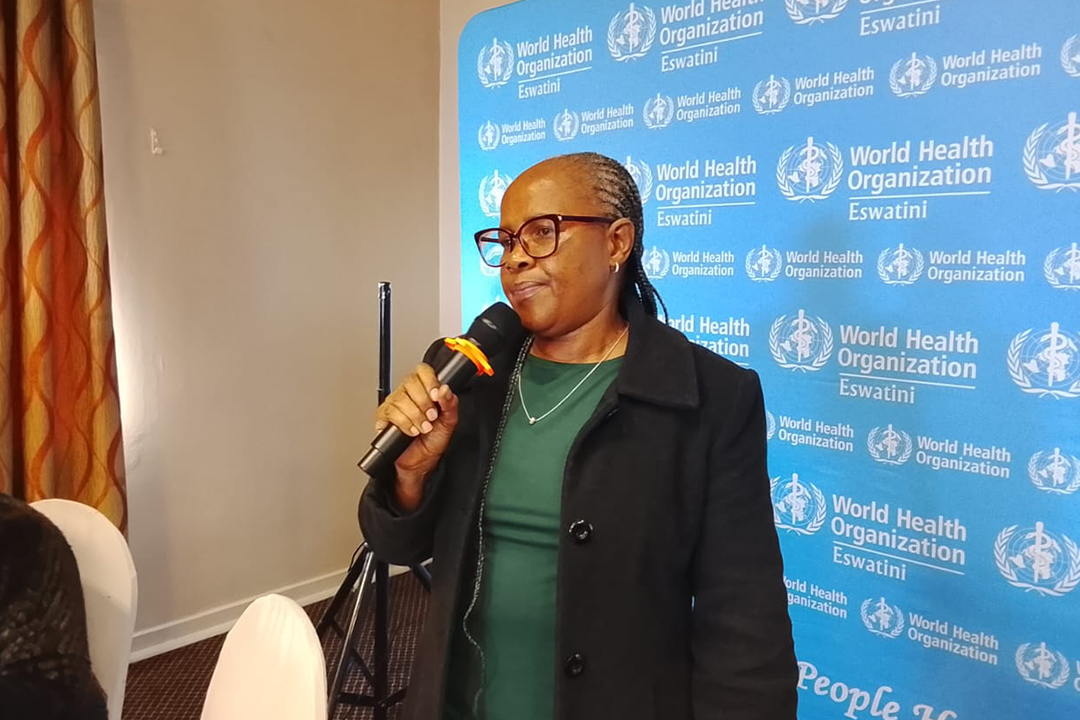
(Courtesy Pic)