


BY GCWALISILE MHLABANE
MANZINI- Communities are often home to valuable resources, skills and knowledge that can become powerful drivers of development when identified and mobilised. Royal Eswatini Sugar Corporation (RES) is strengthening this approach by empowering communities to recognise what they already have and turn those assets into practical solutions to local challenges.
Through its Corporate Social Investment (CSI) Department, RES is implementing an Asset-Based Community Development (ABCD) initiative aimed at equipping traditional leaders, community representatives and ABCD committees with practical tools to identify, mobilise and build on resources within their communities.
The initiative targets RES’s fenceline communities and seeks to promote local ownership of development, encouraging residents to become active participants in finding solutions rather than relying solely on external assistance.
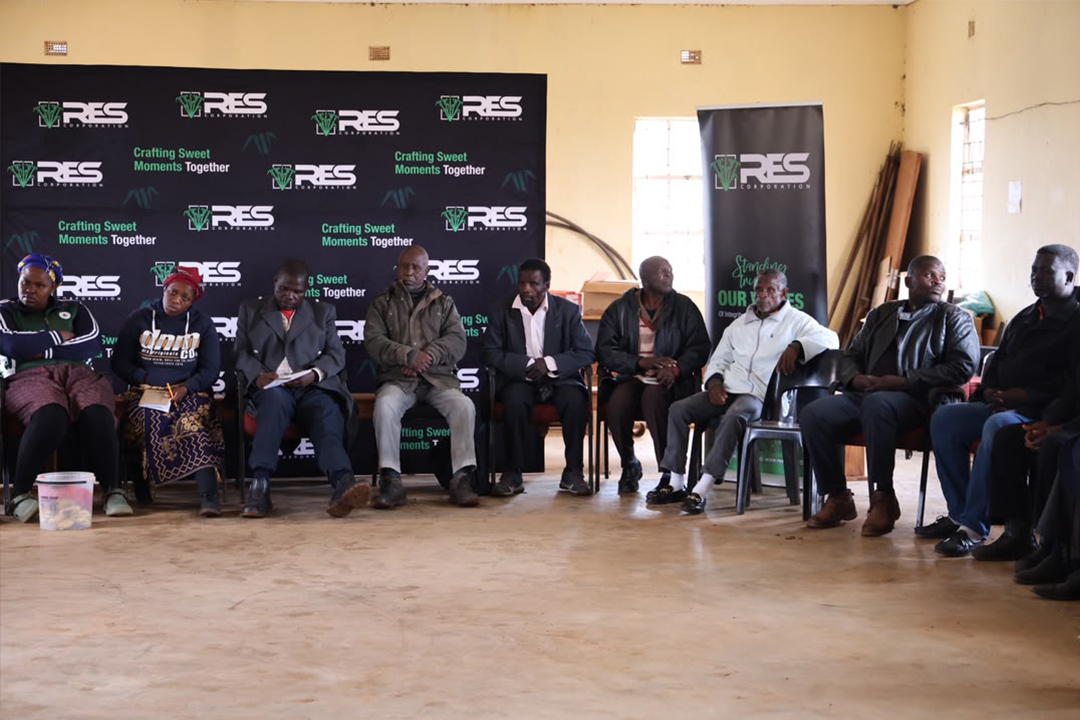
The training programme brought together community representatives and ABCD committees at Lomahasha Inkhundla on August 13, 2026, having started at Madlangempisi Inkhundla on August 6, 2026.

Speaking on the importance of the initiative, RES Corporate Social Investment Manager Phindile Dlamini-Lukhele said the programme was critical to strengthening the communities living alongside the corporation.
“These trainings are very crucial to our stakeholders, who are our fenceline communities. As the CSI Department at RES, it is our responsibility to ensure that our community neighbours are developing,” Dlamini-Lukhele said.
She said RES was committed to going beyond providing support by ensuring communities had the knowledge and practical approaches needed to identify and use their own strengths.
“Through this programme, RES is lending a hand by equipping communities with knowledge and practical approaches that can help them identify and use their own strengths,” she said.
At the heart of ABCD is a simple but transformative principle: communities should begin development by looking at what they have, rather than focusing only on what they lack.
These assets can include natural resources, local skills, knowledge, relationships, institutions, leadership structures and community networks, all of which can contribute to development when properly identified and mobilised.
For Gabsile Masilela, ABCD Vice Secretary from Shewula, the training is helping communities realise that they have the capacity to take greater responsibility for their own development.
She said the approach encouraged communities to identify what they could do for themselves instead of waiting for external intervention. Masilela highlighted natural resources such as mountains as examples of assets that could be transformed into development opportunities when communities work together to identify and utilise them.
The practical value of the approach is already evident in Maphiveni, where ABCD principles have contributed to efforts to address a longstanding water challenge.
Sibongile Khumalo, an ABCD Secretary from Maphiveni, said the training had changed the way the community viewed its challenges and potential solutions.
She said the process had “opened our eyes” to resources available within the community and the possibility of developing locally driven solutions. The approach contributed to the development of a solar-powered water system, demonstrating how community assets can be transformed into practical interventions that improve people’s daily lives.
The Maphiveni experience highlights the importance of giving communities a meaningful role in identifying their needs, resources and priorities. It also demonstrates how local participation can turn challenges into opportunities for innovation and collective action.
At Lomahasha, the ABCD initiative has also encouraged traditional leadership to view its role through a broader development lens.
Gija Mahlalela, an Inner Council member from Sicelwini Umphakatsi at Lomahasha, said the programme had expanded traditional leaders’ understanding of their responsibilities within communities.
He said traditional leaders should not focus only on maintaining social order and addressing issues such as crime, but should also play an active role in advancing development.
Mahlalela said the engagement with RES had “opened their minds” to the wider responsibilities traditional leadership can assume, adding that leaders should lead by example and demonstrate the kind of development they want to see within their communities.
The ABCD initiative therefore places community ownership, participation and local leadership at the centre of development. Rather than viewing communities simply as beneficiaries of corporate social investment, RES is recognising them as partners with valuable assets, knowledge and capabilities.
The initiative also supports the broader objectives of the United Nations Sustainable Development Goals, particularly SDG 11, which promotes inclusive, safe, resilient and sustainable communities, and SDG 17, which highlights the importance of partnerships in achieving sustainable development.
For RES, the training is more than a once-off capacity-building exercise. It forms part of the corporation’s broader CSI approach to strengthening relationships with fenceline communities while supporting them to identify opportunities, mobilise local resources and pursue development priorities.
The experiences emerging from Madlangempisi, Shewula, Maphiveni and Lomahasha demonstrate that some of the most valuable resources for development may already exist within communities.
Through the ABCD initiative, RES is helping communities recognise the value of their people, skills, natural resources, relationships and leadership—and turn those assets into action.
Ultimately, the initiative reinforces a powerful message: sustainable development is strongest when communities are not merely recipients of solutions, but are empowered to become active partners and leaders in shaping their own future.
#EswatiniPositiveNews#RES#CommunityDevelopment#ABCD#CommunityEmpowerment#SustainableDevelopment #CorporateSocialInvestment #Lomahasha #Madlangempisi
(Courtesy Pic)