



BY MFANUFIKILE KHATHWANE
EZULWINI- A dream to one day lead Eswatini’s energy sector earned a Somnjalose High School learner an unexpected E500 cash reward from the Minister of Natural Resources and Energy, His Royal Highness Prince Lonkhokhela, during the launch of the 2027 SADC Sustainable Energy Week on July 8,2026.
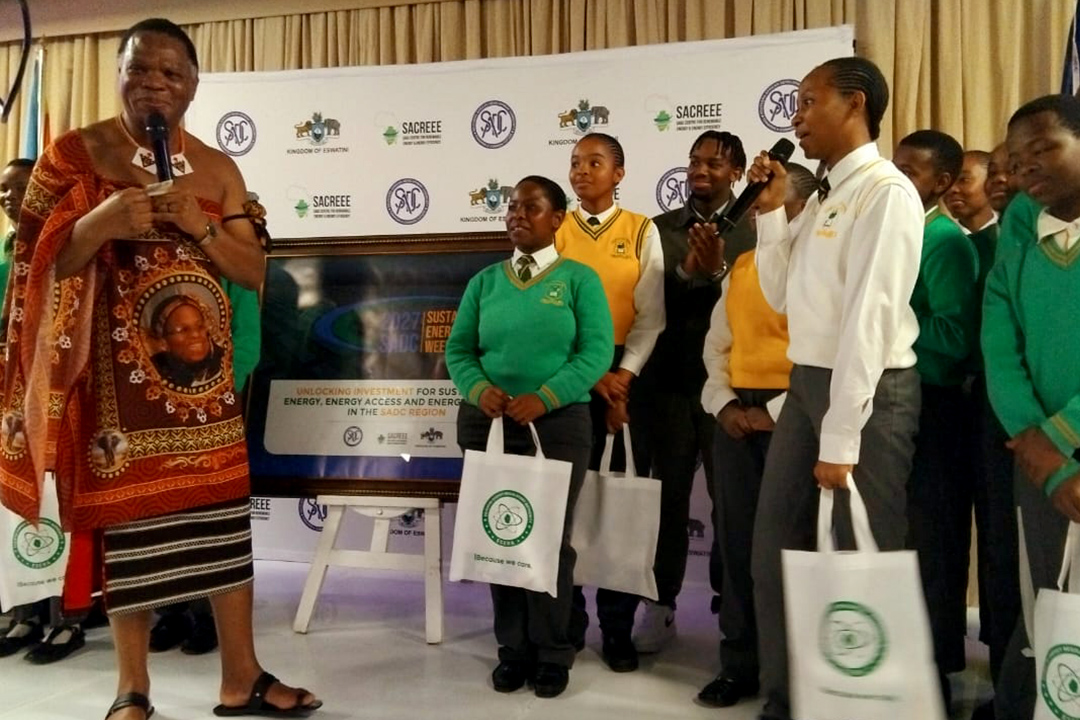
Siviwe Mnisi, a Grade 10 (Form Four) learner and Deputy Head Girl at Somnjalose High School, received the cash gift after telling the minister that she aspires to become the country’s Minister of Natural Resources and Energy.
The moment came as she and her fellow learners were receiving appreciation gifts for entertaining guests with poetry and traditional dances at the launch held at Happy Valley Hotel.
Before delivering his remarks , Prince Lonkhokhela said to guest “The future is in our youth.”

After hearing Mnisi’s ambition, the minister asked her to explain what the 2027 SADC Sustainable Energy Week would focus on.
Mnisi confidently told the audience that the regional event would promote an inclusive and just energy transition, advance regional energy integration and bring together member states to discuss sustainable energy solutions.
Impressed by her understanding of the event, Prince Lonkhokhela immediately rewarded her with E500 as applause filled the venue.
The minister’s gesture drew smiles from delegates and learners alike, highlighting the importance of encouraging young people to take an interest in the country’s future energy sector.
Eswatini will host the 2027 SADC Sustainable Energy Week at the Ezulwini Palazzo International Convention Centre (ICC) from March 15 to 19, 2027.
The event is expected to attract more than 800 delegates from all 16 SADC member states under the theme, “Unlocking Investment for Sustainable Energy, Energy Access and Energy Security in the SADC Region.”
The week will seek to mobilise investment in priority sustainable energy projects, advance regional energy integration and scale up energy efficiency through technology. It will also address regional challenges such as continued reliance on biomass and charcoal for cooking, as well as missing electricity interconnectors that limit the sharing of surplus power among member states.
#SustainableEnergy#CleanEnergy#EnergyTransition#EnergyAccess#EnergySecurity