


BY MBONO MDLULI
DWALENI– The launch of the Starlink Satellite Gateway is expected to significantly improve internet connectivity across Eswatini, marking a major step towards digital transformation and inclusive access to technology.
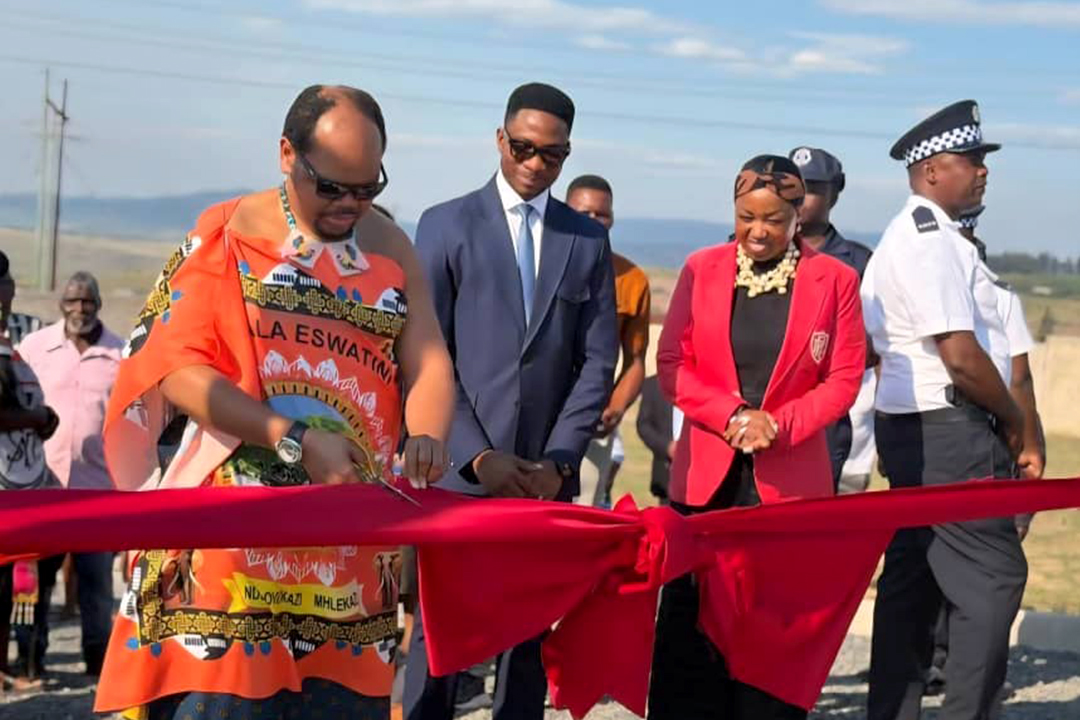
His Majesty King Mswati III officially commissioned the facility on Monday, 27 April 2026, at Dwaleni. The King was represented by Prince Sicalo at the event, which was also attended by Minister of Information, Communications and Technology Savannah Maziya.
The Starlink Gateway, part of the global satellite internet initiative by Starlink, is designed to enhance connectivity through low Earth orbit satellite technology. The facility is expected to deliver faster, more reliable internet services, particularly to underserved and remote communities.
Addressing connectivity challenges in a rural nation

In his address, delivered by Prince Sicalo, King Mswati III acknowledged the efforts of existing service providers such as MTN Eswatini and Eswatini Mobile, noting that while they have made commendable progress, geographical challenges have limited their reach.
“Eswatini is a proudly rural nation. Our people live across wide valleys and mountains where it is simply not practical or affordable to build mobile towers everywhere or lay fibre cables to every village,” the King said.
He further highlighted the country’s dependence on regional fibre infrastructure due to its landlocked position, which exposes it to connectivity disruptions.
“As a landlocked country, we also depend on fibre links that pass through neighbouring nations. We have no direct access to undersea cables, which leaves us vulnerable when those links are cut or congested,” he added.
Unlocking opportunities through advanced technology
The King described the commissioning of the gateway as a historic moment, signalling a new era of connectivity and opportunity.
“Today is a historic day. We are not just launching a building – we are opening the door to a connected, prosperous future for every young person in every corner of the kingdom,” he said.
He emphasised that improved connectivity would unlock opportunities in education, healthcare, entrepreneurship and tourism. With faster and more reliable internet, schools will benefit from e-learning platforms, clinics from telemedicine services, and entrepreneurs from access to digital markets and tools.
“Every school, clinic and young entrepreneur can now be connected, no matter how remote. Faster, more reliable connectivity means e-learning, telemedicine, online businesses, tourism applications, and jobs that were never possible before,” he noted.
Looking ahead, the King pointed to the rapid evolution of satellite and space-based technologies, suggesting that Eswatini’s early adoption positions it for future advancements.
“Starlink is only the beginning. Low Earth orbit technology is evolving rapidly. One day soon, data centres will operate in space and artificial intelligence will run closer to users than ever before. By embracing satellite connectivity today, Eswatini is positioning itself to connect directly to those future space-based resources,” he said.
Community welcomes development at Dwaleni
Dwaleni, located under the Mphini Chiefdom in the Ntondozi Inkhundla within the Manzini Region, has become the focal point of this landmark development. Local residents have welcomed the project, expressing pride in hosting a facility of national importance.
Speaking on behalf of the community, Prince Bhekokwakhe said residents were pleased to see such a significant investment in their area.
He noted that beyond national benefits, the project had already created opportunities for local youth, many of whom were involved in preparatory work ahead of the launch.
The establishment of the Starlink Gateway not only strengthens Eswatini’s digital infrastructure but also signals a broader commitment to bridging the digital divide, ensuring that even the most remote communities can participate in the country’s growing digital economy.
(Courtesy Pic)