


BY MBONGENI NDLELA
MANZINI – Prime Minister Russell Mmiso Dlamini has declared that Eswatini’s young people are the country’s “greatest competitive advantage”, urging renewed national investment in education, skills development, innovation and employment creation as Government confronts the challenge of a youth unemployment rate that now stands at 48.8 percent.
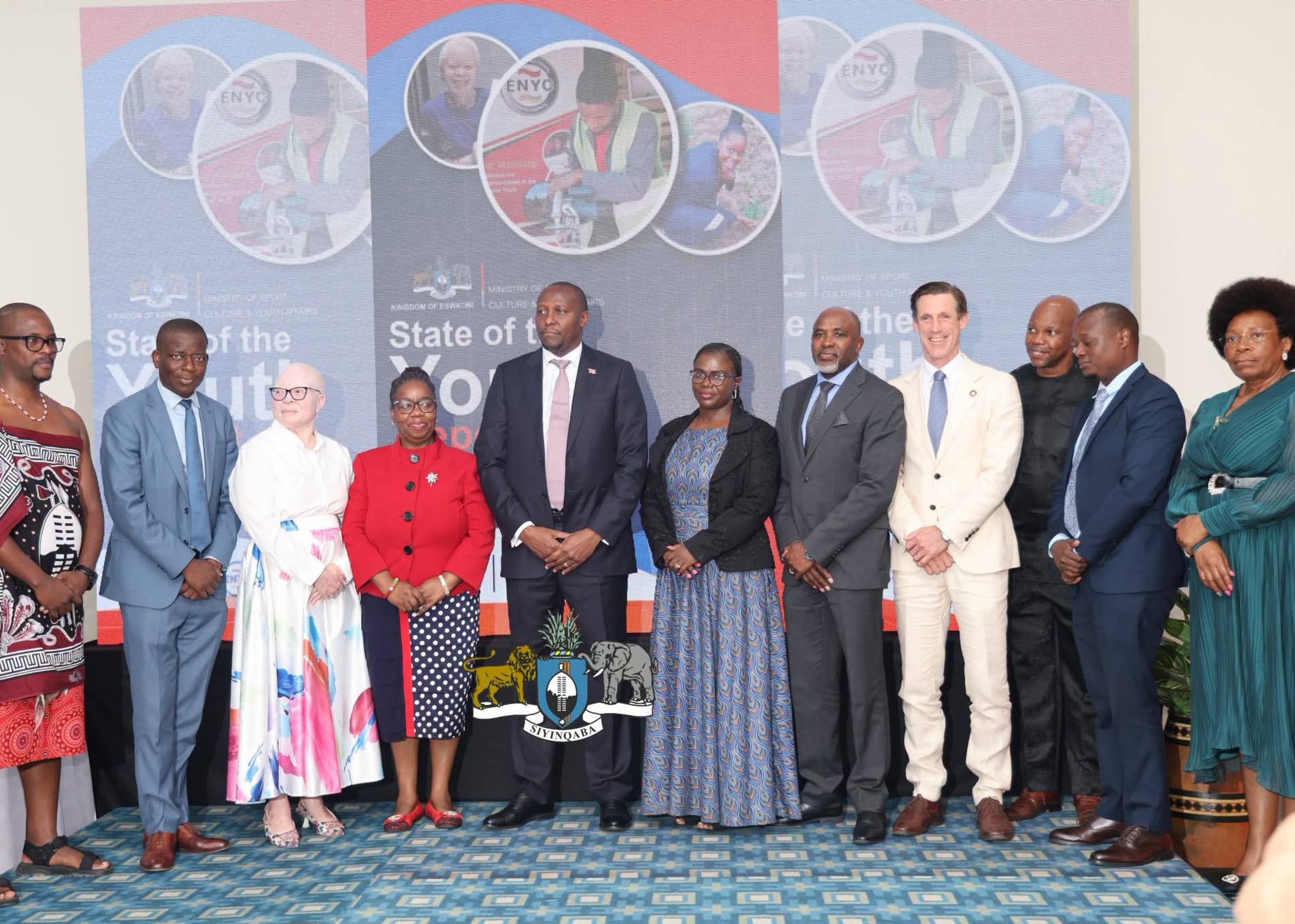
Speaking during the official launch of the State of the Youth Report 2026 at The George Hotel on Thursday, the Prime Minister described the report as one of the most important national planning documents produced in recent years, saying it provides Government and stakeholders with a clear roadmap for transforming the lives of thousands of young emaSwati.
The report presents a comprehensive picture of youth development nearly a decade after the country’s previous assessment, highlighting significant progress while also exposing pressing socio-economic challenges that require immediate attention.
Among its findings are youth literacy rates of about 97 percent, young entrepreneurs accounting for 28 percent of all SMEs, and youth representation in Parliament exceeding 17.3 percent. The Prime Minister said these achievements demonstrate the resilience and enormous potential of Eswatini’s youth.

“This report reminds us that the youth of Eswatini are not a burden, but a national asset, indeed one of our greatest competitive advantages,” he said.
He stressed that Government will continue investing in education, technical and vocational training, digital skills, entrepreneurship and innovation while addressing inequality, health and social wellbeing.
Dlamini acknowledged that youth unemployment and underemployment remain significant challenges, alongside barriers to quality education, skills development, gender equality, mental health support and economic opportunity.
He urged young people to embrace the values of buntfu, humility, patriotism, discipline and hard work, warning that entitlement weakens initiative and self-reliance.
The Prime Minister further said Government has established national and community coordination structures to ensure the report’s recommendations translate into measurable action rather than remaining policy on paper.
He thanked Government ministries, development partners, civil society, the private sector and young people for contributing to the report, describing it as a cornerstone for evidence-based planning and accountability.
“The future of Eswatini rests in the choices we make today. By investing wisely in our youth, grounded in strong values and guided by clear evidence, we will secure a prosperous, stable and resilient nation for generations to come,” he concluded