



….Housing Ministry reviews Rating Act, pushes indigent policies to shield vulnerable property owners
BY SIFISO NHLABATSI
MBABANE– Government has expressed concern over the continued auctioning of properties belonging to Emaswati for unpaid municipal rates, saying it is painful to see citizens lose their investments and homes, particularly where vulnerable groups such as orphaned children and elderly people are affected.
Ministry of Housing and Urban Development Principal Secretary Dr Simon Zwane said the ministry would not tolerate any municipality or town board that unlawfully disposes of people’s properties without following the proper legal procedures.
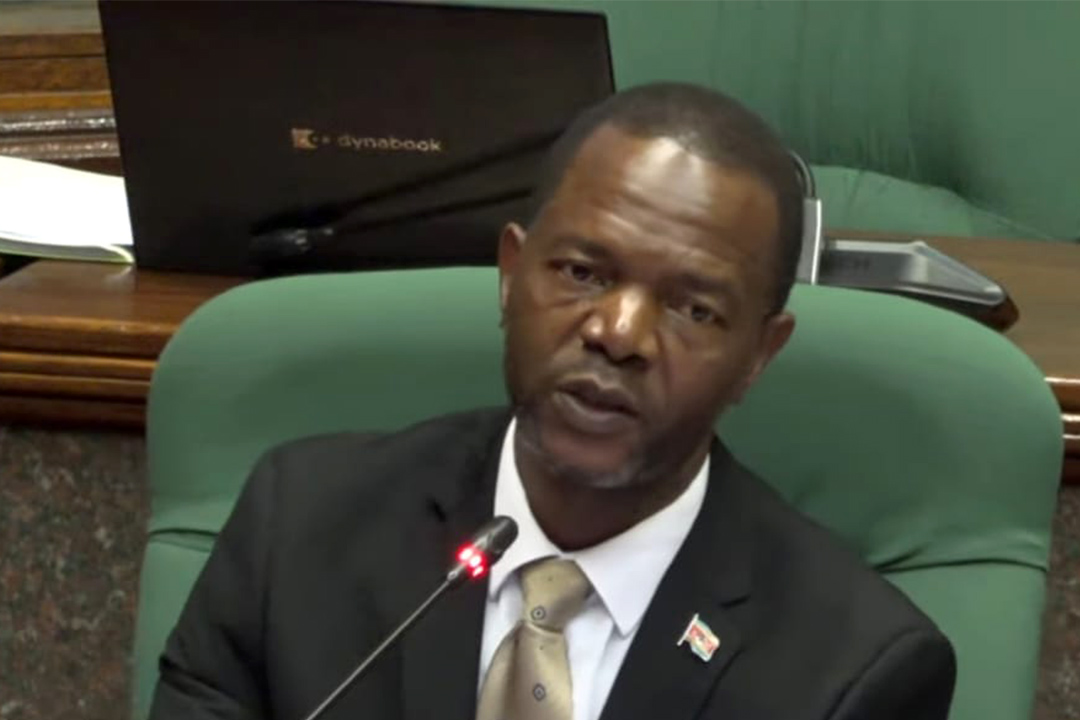
Zwane made the remarks when the Ministry of Housing and Urban Development, together with the Piggs Peak and Siteki Town Board, appeared before Parliament’s Public Accounts Committee (PAC), where Members of Parliament raised concerns over how municipalities recover outstanding rates.

The MPs alleged that some municipalities were too quick to auction properties belonging to rate defaulters, in some instances without adequately notifying the owners or exhausting all possible avenues to trace them.
Responding to the concerns, Zwane challenged parliamentarians to submit any evidence of municipalities failing to follow the law.
“If there are properties of people that are being sold by municipalities without complying with the law, the ministry will not tolerate that. Bring us the evidence so that investigations can be conducted and appropriate action taken,” he said.
The members of parliament questioned how valuable properties could end up being sold for relatively small amounts of unpaid rates.
PAC Chairperson Madala Mhlanga cited an example of a property reportedly worth more than E400 000 that was allegedly auctioned because its owner owed rates amounting to only about E16 000.
He questioned whether there were sufficient safeguards in place to protect property owners from losing assets worth hundreds of thousands of emalangeni over comparatively small debts.
Members of the committee said the problem was not unique to Piggs Peak Town Board but appeared to be affecting several municipalities across the country.
A major concern raised by MPs was the plight of orphaned children and elderly citizens whose properties were allegedly being sold after they became unable to keep up with municipal rates.
Somntongo Member of Parliament Sandile Nxumalo said Parliament had repeatedly heard reports of orphaned children losing family homes after the deaths of their parents because rates had accumulated.
He also said there had been reports of elderly people having their homes auctioned after losing their source of income.
Nxumalo questioned whether government was satisfied with a situation where municipalities simply relied on the law without considering the social consequences of rendering vulnerable citizens homeless.
Responding to these concerns, Zwane acknowledged that there were genuine cases where property owners simply could not afford to pay rates.
He explained that while some property owners deliberately refuse to pay despite having the means to do so, there are others who genuinely struggle financially.
“The unfortunate part is that the current Rating Act does not provide for people who genuinely cannot afford to pay rates,” Zwane said.
He revealed that Cabinet had tasked the ministry with reviewing the legislation to ensure that vulnerable property owners receive protection while municipalities continue collecting the revenue needed to provide services.
According to Zwane, government is simultaneously consulting stakeholders on amendments to the Rating Act while also encouraging municipalities to introduce indigent policies.
He noted that both the Municipal Council of Mbabane and the Municipal Council of Manzini already have indigent policies aimed at assisting financially distressed property owners.
However, he admitted that many other towns still lacked similar policies.
“There is a gap in other towns. That is why we are reviewing the Rating Act and consulting widely so that these provisions can also be included in the law,” he said.
Zwane stressed that government was not advocating for rates to be abandoned altogether, as municipalities depend on those revenues to provide services.
Instead, he said the ministry wanted a balanced approach that would allow struggling residents to receive assistance while ensuring councils continue recovering rates lawfully.
“We are not saying people should not pay rates because that would create a bad precedent. We are saying there should be a mechanism to assist those who genuinely cannot afford to pay or to agree on practical ways of recovering the outstanding amounts,” he said.
He urged property owners facing financial difficulties to approach their municipalities instead of waiting until debts accumulate to the point where legal recovery processes begin.
The Principal Secretary also highlighted another challenge facing municipalities — abandoned and neglected properties.
He said many people purchase plots or houses in towns as investments but later fail to maintain them or pay rates.
According to Zwane, neglected properties often become burdens to municipalities, forcing councils to maintain them while also posing security risks by becoming hideouts for criminals.
He said the ministry was equally concerned about this growing trend.
“Properties are investments and should be taken care of. It is painful when people’s properties are ultimately disposed of through auctions to recover rates,” Zwane said.
He further revealed that the ministry intended to strengthen public education on responsible property ownership.
Drawing a comparison with agricultural extension programmes, Zwane said the ministry wanted to educate Emaswati about protecting and maintaining their properties so that they remained valuable investments rather than liabilities.
During the hearing, Ludzeludze Inkhundla Member of Parliament Nomkhosi A. Masuku suggested that municipalities should adopt more effective methods of notifying property owners before auctions.
She argued that relying mainly on newspaper advertisements was inadequate because many people no longer read newspapers.
Zwane agreed that municipalities should make every effort to locate property owners before auctioning their assets.
He said that before any municipality proceeds with an auction, the ministry encourages it to submit the list of intended auction properties for review.
Using the Municipal Council of Manzini as an example, Zwane said the ministry only supported the auction after satisfying itself that all legal requirements had been met and that reasonable efforts had been made to locate the owners.
“This is because, at the end of the day, it is the Minister who must answer in Parliament whenever concerns arise about municipalities selling people’s properties,” he said.
He added that the ministry expects municipalities to leave no stone unturned before taking the drastic step of auctioning any property.
Meanwhile, MPs continued questioning the Piggs Peak Town Board over two properties that were auctioned, reportedly generating about E300 000.
Zombodze Emuva Member of Parliament asked whether sufficient efforts had been made to trace the owners before the sales.
The town’s treasurer maintained that attempts had been made to locate them.
However, Nxumalo challenged that explanation, arguing that it should not be difficult to locate people from a relatively small town such as Piggs Peak.
The committee also questioned whether there were clear thresholds that determined when a municipality could auction property for unpaid rates.
Attention later shifted to broader concerns about governance within municipalities.
Somntongo Member of Parliament also raised questions about plot allocation systems, alleging that there was “a lot of rot” in some towns where people were allocated plots but never received them.
He asked whether regular plot audits were being conducted.
Zwane responded that municipalities conduct annual plot audits to ensure billing records remain accurate.
He said such audits help prevent situations where the wrong people are billed for municipal rates while ensuring that property ownership records remain up to date.
Throughout the hearing, Zwane repeatedly appealed to property owners to engage municipalities whenever financial challenges arise instead of allowing arrears to accumulate.
He maintained that government was committed to finding humane and sustainable solutions that protect vulnerable citizens without undermining municipalities’ ability to deliver essential services.
At the same time, he made it clear that where there is credible evidence that municipalities have acted outside the law when auctioning properties, the ministry stands ready to investigate and take appropriate action.
#HousingMinistryEswatini#PropertyRights#MunicipalGovernance#PublicAccountsCommittee#LocalGovernment#UrbanDevelopment
#RatingActReform
(Courtesy Pic)