



BY SIFISO NHLABATSI
EZULWINI – Eswatini continues to record about 4 000 new HIV infections every year despite decades of investment in prevention programmes.
Prime Minister Russell Mmiso Dlamini has warned that the country must urgently confront the social and behavioural factors driving the epidemic if it is to end AIDS as a public health threat.
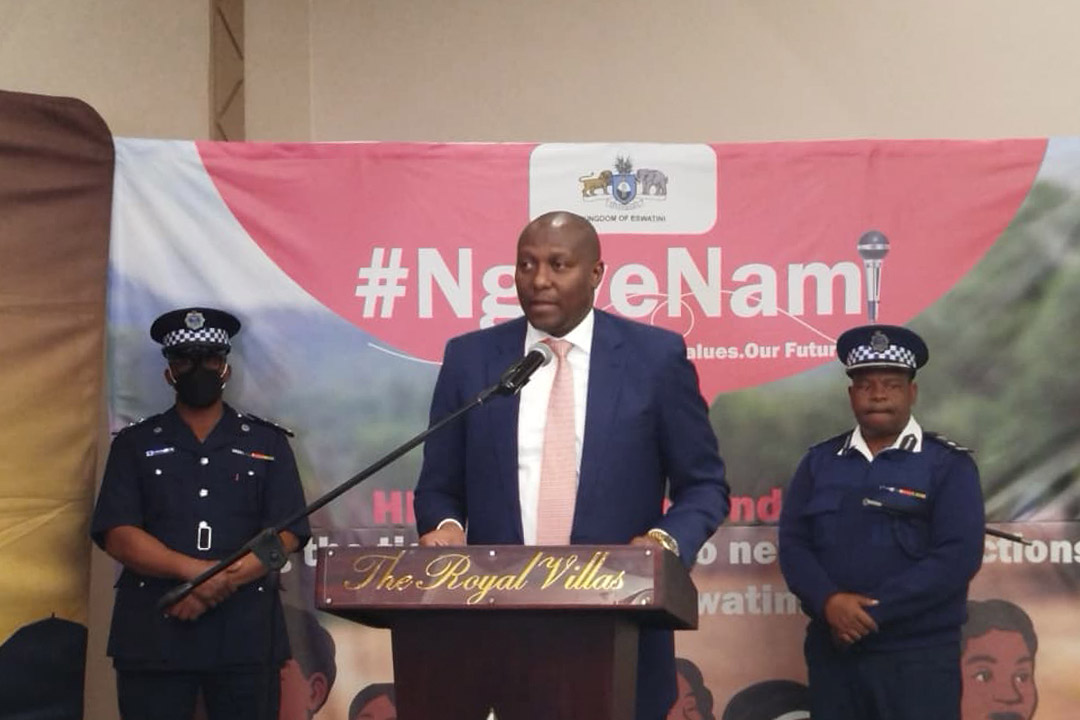
The statistics are contained in the HIV Prevention Indaba Findings Report, which the Prime Minister launched at the Royal Villas on Wednesday. The report shows that 4 220 new HIV infections were recorded in 2024, up from approximately 4 000 new infections reported in 2023.
The Prime Minister said that although Eswatini had made remarkable progress in expanding access to HIV prevention and treatment services, the continued high number of new infections demonstrated that biomedical interventions alone were no longer enough.

“For many years, we have invested substantially in HIV prevention, expanding access to testing, treatment, condoms, voluntary medical male circumcision, PrEP and other evidence-based interventions. These investments have saved countless lives. Yet, despite this progress, Eswatini still records approximately 4 000 new HIV infections each year,” he said.
Dlamini said the statistic should concern every Liswati because behind every new infection is a young person whose future has been altered, a family affected and a community impacted.
He described the HIV Prevention Indaba Findings Report as more than a collection of research findings, saying it represents the collective voice of more than 1 200 emaSwati who shared their experiences, concerns and aspirations during consultations conducted across the country.
According to the Prime Minister, the report shows that while knowledge about HIV is widespread, the country’s response must now focus on addressing deeper societal issues that continue to undermine prevention efforts.
“The challenge before us is no longer only about providing services. It is also about changing behaviours, restoring trust, strengthening families, addressing stigma and creating environments where young people can make healthy decisions without fear, judgement or misinformation,” he said.
He stressed that HIV prevention starts long before someone enters a clinic, noting that homes, schools, churches and chiefdoms all have a critical role to play in shaping behaviour.
“HIV prevention begins at home, in our schools, in our churches, in our chiefdoms and, most importantly, in the conversations between parents and their children. The values we teach and the behaviours we model shape our children into who and what they become,” he said.
Referring to the Indaba’s theme, “Changing Minds, Shaping Norms: The Power of Values in HIV Prevention,” Dlamini said restoring positive values was essential if the country hoped to reverse the trend of new infections.
He noted that the report identified stigma, poor parent-child communication, economic vulnerability, misinformation, harmful gender norms and limited youth-friendly services as some of the major barriers to effective HIV prevention. He said government alone could not address these challenges.
According to Dlamini, government will continue providing leadership, policy direction, financing and health services, while families must guide their children, faith leaders provide moral leadership, traditional leaders strengthen communities, schools equip young people with life skills, civil society reach vulnerable populations and the private sector invest in the wellbeing of citizens.
“Ending HIV requires a whole-of-society response,” he said.
The Prime Minister also warned that changes in the global funding landscape made it imperative for Eswatini to strengthen domestic ownership of its HIV response.
“As international funding landscapes continue to evolve, we must strengthen domestic ownership of our HIV response. The fight against HIV cannot depend solely on external support. It must become part of our national development agenda and our collective responsibility,” he said.
He reaffirmed government’s commitment to ensuring HIV prevention remains a national priority through community-led interventions, support for young people, efforts to reduce stigma and discrimination, and improved access to innovative prevention technologies, including the recently introduced long-acting HIV prevention injection, Lenacapavir.
However, he stressed that policies, funding and technology alone would not end HIV.
“It is people who will end HIV. People who choose compassion over stigma, parents who choose conversation over silence, communities that choose inclusion over discrimination, young people who choose hope over risk and leaders who choose courage over complacency,” he said.
He urged institutions represented at the launch to implement the report’s recommendations and translate its findings into meaningful action.
NERCHA National Executive Director Dr Nondumiso Ncube said the study was undertaken because, despite substantial investment in combination HIV prevention strategies, the country continued to experience high numbers of new infections.
She said Eswatini recorded 4 220 new HIV infections in 2024, while approximately 220 000 people are currently receiving antiretroviral treatment.
“There has been a huge investment in combination prevention strategies in the country. However, structural and social barriers persist, and these necessitate innovative and community-driven approaches to ensure that we keep everybody HIV-free,” Ncube said.
She expressed concern over recent reductions in international HIV funding, saying prevention programmes had been particularly affected.
“With the funding cuts that we are seeing, there really is no money that has been set aside for HIV prevention. It is now very important that we develop new strategies which are people-centred so that our people can own those strategies,” she said.
Ncube said the study sought to identify comprehensive, evidence-based and community-driven HIV prevention strategies by documenting community experiences, barriers to accessing services and recommendations for improving prevention programmes.
Conducted between November 2025 and February 2026 across all four regions, the research included focus group discussions, key informant interviews and in-depth interviews involving adolescent girls, young women, key populations and other community groups.
The launch featured robust discussions involving delegates from government, Parliament, civil society, traditional leaders, faith-based organisations and development partners.
Disability Programme Manager in the Deputy Prime Minister’s Office Fikile Shongwe called for healthcare workers to be trained in sign language to improve access to HIV prevention, testing and treatment services for people with hearing impairments.
Pastor Colani Magongo appealed for a return to strong moral values, saying families and communities should complement biomedical interventions by instilling positive behaviours among young people.
Senator Isaac Magagula questioned Eswatini’s continued reliance on donor funding and called for stronger domestic resource mobilisation to sustain the national HIV response.
Youth representative Tsidiswa Mhlanga urged government to address unemployment, arguing that economic vulnerability continued to expose many young people to HIV infection.
#HIVPrevention #EndHIV #BehaviourChange #Eswatini #PublicHealth #HIVResponse #HealthForAll #StopNewInfections #CommunityAction #NationalHIVPreventionIndaba #NERCHA #PrimeMinister #HealthLeadership #ZeroNewInfections #TogetherWeCanEndHIV
(Courtesy Pic)