


BY GCWALISILE MHLABANE
MANZINI – Umhlanga 2026 is one for the books!
Umhlanga is often seen through the spectacle of the reed, the singing, the traditional attire and the grand Royal celebrations. But standing within the journey for the first time, I discovered something deeper: Umhlanga is not simply a cultural ceremony to be witnessed; it is a living expression of who emaSwati are, where they come from and what they are entrusted to carry forward.
For seven days, I watched that meaning unfold—not from behind a screen or through a reporter’s notes, but through movement, participation, tradition and moments that became personal. From following registration online to kushuca, receiving a Royal Gift at Ngabezweni, cutting reed at Mpisi Farm, returning to Ludzidzini, resting, kucitsa Umhlanga and finally experiencing the Main Day, I came to understand that the reed is only one part of a much bigger story.
The real story is identity. It is found in the discipline of thousands moving together, in the pride carried through traditional attire, in the unity created by a shared tradition, and in the quiet responsibility of one generation inheriting something from those before it. It is also a reminder that culture does not belong only in history books or ceremonial moments; it lives when people participate in it, protect it and give it meaning for the next generation.

That is what made Umhlanga 2026 different for me. I arrived prepared to report the story, but I left having experienced it.
DAY ONE: FROM THE SCREEN TO THE JOURNEY
The journey began with registration, which I followed online rather than physically attending. As a journalist, I was familiar with observing Umhlanga from a distance, gathering information and following the developments that shape the annual celebration. This time, however, the experience felt different because I knew I would soon move from reporting about the journey to physically being part of it.
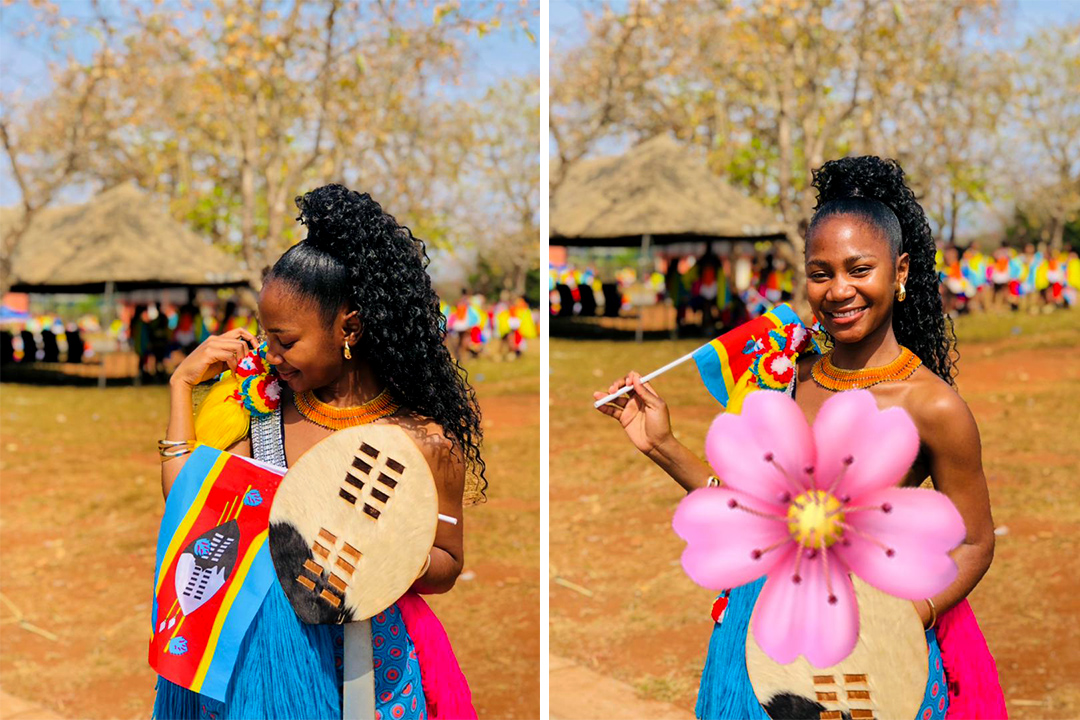
One of the moments that stayed with me happened when I saw myself dressed in cultural attire. I had seen the attire countless times before, both in my work and in the wider celebration of Umhlanga. I had written about it, photographed it and watched others proudly wear it, but seeing myself in it created a completely different feeling. For a moment, I stopped looking at the tradition as a journalist and saw myself within it. The attire was no longer simply something I could describe in an article; it had become part of my own experience and, in a small but meaningful way, part of my own story.
DAY TWO: KUSHUCA AND A ROYAL GIFT
The second day took us from Ludzidzini to Ngabezweni for kushuca, and this was when the experience began to feel much more real. Watching people move together while singing created a sense of unity that is difficult to fully capture through a screen. Being physically present allowed me to appreciate the journey beyond the photographs and headlines, because the movement, participation and shared purpose became part of my own experience rather than something I was simply documenting.
At Ngabezweni, His Majesty King Mswati III commissioned the Imbali before they proceeded towards the reed-cutting sites. The commissioning was an important part of the journey, connecting the young participants to the tradition they were carrying forward. For me, however, Ngabezweni became even more memorable because I received a Royal Gift. The moment was unexpected and deeply personal, and it became one of the memories I will carry from Umhlanga 2026.
As a journalist, I am accustomed to documenting the experiences of other people. I observe events, ask questions, take notes and eventually turn those experiences into stories. Receiving the Royal Gift placed me on the other side of that process. I was no longer only recording a moment for others to remember; I had become part of a moment that I would personally remember. It reminded me that there are some experiences that cannot be fully understood from a distance and that sometimes a story has to be lived before it can truly be appreciated.
DAY THREE: MPISI FARM REED CUTTING
The journey continued to Mpisi Farm for reed cutting, where the significance of the reed became more apparent to me. The singing, movement and participation gave the day a strong sense of purpose, while the reed itself began to represent something beyond the physical object being harvested. I started seeing it as a symbol of continuity, linking generations through a tradition that has survived because people continue to participate in it and pass it forward.
At Mpisi Farm, HRH Princess Sakhizwe encouraged the Imbali to consider entrepreneurship and starting businesses. Her message added an important dimension to my understanding of the occasion because it demonstrated that culture and progress do not have to compete with each other. Young people can remain connected to their heritage while also being encouraged to think about business, independence and their economic future. Umhlanga can therefore be both a celebration of where young people come from and an opportunity to remind them that they have a role to play in shaping where they are going.
DAY FOUR: THE JOURNEY BACK TO LUDZIDZINI
Returning to Ludzidzini marked another important stage of the journey. By this point, I had already experienced several parts of Umhlanga that I had previously only encountered through reporting. I had witnessed kushuca, experienced the Royal commissioning, received the Royal Gift and followed the reed-cutting journey. Returning to Ludzidzini therefore felt like more than simply moving from one place to another; it was another step in a journey that was gradually changing my understanding of the celebration.
The return also made me appreciate that Umhlanga is not defined by one major event. It is a process made up of different stages, each contributing to the meaning of the whole. As a journalist, I am naturally drawn to the moments that become headlines, but being on the ground taught me that the story is also found in the movement between those moments, in the participation, the anticipation and the sense of belonging that develops as the journey continues.
DAY FIVE: A REST DAY FOR REFLECTION
Day Five was a rest day, and the pause gave me an opportunity to reflect on everything I had experienced. Without the immediate pressure of following another major stage of the journey, I found myself thinking about the transformation that had taken place since registration. What had started as something I was accustomed to observing online had gradually become a personal experience that I was carrying with me.
I returned again to the memory of seeing myself in cultural attire. That moment had seemed simple at first, but it had come to represent something much bigger. For years, I had seen Umhlanga through the eyes of a journalist, but this experience had allowed me to understand that culture becomes different when you participate in it. It is no longer simply something you know about or report on; it becomes something you feel connected to and, therefore, something you have a responsibility to respect and help preserve.
DAY SIX: KUCITSA UMHLANGA AND THE APPROACH OF THE MAIN DAY
Kucitsa Umhlanga brought a renewed sense of anticipation as the Main Day drew closer. By this stage, I was still very much a journalist, but I had also become more comfortable simply being present and taking in the experience. The singing, movement and traditional attire were no longer only elements of a story I was covering; they had become part of a journey I had personally travelled.
The experience also taught me that not every moment needs to be immediately turned into words. Journalism requires observation, but being on the ground reminded me that observation and participation can exist together. Sometimes it is necessary to put the notebook aside mentally and allow an experience to settle before deciding how best to tell its story.
DAY SEVEN: WHEN THE JOURNEY CAME TOGETHER
The Main Day brought the seven-day journey to its climax. The traditional attire, singing, movement and sense of pride came together in the biggest celebration of the journey, and standing there made me reflect on everything that had brought me to that point. I thought about the registration I had followed online, the journey from Ludzidzini to Ngabezweni, the Royal commissioning, the Royal Gift, the reed cutting at Mpisi Farm, the return to Ludzidzini, the rest day and kucitsa.
Looking back at the entire journey, I realised that each stage had contributed something different to my understanding of Umhlanga. The experience had gradually moved me from being an observer to becoming someone with a personal connection to the journey. What I had once primarily understood as an annual cultural event had become something much more layered, involving identity, belonging, discipline, unity and the responsibility of preserving something meaningful for future generations.
BEYOND THE REED
By the end of Umhlanga 2026, I understood that the reed is only one part of the story. The deeper story is identity: the feeling of belonging to something that existed before us and that, if protected and respected, can continue long after us. It is the discipline of people moving together, the pride expressed through traditional attire, the unity created by a shared tradition and the responsibility of one generation receiving something valuable from those before it.
This is why I believe Umhlanga cannot be fully captured through photographs, headlines or newspaper reports. A journalist can describe the singing, report on the reed cutting, document the traditional attire and tell the story of the Royal celebrations, but there is another layer that only becomes visible when one is physically present. Standing within the journey allows one to appreciate the emotion, participation and sense of belonging that sit beneath the spectacle.
For me, Umhlanga 2026 was therefore more than an assignment. It became a journey into identity and a reminder that culture remains alive because people choose to participate in it. It survives when it is respected, taught and carried forward, and it becomes stronger when young people understand that preserving their heritage does not prevent them from pursuing their ambitions for the future.
The moment I saw myself in cultural attire now feels symbolic of the entire experience. I had spent years seeing the attire on others and reporting on what it represented, but this time I saw myself wearing it. That small moment helped me understand the difference between simply seeing culture and feeling that you belong within it.
I arrived at Umhlanga with the responsibility of a journalist, ready to observe, document and tell the story. But the seven-day journey gave me something beyond a story to publish. It gave me a personal memory of participating in a tradition that connects generations and continues to shape the identity of emaSwati.
Umhlanga, I learned, is not only about preserving what has been inherited from the past. It is also about giving the next generation something meaningful to inherit. It is about understanding that culture is not frozen in history; it remains alive through the people who carry it.
And that is the story I will remember beyond the reed, beyond the singing and beyond the celebration.
I went to Umhlanga prepared to report the story. I left having experienced it.