


BY SIFISO NHLABATSI
EZULWINI– Prime Minister Russell Mmiso Dlamini has warned that Eswatini cannot achieve meaningful national transformation while public office is used as a pathway to private enrichment, saying corruption is consuming resources that should be improving the lives of citizens.
Dlamini said corruption was draining resources that should instead be used to educate children, provide healthcare, develop infrastructure and create employment.
“Corruption is consuming resources on a scale that no nation committed to renewal can tolerate: resources that ought to educate children, heal the sick, build infrastructure and create employment,” said Dlamini.
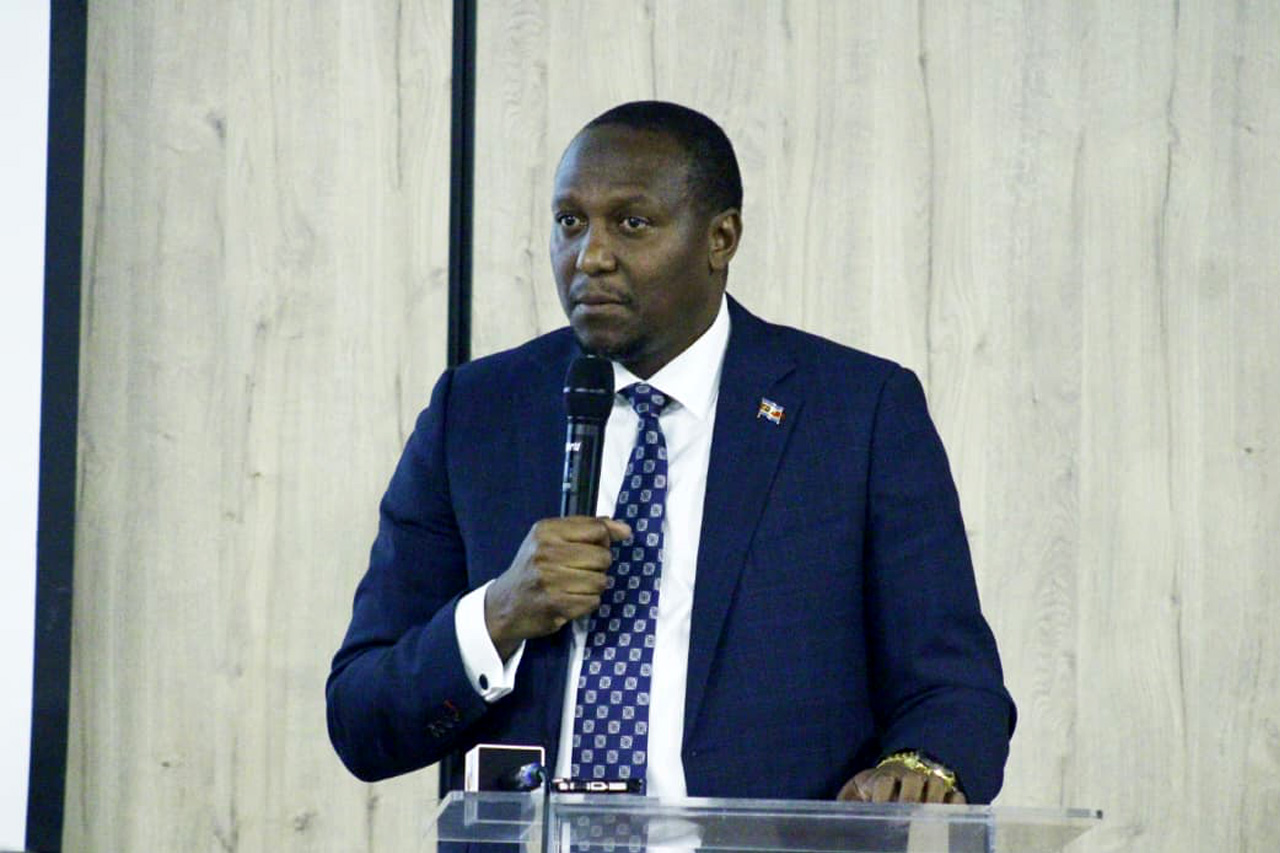
He was speaking during the Kingdom International Leadership Foundation Lecture held at Happy Valley Hotel on Monday, where he outlined what he described as key principles that must guide Eswatini’s transformation.

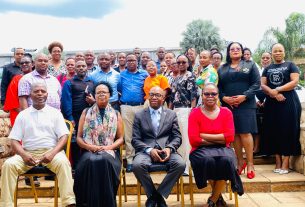
The seminar brought together, Cabinet Ministers, Members of Parliament, Principal Secretaries, senior government officials and Parliament staff, alongside religious and business leaders and members of Campus Crusade for Christ. The gathering formed part of the Kingdom Leadership and National Transformation initiative aimed at engaging leaders on leadership, integrity and national development
The Prime Minister said the country could not build a great nation if public office was regarded as an avenue for personal financial gain.
“We cannot build a great nation where public office is treated as an avenue for private enrichment,” he said.
He said the fight against corruption should go beyond condemning the practice in speeches, arguing that integrity must become a practical standard governing how public institutions operate.
“Integrity must cease to be merely a virtue we commend in speech; it must become the standard by which we govern, lead, procure, employ and conduct public business,” he said.
INTEGRITY MUST GUIDE PUBLIC BUSINESS
The Prime Minister said national transformation required more than new programmes and policies, stressing that the character and conduct of people entrusted with public responsibilities would determine whether the country achieved its aspirations.
He said public resources must be protected because they were ultimately meant to serve citizens.
The Prime Minister said resources lost through corruption represented opportunities lost by ordinary Emaswati, particularly in areas such as education, healthcare, infrastructure and job creation.
He called for integrity to be embedded in the day-to-day functioning of government and other institutions, rather than being treated as an abstract moral principle.
According to the Prime Minister, integrity must influence decisions involving public leadership, procurement and employment, as well as the broader conduct of public business.
COUNTRY MUST COME FIRST
The Prime Minister also called for the national interest to take precedence over personal, political and institutional interests.
“Above all, the country must come first. Personal ambition must yield to the national interest. Political interest must yield to the national interest. Institutional interest must yield to the national interest,” he said.
He said the current generation had a responsibility to make sacrifices so that future generations could inherit a better country.
“Our generation must be prepared to surrender something of itself so that the generations after us may inherit something greater,” he said.
DISRUPT SYSTEMS THAT FAIL THE PEOPLE
The Prime Minister said transformation would require Eswatini to confront systems and processes that no longer serve the interests of the people.
He called for the “lawful and purposeful disruption” of systems, processes and structures that had become self-serving rather than people-centred.
The Prime Minister said the country needed to move away from what he described as perpetual contestation, personality-driven politics and public discourse characterised by insults, threats and division.
He said disagreement was a normal part of national life, but urged leaders and citizens to maintain respect while engaging on issues.
“Difference of opinion is both inevitable and healthy; contempt is not,” he said.
FROM DEPENDENCY TO PRODUCTION
The Prime Minister also linked the fight against corruption to the broader economic transformation he said Eswatini requires.
He said the country must move “from dependency to productivity; from consumption to production; from importation to manufacturing; from the export of raw resources to the creation of value”.
The Prime Minister said Eswatini needed to develop greater confidence in its own capacity while remaining open to international investment, technology and knowledge.
He said foreign investment and partnerships remained necessary and welcome, but should complement rather than replace national agency.
“We must become the principal authors, investors and beneficiaries of Eswatini’s development,” he said.
The Prime Minister said the country possessed the potential to build a stronger economy if it developed the capacity to own, finance and control productive assets.
TRANSFORMATION STARTS IN THE MIND
The Prime Minister said national transformation ultimately began with a change in mindset.
He called for an Eswatini that believes in Emaswati and an Africa that believes in Africans, while encouraging citizens to learn from the rest of the world without simply copying foreign models.
“We require a renewed national confidence: an Africa that believes in Africans; an Eswatini that believes in emaSwati; and a people prepared, without hesitation or complaint, to take responsibility for their own destiny,” he said.
He said the country should have the confidence to embrace its identity while improving what already exists.
CHURCH HAS A ROLE
The Prime Minister further said the Church had an important role to play in developing citizens who uphold integrity and responsible leadership.
He said Government could construct roads, hospitals, schools and industries, but institutions alone could not shape the character of a nation.
“The Church bears a profound responsibility to help shape men and women of truth, discipline, service, compassion and integrity,” he said.
He also called for Government and the Church to work within their respective spheres towards a society that serves people rather than power and rewards honest work rather than corruption.
The Prime Minsiter said leadership should ultimately be regarded as a sacred trust.
GRAND PLAN AND NKWE
The Prime Minister said Government had already established the Nkwe Programme of Action and the Grand Plan for National Transformation as frameworks for pursuing the country’s development objectives.
While acknowledging that no policy framework was beyond improvement, he said the two instruments provided a sufficient foundation upon which the country could pursue its transformation agenda.
The Prime Minister said Eswatini was at a defining moment and faced a choice between continuing to manage the limitations of the present or having the courage, imagination and discipline to build the country it was capable of becoming.
He said the responsibility for achieving that transformation rested with the present generation.
“This is why today’s conversation is important,” he said, as he welcomed Professor Delanyo Adadevoh to the lecture.
He said Adadevoh’s contribution could challenge existing assumptions, broaden the thinking of leaders and strengthen their resolve to transform Eswatini.
The Prime Minister made a call for a country that believes in itself, develops itself, owns its future and prospers under the providence of Almighty God.
#Corruption #Integrity #RussellMmisoDlamini #NationalTransformation #Leadership #Eswatini #PublicOffice #GoodGovernance #NationalDevelopment #KingdomLeadership