



BY THEMBA ZWANE
EZULWINI – Africa is not yet ready for the full-scale integration of artificial intelligence (AI) into classrooms, with teacher preparedness, infrastructure, regulation and security emerging as major obstacles to the continent’s AI ambitions.
This warning emerged during the Pan-African Conference on Teacher Education (PACTED) 2026 at the Ezulwini Palazzo International Convention Centre, where education experts examined the continent’s readiness to equip teachers and learners for an increasingly AI-driven education system.
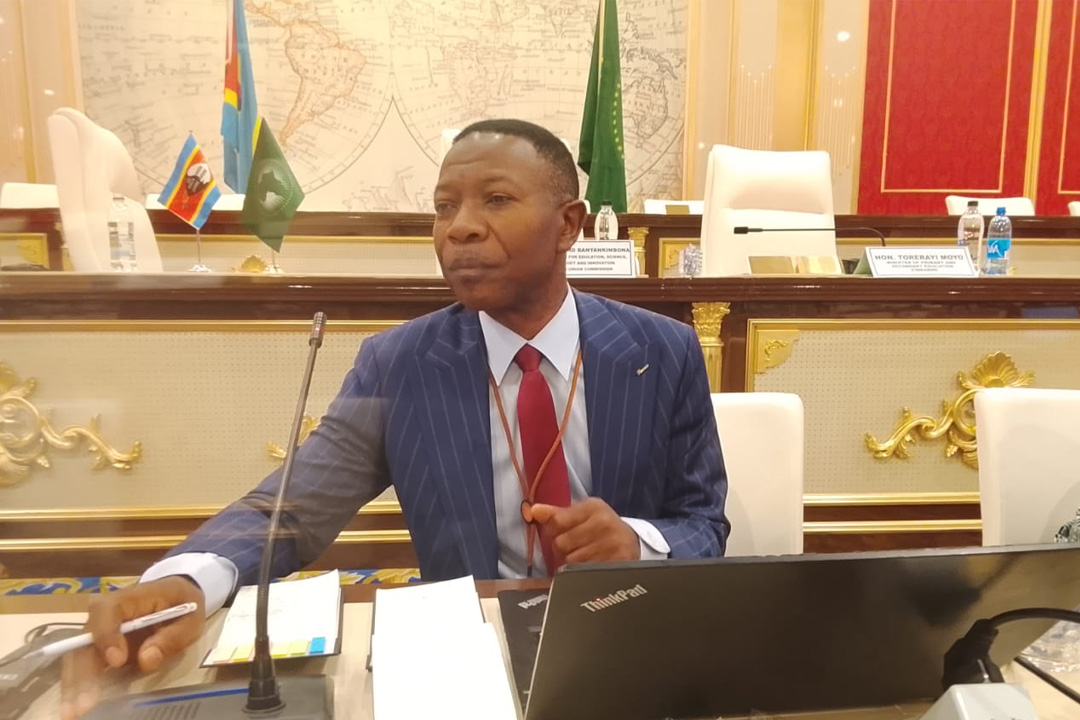
The remarks were made by Inspector General of Pedagogy for Computer Science and IT, Fomboh Julius of Cameroon, who said teacher readiness had been identified as a priority as far back as three years ago, but experience with digital technologies and AI had demonstrated that simply putting technology into classrooms was not enough.
“For readiness, we are not 100 per cent ready,” Julius said.
The admission comes as African education systems increasingly explore AI for teaching, assessment, personalised learning and the creation of new learning experiences.
However, Julius cautioned that AI represented a fundamentally different challenge from conventional digital technology.
Previously, teachers could use digital tools by giving them specific instructions and expecting predictable results.
AI, however, can generate its own responses, make recommendations and perform functions beyond what the user may have anticipated.
“The previous tools, you could give it an instruction and expect a good result. But with AI, you give it an instruction, it gives you an instruction, and can also do its own things,” Julius explained.
This unpredictability, Julius said, means that teachers cannot be expected to use AI effectively without first understanding how it works and the risks associated with it.
TEACHERS AT THE CENTRE
The biggest readiness challenge is therefore not necessarily access to technology, but the capacity of teachers to use it responsibly.
Julius said education systems had invested in resources such as smartboards and other digital teaching tools, but teacher capacity remained at the centre of successful technology adoption.
A three-level approach to teacher AI training was outlined.
The first level is understanding AI, where teachers learn the basic concepts and principles behind the technology.
The second is using AI as a teaching tool, including applications in teaching, assessment and personalised learning.
The third involves creating AI-enabled learning experiences, including simulations that can be used in classrooms.
Julius warned against putting AI tools into teachers’ hands without ensuring that they understand the technology behind them.
The challenge, according to Julius, is that some educators may approach AI as if it were simply another digital tool, without appreciating that it can operate in more complex and dynamic ways.
AI RISKS
Another major gap is the ability of education systems to manage AI-related risks.
Julius said AI applications needed to be classified according to their level of risk, with different controls applying to low-, medium- and high-risk systems.
Low-risk applications could be used with fewer restrictions, while medium-risk applications would require authorisation. High-risk applications would face much stricter controls and could require national-level authorisation.
This risk-based approach is expected to form part of guidelines for the responsible use of AI in education.
The issue is particularly important because teachers and education authorities are increasingly expected to make decisions about technologies whose potential risks they may not fully understand.
INFRASTRUCTURE GAP
Beyond teacher training, Julius said African countries also faced a major system-readiness challenge.
Training teachers may be relatively straightforward, but building the infrastructure required for sustainable AI deployment is considerably more difficult.
Julius pointed to the need for stronger national systems, including data centres and security mechanisms, to give governments greater control over AI-related data and infrastructure.
African countries also face the cost of accessing advanced AI technologies and computing infrastructure.
“We pay a lot of money to access AI data and the highest centres around the world,” Julius said.
This means that AI readiness cannot simply be measured by whether schools have internet connections, computers or smartboards.
It must also consider whether countries have the infrastructure, cybersecurity, regulatory frameworks and human capacity required to deploy AI safely and sustainably.
FROM DIGITAL TO AI
The conference heard that Africa therefore needs to move beyond its previous approach to digitalisation.
Digitalisation largely focused on giving teachers technological tools.
AI requires a deeper transformation in how teachers are trained and how education systems are designed.
Julius said the continent’s experience over the past two to three years had exposed gaps in AI knowledge and skills, making teacher professional development an urgent priority.
The training model being pursued is based on the UNESCO AI Competency Framework, with efforts also underway to strengthen teacher qualifications and competencies.
Julius’s message was ultimately a warning against treating AI as another technology that can simply be introduced into schools.
Africa may be moving rapidly towards AI-powered education, but the foundations for that transition — prepared teachers, responsible-use guidelines, secure infrastructure, regulation and system capacity — still need significant strengthening.
The challenge facing African education systems is therefore no longer whether AI will enter the classroom.
It is whether teachers and education systems will be ready when it does.
#PACTED2026 #AIinEducation #TeacherReadiness #ArtificialIntelligence #Education #TeacherEducation #Cameroon #Eswatini #Africa #DigitalTransformation