



BY THEMBA ZWANE
EZULWINI– Refugee teachers in Kenya are facing severe professional and welfare challenges, including poor pay, insecure employment, lack of professional registration and high burnout, despite remaining deeply committed to educating children in some of the country’s most challenging learning environments.
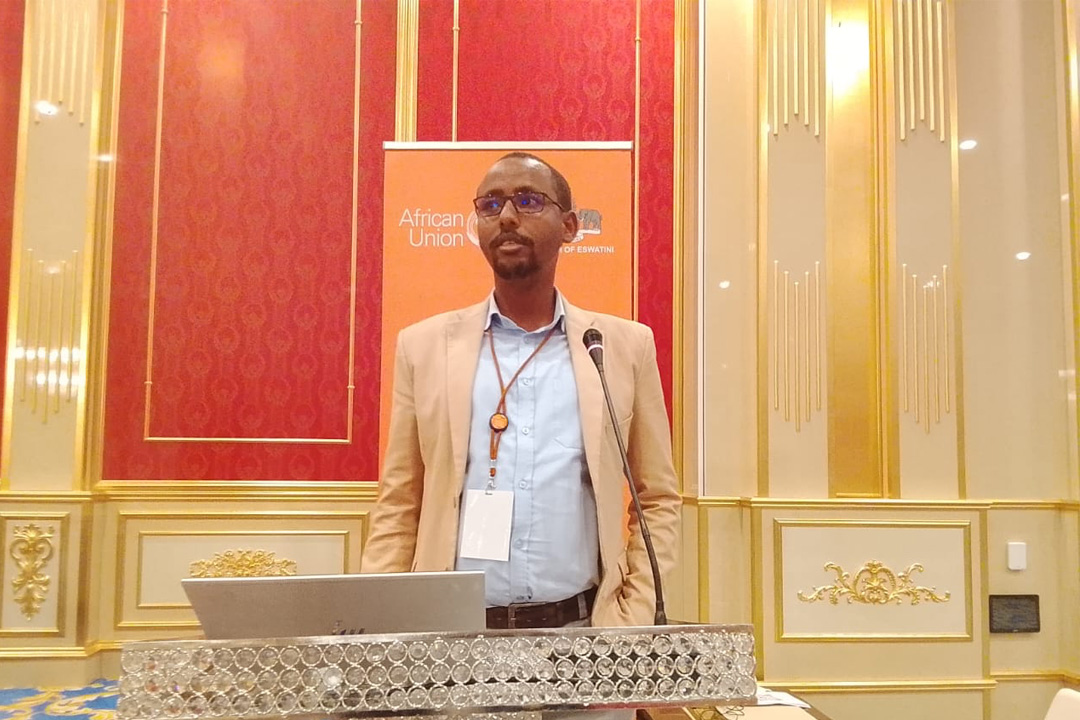
The findings emerged from a study conducted in Kenya and presented by Abdimalik Ibrahim Farah of the African Population Health Research Centre (APHRC) during the Pan-African Conference on Teacher Education (PACTED) 2026 at the Ezulwini Palazzo International Convention Centre.
The study focused on what researchers described as the “unsung heroes” of education – teachers working in refugee camps and refugee-hosting schools who often receive far less attention than the learners they serve.
Farah said the research sought to highlight teachers affected by crisis who had fled their countries for different reasons and were now teaching in Kenya’s refugee settings.

Kenya hosts refugees mainly in Garissa and Turkana counties, where teachers operate under difficult conditions characterised by overcrowded classrooms, insecurity, limited teaching materials and inadequate opportunities for professional training.
According to the study, classrooms can have an average teacher-to-learner ratio of about 1:80, placing enormous pressure on educators already working in difficult circumstances.
A major concern identified by the research was the glaring disparity in remuneration between national teachers and refugee teachers.
Farah said national teachers working in the same refugee education environment can earn more than KSh50 000 (E6300), while refugee teachers, commonly referred to as “incentive teachers”, can earn less than KSh9 000 (around E1100)
The disparity is compounded by differences in employment security.
The study found that refugee teachers are generally employed on contracts lasting less than a year, meaning their employment is not guaranteed, while national teachers benefit from permanent and pensionable arrangements.
Farah said the research also found that many refugee teachers lacked recognised certification because their qualifications were either not equated or did not correspond with the requirements of the host country.
Professional exclusion was another major challenge.
The study found that refugee teachers were not registered with Kenya’s Teacher Service Commission (TSC), the body responsible for teacher registration and deployment.
Farah said the lack of registration was linked to their status as non-citizens, contributing to their exclusion from the formal teaching system and helping explain the significant disparity in remuneration.
Despite these challenges, the study found that refugee and refugee-hosting school teachers demonstrated strong commitment to their profession.
About 60 per cent of teachers surveyed were found to be highly committed to teaching.
Some described teaching as a calling, while others regarded it as a noble profession.
However, the researchers identified a striking paradox: teachers remained highly committed while simultaneously experiencing high levels of burnout and job distress.
The burnout was found to be particularly pronounced among refugee teachers, with poor remuneration, insecure employment and exclusion from professional systems contributing to their difficult working conditions.
The study further highlighted inequalities affecting female refugee teachers and teachers with disabilities.
These groups face additional challenges related to maternity, caregiving responsibilities, mobility and safety, increasing the pressures associated with working in refugee education settings.
Mental health and psychosocial support was also identified as an area of concern.
Although the need for psychosocial and mental-health support among teachers is recognised, its provision remains uneven and is largely dependent on non-governmental organisations, development partners and well-wishers rather than established institutional mechanisms.
The research involved approximately 937 teachers from 74 schools in Garissa and Turkana.
It covered both refugee camp schools and refugee-hosting schools, including public schools that accommodate refugee learners.
The researchers used a concurrent mixed-method approach, clustering schools according to county and whether they were located in refugee camps or refugee-hosting communities.
Teachers’ well-being was assessed across five areas, including self-efficacy, job satisfaction, social and emotional competence, and burnout or job distress.
The findings were also disaggregated according to gender and whether teachers were nationals or refugees.
Farah stressed that the term refugee teacher covers different categories, including national teachers working in refugee settings and teachers who themselves are refugees or asylum seekers who fled their countries and subsequently came to Kenya.
The findings place renewed attention on the need to support teachers as an essential part of refugee education systems, rather than focusing almost exclusively on learners, classrooms and physical infrastructure.
The study suggests that building schools and providing learning materials alone cannot address the challenges facing refugee education if the teachers responsible for delivering education remain underpaid, professionally excluded and exposed to high levels of occupational distress.
For refugee teachers, the research presents a picture of educators who continue to serve vulnerable learners despite conditions that place their own professional and psychological well-being under considerable strain.
#PACTED2026 #TeacherEducation #RefugeeTeachers #Kenya #Education #TeacherWellbeing #MentalHealth #TeacherBurnout #AfricanEducation #APHRC #RefugeeEducation #TeachersMatter