



BY SIPHOSETHU MABUZA
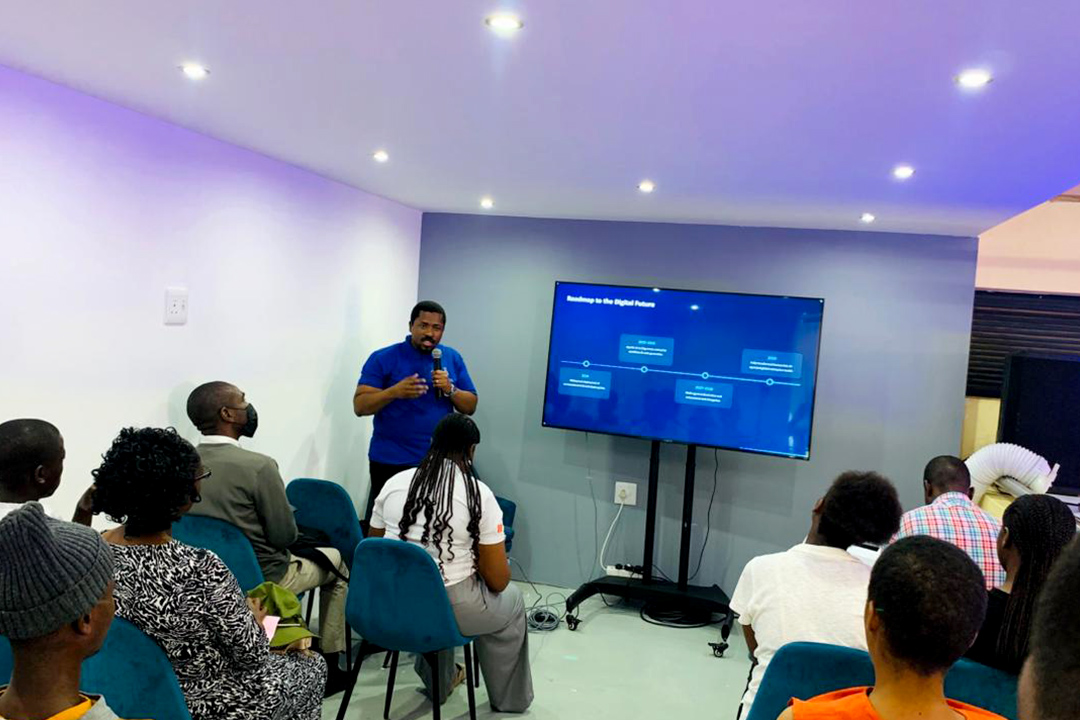
MANZINI– Artificial intelligence may be changing how businesses work, but the technology still needs human judgement, accountability and ethical oversight, according to AI Project Architect Mbulelo Mabusela.
Mabusela was speaking during the Digital Skills Workshop Series at the Eswatini International Trade Fair, where he unpacked the growing role of AI and what its adoption could mean for businesses and the workforce.
He said AI’s ability to process information, analyse data and operate continuously should not be mistaken for the judgement and accountability that come with human intelligence.
While AI can work with large amounts of raw and unstructured data and support decision-making, Mabusela stressed that people must remain responsible for determining whether the information and actions produced by AI make sense.
The distinction, he said, becomes particularly important when inaccurate information could lead to decisions with serious consequences. For Mabusela, the future of AI adoption therefore lies in human beings working alongside technology, rather than simply handing decision-making over to machines.
He identified continuous reskilling as one of the major requirements for remaining competitive as AI becomes more integrated into workplaces. “Continuous reskilling is encouraged,” Mabusela said, highlighting the need for workers to keep developing their skills as technology changes.
He also pointed to a changing role for managers. Traditionally, managers have been responsible for teams of people, but the growing use of AI agents means they may increasingly have to understand how to manage both human employees and machines.
Ethical awareness was another major concern raised during the workshop. Mabusela argued that organisations need strong governance, integrity and accountability when introducing AI, particularly because technology can produce decisions or content that require human judgement before being acted upon.
AI adoption, he noted, is also taking place at different speeds across industries. Technology and telecommunications are among the faster adopters, while manufacturing and logistics are using AI to improve efficiency and predictive analytics.
Financial services, healthcare and the public sector, however, are taking a slower approach because of the sensitive information and regulations involved.
Mabusela further divided workplace needs according to career stages. Gen Z workers may look to AI as a co-pilot for tasks such as software development, but still require mentorship, while mid-career professionals need structured reskilling to integrate AI into established workflows.
As AI continues to reshape the workplace, Mabusela’s message was clear: the competitive advantage may not simply belong to those who use AI, but to those who know how to use it responsibly.
#DigitalSkills #ArtificialIntelligence #AI #MbuleloMabusela #RSTP #EITF2026 #DigitalTransformation #FutureOfWork #Reskilling #Eswatini #Technology #Innovation #AIInBusiness