



BY THEMBA ZWANE
LOBAMBA– Mainland Chinese citizens have brushed aside their government’s warning against travelling to Eswatini and arrived in the Kingdom to witness the 2026 Umhlanga Reed Dance, presenting a striking contrast to Beijing’s claims of heightened security risks in the country.
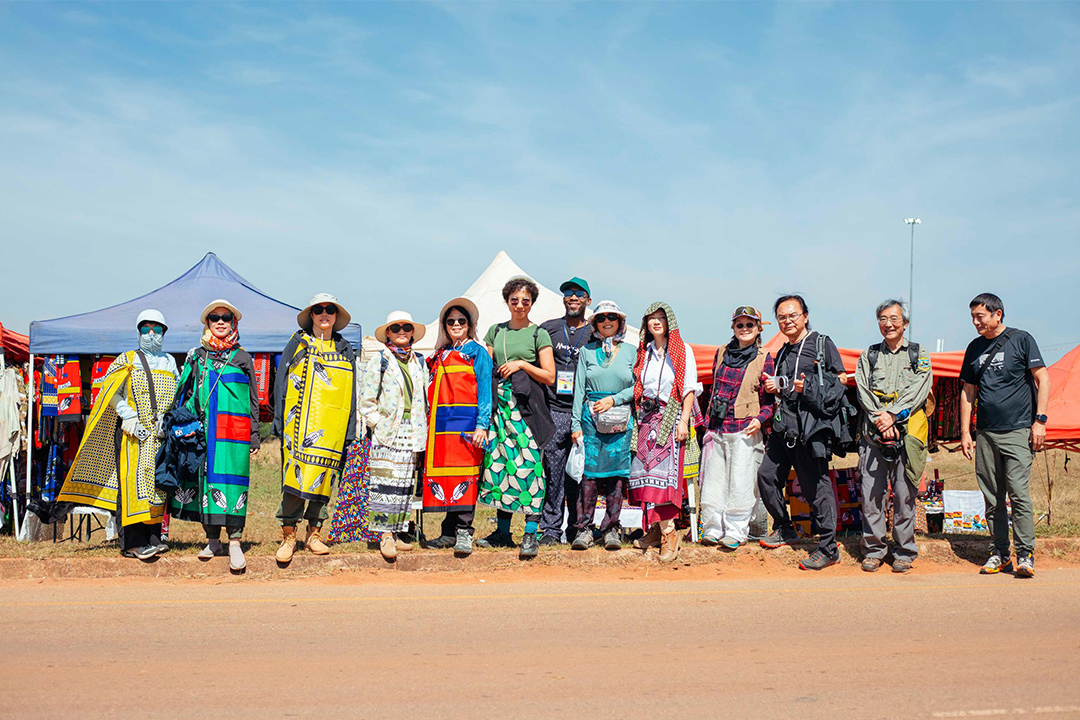
The visitors, who personally confirmed to Eswatini Positive News that they were citizens of the People’s Republic of China and not Taiwan, joined thousands of spectators and international guests at Lobamba to experience one of Eswatini’s biggest and most celebrated cultural events.
Their decision to travel to the Kingdom comes only days after Beijing urged Chinese nationals to avoid Eswatini and advised those already in the country to leave at the earliest opportunity or relocate to areas it described as safer, including neighbouring South Africa.
Yet at Umhlanga, the picture on the ground was markedly different.

The Chinese visitors found themselves surrounded by thousands of maidens, traditional music, colourful regalia and crowds of local and international spectators celebrating Eswatini’s cultural heritage.
Their presence has consequently added a powerful human dimension to the diplomatic disagreement between Eswatini and China.
While Beijing has raised concerns over security, ordinary Chinese citizens have chosen to travel to the Kingdom and experience conditions for themselves.
China’s recent advisory cited alleged telecommunications fraud, illegal online gambling activities and what it described as serious public security risks in Eswatini.
The Eswatini Government has strongly rejected that assessment, maintaining that the Kingdom remains peaceful, stable and governed by the rule of law.
Acting Government Spokesperson Thabile Mdluli said a recent law-enforcement operation involving a number of foreign nationals, many of whom were Chinese, should instead be viewed as evidence of effective policing.
“Far from demonstrating a failure of public security, it affirms the vigilance and effectiveness of the Kingdom’s law-enforcement institutions,” Mdluli said.
Government has maintained that the suspects were targeted through an organised law-enforcement operation over alleged cyber-related criminal activities and would be subjected to due legal process.
The operation, Government argues, demonstrates that Eswatini has functioning law-enforcement institutions capable of identifying and acting against suspected criminal networks.
Against that background, the arrival of mainland Chinese visitors for Umhlanga has provided a contrasting image to the sweeping tone of Beijing’s warning.
Rather than staying away from Eswatini, the visitors joined other tourists who travelled to the Kingdom specifically to experience its culture and traditions.
Umhlanga is one of Eswatini’s most important cultural events and annually attracts thousands of maidens from across the country, together with tourists, diplomats, dignitaries and cultural enthusiasts from different parts of the world.
Beyond the dancing and colourful traditional attire, the ceremony provides visitors with a close look at Eswatini’s cultural identity, customs, traditional leadership structures and commitment to preserving its heritage.
For the mainland Chinese visitors, the ceremony also presented an opportunity to form their own impressions of the Kingdom at a time when relations between Mbabane and Beijing are under renewed scrutiny.
Their presence suggests that diplomatic disagreements between governments do not necessarily translate into hostility or disengagement between ordinary people.
Eswatini does not maintain formal diplomatic relations with Beijing and continues to recognise Taiwan.
The Kingdom remains Taiwan’s only diplomatic partner in Africa, a position that has long placed Eswatini at the centre of diplomatic interest involving China and Taiwan.
Government has insisted that the Kingdom’s choice of diplomatic partners remains a sovereign national decision.
“The Kingdom further reaffirms that its foreign policy and diplomatic relations are matters of sovereign national determination,” Mdluli said.
Government has also stressed that Chinese nationals living, working or conducting business in Eswatini remain protected under the Constitution and the laws of the Kingdom.
Chinese entrepreneurs and businesses have operated in Eswatini for years, particularly in the retail, construction and commercial sectors.
Mdluli said Government respected the right of every country to issue consular advice to its citizens but rejected any suggestion that Eswatini constituted an exceptional or generalised security threat.
The presence of mainland Chinese nationals at Umhlanga has therefore become more than an ordinary tourism story.
It has placed real people at the centre of a diplomatic debate.
While governments continue exchanging sharply different assessments of Eswatini, the visitors made their own choice — travelling to Lobamba, joining the crowds and witnessing the Kingdom’s biggest cultural spectacle for themselves.
Their visit also highlights the potential of cultural tourism to create connections between people even when relations between their governments remain complicated.
As thousands of maidens sang and danced before spectators from across the world, the mainland Chinese visitors became part of a broader message emerging from Umhlanga 2026: culture can continue opening doors even when diplomacy becomes difficult.
And in choosing to travel to Eswatini despite Beijing’s warning, the visitors offered perhaps the clearest possible contrast between a government advisory and an individual experience of the Kingdom.
#Eswatini #MainlandChina #PRC #Umhlanga2026 #ReedDance #EswatiniCulture #ChineseVisitors #Tourism #Diplomacy #EswatiniPositiveNews