


BY LINDELWA MYENI
EZULWINI – Civil society organisations have been identified as critical drivers of community-led climate adaptation, with stakeholders saying their close relationship with local communities positions them to lead Eswatini’s response to climate change.
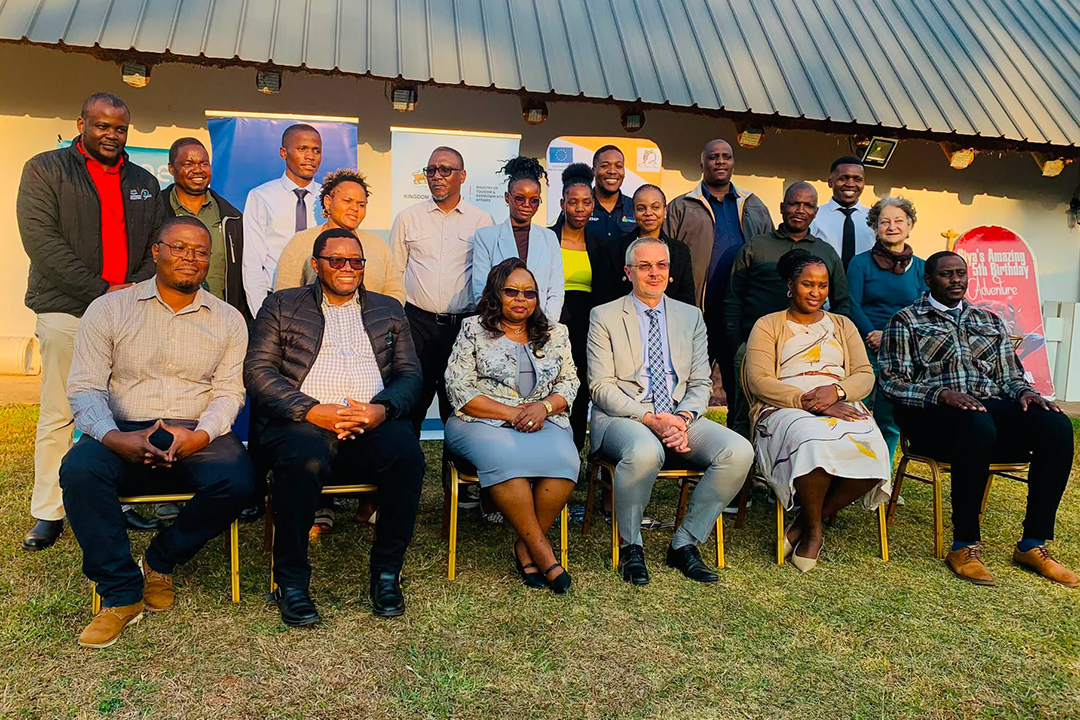
This emerged during the launch of the Participatory Adaptation for Climate Equity (PACE) Project yesterday afternoon, where speakers emphasised that strengthening civil society would be key to building resilient communities and delivering sustainable climate action.
PELUM Eswatini Programme Manager Andile Dlamini said the three-year project, funded by the European Union and implemented by COSPE in partnership with PELUM Eswatini, the Ministry of Tourism and Environmental Affairs and the Ministry of Tinkhundla Administration and Development, would empower communities to take ownership of climate adaptation. She said the project would develop 28 Local Adaptation Plans, strengthen the capacity of 30 civil society organisations and integrate climate adaptation into community development planning.
Dlamini said the initiative was designed to ensure that climate action responds to the needs and priorities of local communities while supporting the implementation of Eswatini’s National Adaptation Plan and Nationally Determined Contributions.

Meanwhile, Coordinating Assembly of Non-Governmental Organisations (CANGO) Executive Director Thembinkosi Dlamini said civil society organisations were uniquely positioned to drive locally led adaptation because they work directly with the people most affected by climate change.
“Civil society organisations do not operate from a distance. We work precisely where climate impacts hit hardest right alongside rural households and vulnerable families,” he said.
He said the project’s investment in strengthening 30 civil society and community-based organisations would leave a lasting legacy by building institutional capacity and local leadership that would continue driving climate action beyond the project’s implementation period.
Dlamini said PACE’s approach of enabling communities to identify their own climate risks, set priorities and develop Local Adaptation Plans reflected the strength of locally led development.
“PACE’s community-led model, mpowering people to map their own risks, set their own priorities and draft their own Local Adaptation Plans embodies civil society at its absolute best,” he said.
As the umbrella body representing more than 100 non-governmental organisations in Eswatini, CANGO, he said, was ready to support participating organisations by promoting collaboration, sharing expertise and ensuring community voices continued to shape national climate policy.
“The civil society sector stands fully prepared to walk hand-in-hand with COSPE, PELUM, Government, the European Union, UNDP and our local communities to ensure PACE achieves lasting success,” he said.
Both speakers stressed that strong partnerships between Government, civil society, development partners and communities would be essential in ensuring climate adaptation efforts deliver lasting benefits for emaSwati.
#ClimateResilience #PACEProject #CivilSociety #CommunityAdaptation #Eswatini